It started with excitement—the kind you try to keep in check because experience has taught you not to expect too much, but hope sneaks in anyway.
My brother Adam had been unusually persistent.
“You’ll like him,” he kept saying. “He’s solid. Good job, smart, normal—finally someone worth your time.”
That alone should have been my first warning.
Adam had a history of exaggeration, especially when it came to setting me up with people. But this time, something felt different. He sounded convincing. Confident. Almost… invested.
So I said yes.
And that’s how I found myself standing in front of my mirror that evening, carefully choosing an outfit that struck the perfect balance—effortless but intentional. Not trying too hard, but still wanting to make a good impression.
Because maybe, just maybe, this time would be different.
When Stewart pulled up, I felt cautiously optimistic.
The car was sleek—a polished sedan that looked expensive enough to suggest success, but not flashy enough to seem arrogant. He stepped out, smiled, and greeted me warmly.
First impressions? Good.
Better than expected, actually.
The drive to the restaurant was smooth, conversation flowing easily. He was funny in a subtle way, attentive without being overwhelming, and genuinely easy to talk to.
By the time we arrived at the restaurant—a place far more upscale than I had anticipated—I had started to relax.
Maybe Adam got it right this time.
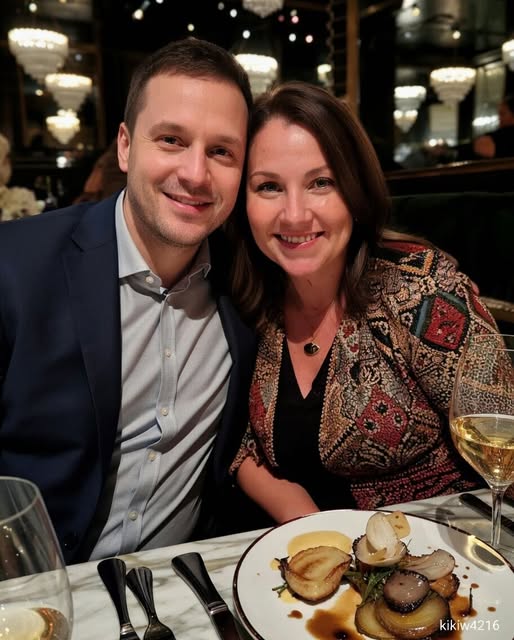
The restaurant was elegant. Dim lighting, soft music, polished glasses reflecting candlelight. The kind of place where everything feels deliberate.
We were seated quickly.
Menus opened.
Drinks ordered.
And for a while, everything felt… normal.
Better than normal.
We talked about work, travel, ridiculous office stories. He made me laugh—really laugh—for the first time in weeks. Not the polite kind, but the kind that catches you off guard.
And slowly, I let my guard down.
Because nothing about the evening suggested what was coming.
The shift happened in an instant.
The bill arrived.
Stewart reached for it confidently, barely glancing at the total before handing over his card.
I remember thinking, that’s reassuring.
Until the server came back.
“I’m sorry,” she said carefully. “It seems this card was declined.”
A small pause.
Stewart blinked.
“That’s strange. Try it again.”
She did.
Declined.
Again.
The air changed.
It was subtle at first—just a tightening of space, a shift in tone—but it spread quickly. Conversations from nearby tables seemed louder. Eyes began to linger.
Stewart’s confidence cracked.
He tried another card.
Declined.
A third.
Same result.
Now people were definitely watching.
My stomach dropped.
“Do you have another way to pay?” the server asked, her voice polite but strained.
Stewart looked… lost.
“I—I don’t understand. This shouldn’t be happening.”
I felt heat rush to my face.
Not just embarrassment—something deeper.
Something instinctive.
Something wrong.
I pulled out my phone.
Texted Adam.
What is going on?
His reply came instantly.
Relax. Just go with it.
Go with it?
My heart started pounding.
That’s when it clicked.
The car.
The restaurant.
The way Adam had pushed this date so aggressively.
The perfect setup.
Too perfect.
I looked at Stewart.
“You didn’t choose this place, did you?”
He hesitated.
“No… Adam suggested it.”
Of course he did.
I checked my phone again.
Another message from Adam:
This is going to be hilarious.
Something inside me snapped.
“What did he tell you?” I asked Stewart.
His voice dropped.
“That he’d cover everything. That he transferred me money for tonight.”
He looked at me, realization dawning at the same time it hit me fully.
“He didn’t send anything.”
No.
He didn’t.
Because this wasn’t a misunderstanding.
This was a setup.
The manager approached.
Now the situation had escalated beyond awkward.
This wasn’t just an uncomfortable date anymore.
It was a problem.
A financial one.
A public one.
“You’ll need to resolve the bill,” the manager said firmly.
I nodded, trying to keep my composure.
“I will.”
But inside, I was burning.
Not at Stewart.
At Adam.
Outside the restaurant, the tension didn’t ease.
If anything, it intensified.
A security guard lingered nearby, watching.
Not aggressively.
But enough to remind us this wasn’t optional.
Stewart paced, running a hand through his hair.
“I swear, I didn’t know,” he said.
“I believe you,” I replied.
Because now it was obvious.
We were both victims.
Different roles.
Same trap.
My phone buzzed again.
Adam.
Did you see his face? Worth it.
Worth it.
That word echoed in my mind like an insult.
This wasn’t a joke.
This wasn’t harmless.
This was humiliation.
Public.
Calculated.
Intentional.
When Adam finally arrived, he wasn’t apologetic.
He was smiling.
Actually smiling.
“Okay, okay,” he said, pulling out his wallet. “I’ll fix it.”
Fix it?
“You think paying the bill fixes this?” I snapped.
He shrugged.
“It was just a joke. You’re overreacting.”
Overreacting.
I laughed—but there was no humor in it.
“You put me in a situation where I could have been detained over a bill I didn’t create. In front of a room full of people.”
He rolled his eyes.
“Relax. It wasn’t that serious.”
That was the moment everything changed.
Because it wasn’t about the restaurant anymore.
Or the money.
Or even the embarrassment.
It was about trust.
And how easily he had broken it.
That night, I didn’t just go home upset.
I went home aware.
Aware that something fundamental had shifted.
Because when someone you trust turns you into a punchline, it forces you to reevaluate everything.
Every past “joke.”
Every setup.
Every moment you dismissed as harmless.
The days that followed were heavy.
Not dramatic.
Not explosive.
Just… heavy.
Adam acted like nothing had happened.
I didn’t.
Because I couldn’t.
I started setting boundaries.
Clear ones.
No more blind dates arranged by him.
No more “surprises.”
No more trusting his version of anything involving my personal life.
And when I told him that, he laughed.
Until he realized I wasn’t joking.
Stewart and I spoke once more.
Briefly.
We agreed on one thing:
We both deserved better than being used as props in someone else’s entertainment.
There was no second date.
Not because of him.
But because the foundation had been contaminated before it even had a chance to exist.
What stayed with me most wasn’t the embarrassment.
It was the realization.
That not all harm comes from strangers.
Sometimes it comes from people who think they have the right to cross lines because they share your history.
Your last name.
Your life.
And sometimes, the hardest lesson is this:
Being family doesn’t excuse disrespect.
It doesn’t justify humiliation.
And it certainly doesn’t mean you have to tolerate it.
Looking back now, I don’t see that night as just a disaster.
I see it as a turning point.
A moment where I stopped accepting behavior just because it came from someone close.
A moment where I chose myself.
Because trust isn’t automatic.
It’s earned.
Maintained.
Protected.
And once it’s broken in a room full of strangers over something as simple as a dinner bill—
It’s never quite the same again.
So yes, it was just a date.
Just a prank.
Just a joke.
Until it wasn’t.
Until it became something else entirely.
A lesson.
A boundary.
A line I will never let anyone cross again.