It usually starts as something small. You plug in your phone at night, toss it onto your bed, and fall asleep without a second thought. It’s a routine repeated by millions of people every day—simple, automatic, and seemingly harmless. But beneath that routine lies a hidden danger that most users underestimate: improper charging practices that can transform a harmless device into a serious fire hazard.
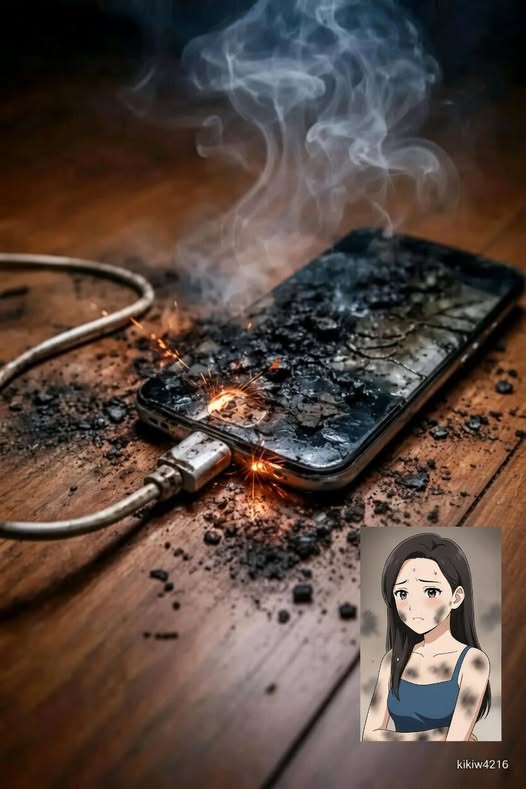
The image of a burned smartphone, smoke rising from its casing and sparks erupting from a damaged cable, isn’t just dramatic—it reflects a very real risk. Around the world, thousands of fires are linked each year to electronic devices, and a significant portion of them stem from phones being charged incorrectly. The frightening part is that most of these incidents are entirely preventable.
Understanding why this happens requires a closer look at what powers your device. Modern smartphones rely on lithium-ion batteries—compact, efficient, and capable of storing large amounts of energy. These batteries are engineering marvels, but they also come with vulnerabilities. When conditions are ideal, they perform safely and reliably. When those conditions are disrupted—through heat, damage, or poor charging habits—they can become unstable.
One of the most common triggers is heat buildup. When you charge your phone, energy flows into the battery, and some of that energy naturally converts into heat. Under normal conditions, your phone is designed to manage this heat. But when you place it on a soft surface like a bed, couch, or pillow, you block airflow. The heat has nowhere to go. It builds up slowly at first, then more rapidly, creating a dangerous cycle.
This process can lead to what experts call “thermal runaway.” Once the battery reaches a certain temperature, internal chemical reactions accelerate, generating even more heat. At that point, the process becomes self-sustaining—and extremely dangerous. The battery can swell, leak, ignite, or even explode.
Damaged charging cables add another layer of risk. A frayed wire or bent connector can cause electrical resistance, leading to sparks or overheating at the connection point. In some cases, this can ignite nearby materials—especially if your phone is resting on something flammable like fabric or paper. What begins as a small spark can escalate into a full-blown fire within seconds.
Cheap or uncertified chargers are another major factor. While they may look identical to original accessories, they often lack the internal safeguards needed to regulate voltage and current. This can result in inconsistent power delivery, overheating, and increased strain on the battery. Over time, this stress weakens the battery’s structure, making it more prone to failure.
Many people assume that charging overnight is harmless. After all, modern smartphones are designed to stop charging once they reach 100%. While that’s true, it doesn’t eliminate all risks. If your phone is overheating due to poor placement or faulty equipment, the danger remains—even if the battery is technically full. Leaving a phone charging unattended for hours increases the window of opportunity for something to go wrong.
The consequences of these habits extend far beyond a damaged device. A phone fire can spread quickly, especially in enclosed spaces like bedrooms. Curtains, bedding, furniture—all can catch fire within moments. In severe cases, entire homes have been lost due to a single overheating device.
There’s also a personal safety aspect. Burns from device-related fires are not uncommon, and smoke inhalation can be just as dangerous. Even if the damage is minor, the experience itself can be traumatic—waking up to the smell of burning plastic and the sight of smoke filling your room is something no one forgets easily.
Financially, the impact can be significant. Replacing a high-end smartphone is expensive, but that’s often just the beginning. Fire damage to property, lost belongings, and potential medical expenses can quickly add up. In some cases, insurance claims may be denied if the incident is deemed preventable, leaving individuals to cover the costs themselves.
Environmental consequences are another overlooked aspect. When a device burns, it releases toxic chemicals into the air and contributes to electronic waste. The materials inside smartphones—metals, plastics, and rare earth elements—are not easily recyclable once damaged. Each incident adds to a growing global problem.
So how can you protect yourself?
It starts with simple, consistent habits.
Always use high-quality charging equipment. Ideally, stick with the charger that came with your phone or a certified replacement from a reputable manufacturer. Avoid extremely cheap alternatives that lack proper safety features.
Inspect your cables regularly. If you notice fraying, exposed wires, or bent connectors, replace the cable immediately. Continuing to use damaged equipment is one of the fastest ways to create a hazardous situation.
Choose the right surface for charging. Place your phone on a hard, flat, non-flammable surface like a table or desk. Avoid beds, couches, or carpets, where heat can build up and spread.
Keep your device uncovered while charging. Never place it under a pillow, blanket, or inside a drawer. Proper ventilation is essential for dissipating heat.
Be mindful of your surroundings. Keep charging devices away from flammable materials and direct sunlight. Even a small increase in ambient temperature can contribute to overheating.
If possible, avoid charging your phone overnight. Charging during the day, when you’re awake and able to monitor the device, reduces the risk of unnoticed issues escalating.
For those who want an extra layer of safety, consider using smart plugs or charging devices with built-in timers. These can automatically cut off power after a set period, reducing prolonged exposure to heat.
Advanced users should also pay attention to software updates. Manufacturers often include improvements to battery management systems, helping devices regulate temperature more effectively. Keeping your phone updated ensures you benefit from these enhancements.
Understanding the technical side can also help. Lithium-ion batteries operate best within a specific temperature range. Exceeding that range—even briefly—can cause long-term damage. Fast charging, while convenient, generates more heat than standard charging, making proper conditions even more important.
Wireless charging introduces its own considerations. Misalignment, foreign objects, or poor-quality charging pads can all contribute to inefficiency and heat buildup. While convenient, wireless charging should be used with the same level of care as traditional methods.
Education plays a crucial role, especially for younger users. Many incidents involve children or teenagers who are unaware of the risks. Teaching safe charging habits early can prevent dangerous situations later.
Looking ahead, new battery technologies promise safer alternatives. Solid-state batteries, for example, are being developed to reduce the risk of overheating and fire. Improved charging systems may eventually eliminate many of today’s concerns. But until those technologies become widespread, responsibility remains in the hands of users.
The reality is simple: your smartphone is a powerful device, and like any powerful tool, it requires proper handling. The convenience it offers should not overshadow the risks it carries when used carelessly.
That image of a burned phone—charred, smoking, and sparking—is not just a warning. It’s a reminder.
A reminder that small habits matter.
That where you place your phone, what charger you use, and how you treat your device can make the difference between safety and disaster.
Charging your phone should be the simplest part of your day. And with the right precautions, it can remain exactly that.
But ignoring these risks—even once—can have consequences far greater than most people ever imagine.
So the next time you plug in your phone, take a moment.
Look at where you’re placing it.
Check your cable.
Think about the environment around it.
Because preventing a fire doesn’t require complex knowledge or expensive tools.
It just requires awareness—and a few smart choices.
And those choices could protect not just your device, but your home, your safety, and your peace of mind.