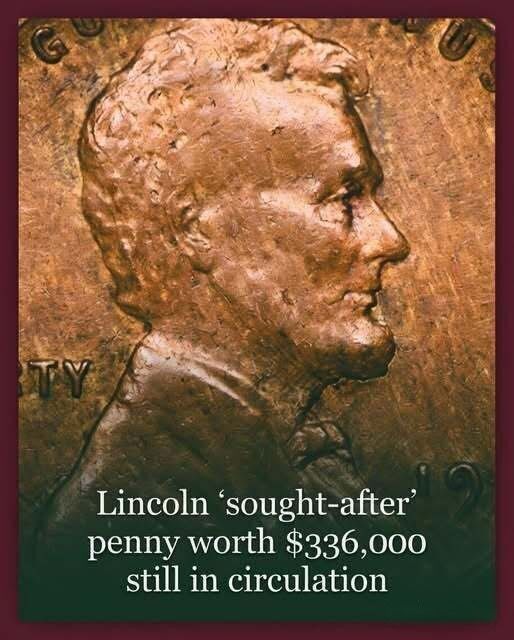
It is easy to overlook the small, ordinary objects that pass through our hands every day. Coins, in particular, rarely receive more than a quick glance before being tucked into a pocket, dropped into a jar, or handed over in a transaction. Yet, hidden among these seemingly insignificant pieces of metal, there occasionally exists something extraordinary—an object whose value far exceeds its face worth. One of the most fascinating examples of this is the 1943 Bronze Lincoln Cent, a coin that has become legendary among collectors and continues to capture the imagination of people across generations.
To understand why this coin is so special, it is important to step back into the historical context of the early 1940s. The United States was deeply involved in World War II, and resources were being carefully managed to support the war effort. Copper, a key component in the production of traditional pennies, was in high demand for military equipment such as shell casings and electrical wiring. In response, the U.S. Mint made a significant change in 1943: it began producing pennies from zinc-coated steel instead of the usual bronze alloy.
These steel cents were noticeably different from the pennies people were accustomed to. They had a silver-gray appearance and were lighter in color than the familiar copper coins. While practical from a resource standpoint, they were not particularly popular with the public. Many people found them confusing, as they could easily be mistaken for dimes, and they were also prone to rust over time.
Amid this large-scale production shift, a small and unexpected error occurred—one that would eventually become one of the most famous stories in numismatic history. A few leftover bronze planchets, which are the blank discs used to strike coins, remained in the minting presses from the previous year. These planchets were not supposed to be used in 1943, but somehow, they were fed into the machinery and stamped with the 1943 design.
The result was a tiny number of 1943 pennies made from bronze instead of steel. At the time, this mistake went largely unnoticed. The coins entered circulation just like any other, blending in with everyday change. It wasn’t until several years later, around 1947, that reports began to surface of unusual copper-colored 1943 pennies. These reports quickly gained attention, sparking curiosity and excitement.
Initially, the U.S. Mint was skeptical. Officials believed that these claims were likely the result of altered coins—steel pennies that had been coated or plated to appear copper. However, as more examples emerged and were subjected to careful analysis, it became clear that some of these coins were genuine. Metallurgical testing confirmed that they were indeed struck on bronze planchets, validating their authenticity and solidifying their place as one of the most remarkable mint errors ever discovered.
What makes the 1943 Bronze Lincoln Cent so valuable is its extreme rarity. Experts estimate that fewer than twenty authentic examples exist across all three major minting locations: Philadelphia, Denver, and San Francisco. Each of these coins carries subtle characteristics that help identify its origin, making them not only rare but also uniquely identifiable.
As news of these coins spread, they quickly became the subject of a nationwide treasure hunt. People from all walks of life began checking their pocket change, coin jars, and old collections, hoping to stumble upon one of these elusive treasures. The idea that such a valuable object could be hiding in plain sight added to the excitement. It transformed an ordinary activity—handling spare change—into a potential moment of discovery.
One of the most enduring aspects of this story is the role of chance. Unlike many valuable collectibles that are acquired through deliberate effort or investment, the 1943 Bronze Lincoln Cent represents the possibility of accidental fortune. Stories of unexpected discoveries have fueled this narrative, including the well-known case of a teenager who found one in his lunch money. That single coin later sold for a substantial sum, reinforcing the idea that extraordinary finds can come from the most ordinary circumstances.
Over the decades, the value of these coins has continued to rise. While early sales reached into the hundreds of thousands of dollars, some examples have achieved even higher prices at auction, with one reportedly surpassing the million-dollar mark. These figures reflect not only the coin’s rarity but also its historical significance and the enduring fascination it inspires.
Collectors are drawn to the 1943 Bronze Lincoln Cent for several reasons. Its connection to World War II gives it a unique place in history, representing a time when even small details like coin composition were influenced by global events. The fact that it was created by accident adds an element of intrigue, highlighting the imperfections that can occur even in highly controlled processes. Together, these factors make the coin a powerful symbol of both history and human error.
Authenticating such a rare coin, however, is not a simple task. Because of its high value, the 1943 Bronze Lincoln Cent has been the target of numerous counterfeits and altered coins. Some individuals have attempted to modify steel cents to resemble bronze ones, while others have altered the dates on different coins. As a result, experts rely on detailed analysis, including weight, composition, and microscopic examination, to verify authenticity.
One of the simplest preliminary tests involves using a magnet. Steel cents are magnetic, while bronze cents are not. This basic check can help rule out many common fakes, though it is not sufficient for full authentication. Professional evaluation is essential for any coin that appears to match the characteristics of a genuine 1943 bronze cent.
Despite the rarity of these coins, their story continues to resonate with the public. It serves as a reminder that value can exist in unexpected places and that history is often shaped by small, unintentional events. The idea that a coin worth hundreds of thousands of dollars could still be out there, unnoticed, adds an element of mystery and possibility to everyday life.
Even for those who never find one, the search itself can be rewarding. It encourages a closer look at the objects we usually take for granted and fosters an appreciation for the details that make each item unique. Coin collecting, in this sense, becomes more than a hobby—it becomes a way of connecting with history and discovering the stories behind the objects we use every day.
The 1943 Bronze Lincoln Cent also highlights the broader appeal of numismatics, the study and collection of coins. This field combines elements of history, art, economics, and science, offering endless opportunities for learning and exploration. Each coin carries its own story, reflecting the time and place in which it was created. For collectors, these stories are as valuable as the coins themselves.
In a world where digital transactions are becoming increasingly common, physical currency may seem less significant than it once was. However, coins like the 1943 Bronze Lincoln Cent remind us of the tangible connections we have to the past. They are small pieces of history that we can hold in our hands, linking us to moments that shaped the world we live in today.
Ultimately, the enduring fascination with this rare penny lies in its combination of history, rarity, and possibility. It represents a perfect intersection of chance and significance—a simple object that carries extraordinary value. Whether viewed as a collector’s prize, a historical artifact, or a symbol of hidden potential, the 1943 Bronze Lincoln Cent continues to captivate and inspire.
So the next time you receive change, it might be worth taking a closer look. While the odds are incredibly small, the possibility—however remote—adds a sense of excitement to an otherwise routine moment. And even if you never find such a treasure, the story itself serves as a reminder that sometimes, the most remarkable discoveries are hidden in the most ordinary places.