There is a particular kind of satisfaction that comes from cleaning your home, especially when you’ve just finished mopping the floors. Everything smells fresh, the dust is gone, and the surface feels smooth under your feet. Yet, despite all that effort, something often seems to be missing. The floor may be clean, but it doesn’t quite look the way you expected. Instead of gleaming, it appears dull, tired, or slightly cloudy—almost as if a thin film is muting its natural finish.
This is a common experience in many households, and it can be frustrating. Over time, floors accumulate more than just visible dirt. Layers of residue gradually build up from various sources: cleaning products, mineral deposits from water, grease from cooking, and fine dust particles that settle into microscopic textures. Even when cleaned regularly, these layers can remain, subtly altering how light reflects off the surface. The result is a floor that looks lifeless despite being technically clean.
In response, many people turn to commercial floor-cleaning products that promise a brilliant shine. While some of these products can be effective, they are not always the perfect solution. Certain cleaners contain ingredients that leave behind a thin coating designed to enhance gloss. Initially, this might create the appearance of shine, but with repeated use, it can actually contribute to buildup. Over time, this layer can trap dirt and dull the surface further, creating a cycle where more product is needed to maintain the same effect.
This is where simple, traditional cleaning methods can offer an appealing alternative. Passed down through generations, these approaches rely on basic household ingredients that serve specific purposes without unnecessary additives. One such method involves a surprisingly effective combination: white vinegar and a small amount of fabric softener mixed with hot water. Though it may sound unconventional at first, each component plays a distinct role in improving the appearance of your floors.
White vinegar has long been valued as a natural cleaning agent. Its mild acidity makes it particularly effective at breaking down mineral deposits, grease, and residue left behind by other cleaning products. These are often the hidden culprits behind dull-looking floors. When diluted properly, vinegar works to dissolve these layers without damaging most common floor surfaces. As the buildup is removed, the floor’s natural finish becomes more visible, allowing it to reflect light more evenly and appear brighter.
Another advantage of vinegar is that it evaporates quickly and does not leave behind a sticky residue. This is important because residue is one of the main causes of that cloudy or streaky look. By cleaning thoroughly and drying cleanly, vinegar helps restore a more natural, streak-free appearance.
Fabric softener, on the other hand, serves a different purpose. While it is primarily used for laundry, in this mixture it contributes to the overall feel and scent of the floor. A small amount can help reduce static and leave surfaces feeling smoother to the touch. It also adds a subtle fragrance that enhances the perception of cleanliness. It’s important to note that only a minimal amount is needed—just enough to provide these benefits without leaving behind its own residue.
When combined with hot water, these ingredients create a simple yet effective cleaning solution. The heat of the water helps loosen dirt and grime, making it easier for the vinegar to break down buildup. The mixture works together to clean deeply while also improving the floor’s appearance in a noticeable way.
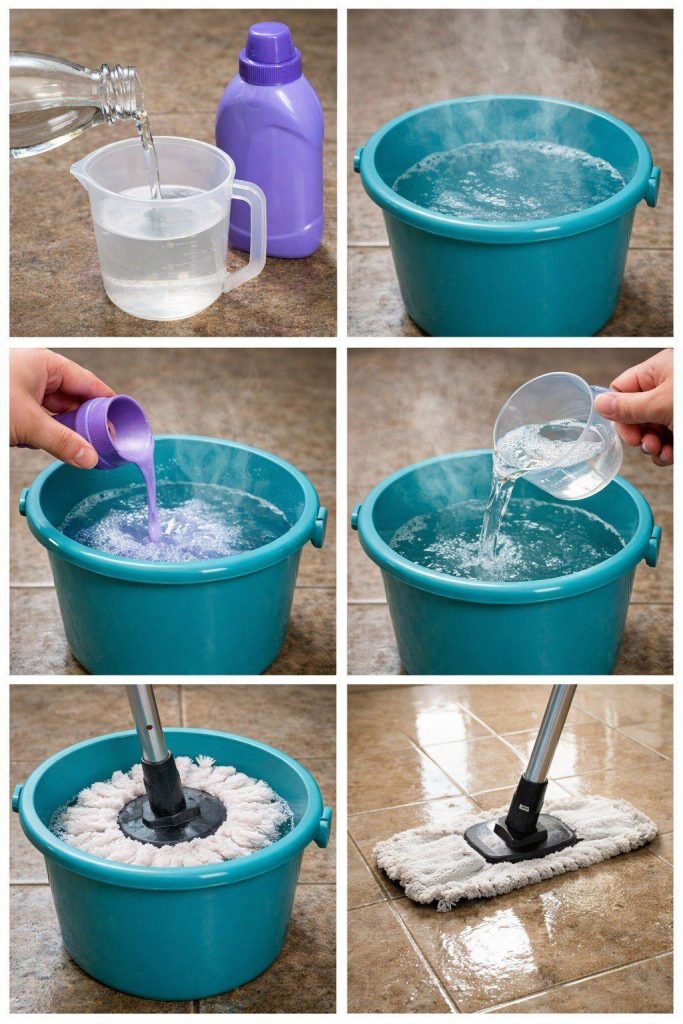
Preparing this solution is straightforward. Start by filling a bucket with hot water—warm enough to aid cleaning, but not so hot that it becomes difficult to handle safely. Then add approximately 120 milliliters of white vinegar. This amount provides enough acidity to be effective without being overwhelming. Next, add a small capful of fabric softener. Stir the mixture gently to combine the ingredients without creating excessive foam.
Once prepared, the solution can be used just like any standard floor cleaner. Dip your mop into the bucket, wring out the excess liquid, and clean the floor using smooth, even strokes. It’s best to avoid soaking the floor, as excessive moisture can be harmful to certain materials, such as wood or laminate. Instead, aim for a lightly damp mop that cleans effectively without leaving puddles behind.
As you mop, you may notice that the floor begins to look clearer and more refreshed. This is because the solution is actively removing the layers that have been dulling its appearance. After cleaning, allow the floor to air dry. Since vinegar evaporates quickly, drying time is usually short, and the risk of streaks is reduced.
While this method is suitable for many types of flooring, it’s always important to consider the specific material you are cleaning. For example, natural stone surfaces such as marble or granite can be sensitive to acidic substances like vinegar. In these cases, it’s best to use a cleaner specifically designed for that material. For sealed tiles, vinyl, and many laminate floors, however, this mixture can be an effective and economical option.
In addition to restoring shine, this approach offers several practical benefits. It is cost-effective, using ingredients that are already common in most households. It also reduces reliance on specialized cleaning products, which can be more expensive and sometimes contain unnecessary chemicals. For those who prefer a simpler cleaning routine, this can be a welcome change.
There is also a certain satisfaction in using a method that is both straightforward and effective. Rather than relying on complex formulas or heavily marketed products, you are addressing the root cause of the problem—residue buildup—using basic principles. This not only improves the appearance of your floors but also helps maintain their condition over time.
Of course, maintaining shiny floors is not just about the cleaning solution you use. Regular upkeep plays an important role as well. Sweeping or vacuuming frequently helps prevent dirt and dust from accumulating in the first place. Using doormats can reduce the amount of debris brought into the home. Avoiding excessive use of heavy cleaning products can also help minimize buildup.
It’s also helpful to pay attention to how often you clean your floors. Over-cleaning with strong products can sometimes do more harm than good, leading to the very dullness you are trying to avoid. Finding a balanced routine—where floors are cleaned as needed without unnecessary repetition—can help preserve their natural appearance.
Another factor to consider is the type of mop you use. Microfiber mops, for example, are particularly effective at picking up fine particles and distributing cleaning solution evenly. This can enhance the results of any cleaning method, including the vinegar-based mixture.
Ultimately, the goal is not just to have clean floors, but floors that look and feel clean. Shine plays a big role in how we perceive cleanliness. A bright, reflective surface gives the impression of freshness and care, even if the difference is subtle. By addressing the underlying causes of dullness, this simple household trick helps achieve that effect in a natural and accessible way.
In a world where many solutions are marketed as complicated or specialized, it can be refreshing to rediscover the effectiveness of basic ingredients. The combination of white vinegar, fabric softener, and hot water is a reminder that sometimes, the simplest approaches are the most practical.
So the next time your floors look clean but lack that satisfying shine, consider trying this method. With just a few small adjustments to your routine, you may find that your floors not only feel cleaner but also look brighter, fresher, and more inviting—bringing a renewed sense of satisfaction to your home.