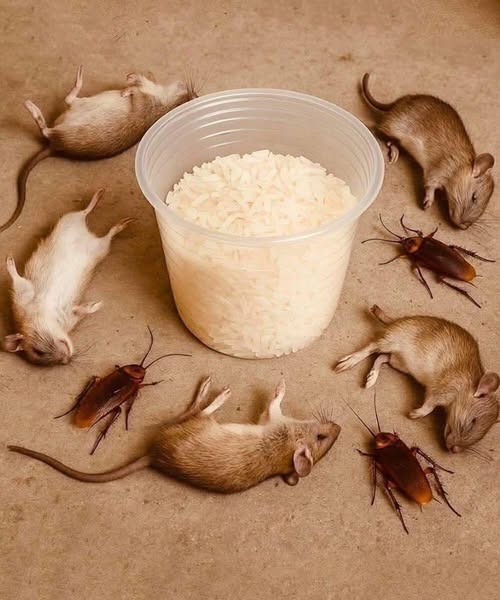
For generations, people have searched for simple, effective ways to keep their homes free from pests without relying on harsh chemicals or expensive treatments. While modern pest control products promise fast results, many homeowners are rediscovering natural alternatives that are safer, more affordable, and surprisingly powerful. One of the most unexpected solutions comes from something almost every household already has: rice.
At first glance, rice might seem like an unlikely tool for pest control. It’s a staple food, not a chemical agent or a commercial repellent. But when used strategically and combined with a few common ingredients, rice can become a highly effective way to combat two of the most stubborn household invaders—rats and cockroaches.
What makes rice useful in this context isn’t magic—it’s behavior and biology. Both rats and cockroaches are strongly attracted to food sources that are rich in carbohydrates. Rice, whether cooked or uncooked, fits perfectly into their preferred diet. By using rice as a bait base, you can deliver other substances that disrupt their systems, helping to control and reduce their population.
Why Rice Works Against Pests
Rats and cockroaches are opportunistic feeders. They rely on smell, texture, and availability when choosing food. Rice is appealing because:
- It has a neutral but inviting scent
- It’s easy to eat or carry
- It mimics natural food sources like grains and seeds
- It blends easily with other ingredients
This makes rice an ideal “carrier” in homemade pest control mixtures.
But the real effectiveness comes from what you mix with it.
Natural Remedy for Cockroaches Using Rice
Cockroaches are drawn to starchy and sugary foods. Cooked rice, in particular, has a soft texture and mild aroma that attracts them quickly. When paired with the right ingredients, it becomes a powerful bait.
What You’ll Need:
- Cooked rice (soft and slightly sticky)
- Sugar (to increase attraction)
- Boric acid (available in pharmacies or hardware stores)
How It Works:
Boric acid is widely known as a low-toxicity substance for humans when used correctly, but it is highly effective against insects. When cockroaches come into contact with it, the powder sticks to their bodies. As they groom themselves—a natural habit—they ingest it.
Once inside their system, boric acid interferes with their digestion and metabolism, eventually killing them.
Even more importantly, cockroaches live in colonies. They interact closely, sharing food and even feeding on each other’s remains. This allows the boric acid to spread from one roach to others, amplifying its effect over time.
Step-by-Step Instructions:
- Take a small bowl of cooked rice.
- Add one teaspoon of sugar and mix well.
- Add a small amount of boric acid (about half a teaspoon).
- Mix until everything is evenly combined.
- Roll the mixture into tiny balls (pea-sized).
Where to Place It:
- Under the sink
- Behind the refrigerator
- Inside cabinets
- Along baseboards
- Near drains and pipes
- Behind appliances
Cockroaches prefer dark, warm, and moist areas, so focus on those zones.
Important Safety Tips:
- Keep the mixture away from children and pets
- Avoid placing it on open surfaces
- Use small quantities to minimize exposure
Natural Remedy for Rats Using Rice
Rats require a different approach because they are larger and have different digestive systems.
Method 1: Rice + Baking Soda
This is one of the most popular natural remedies.
What You’ll Need:
- Uncooked rice
- Baking soda
- Sugar
How It Works:
Rats cannot release gas the same way humans can. When they consume baking soda, it reacts with stomach acids and produces gas. This creates internal pressure that becomes fatal.
Sugar attracts the rats, rice provides texture, and baking soda does the work internally.
Steps:
- Mix equal parts uncooked rice and sugar.
- Add an equal part of baking soda.
- Stir thoroughly.
- Place the mixture in small containers or lids.
Where to Place It:
- Along walls
- Near entry points
- Behind furniture
- In attics or basements
- Near garbage areas
Method 2: Rice + Plaster (Traditional Approach)
Another widely used method involves mixing rice with plaster powder (often called plaster of Paris).
How It Works:
When rats eat the mixture, the plaster reacts with moisture in their stomach and hardens. Because rats cannot easily expel it, this becomes fatal.
Steps:
- Mix uncooked rice with plaster powder.
- Place it in shallow dishes.
- Keep it near rat activity zones.
Safety Note:
- Always keep this mixture away from pets and children
- Use gloves when handling plaster
Why Many People Prefer Natural Methods
There are several reasons why rice-based remedies are becoming popular again:
1. No Toxic Fumes
Unlike sprays or chemical poisons, these methods don’t release harmful gases into your home.
2. Budget-Friendly
Rice, sugar, and baking soda are inexpensive and widely available.
3. Easy to Prepare
No special tools or expertise required.
4. Discreet Use
Mixtures can be placed out of sight, unlike traps or large bait stations.
The Importance of Placement
Even the most effective mixture won’t work if it’s placed incorrectly.
Pests follow specific paths. Rats move along walls and edges. Cockroaches hide in tight, dark spaces.
To improve success:
- Observe where you’ve seen activity
- Look for droppings or grease marks
- Place bait along travel routes, not open spaces
Combine Remedies with Prevention
Natural remedies work best when combined with basic home maintenance.
To prevent cockroaches:
- Clean food crumbs regularly
- Fix leaks under sinks
- Avoid leaving dirty dishes overnight
- Seal cracks and gaps
To prevent rats:
- Store food in sealed containers
- Take out trash regularly
- Block entry holes
- Remove clutter
Without these steps, pests may continue returning even after treatment.
How Long Does It Take to Work?
Natural remedies are not instant like chemical sprays. They work gradually.
- Cockroach reduction: within a few days to weeks
- Rat activity decrease: within several days
Consistency is key. Check and replace mixtures every few days for best results.
Signs the Method Is Working
- Reduced sightings
- Less droppings
- Bait being consumed
- Decreased noise (for rats)
If nothing changes after a week, adjust placement.
When to Call Professionals
While rice-based methods are effective for small to moderate problems, severe infestations may require professional help.
Consider calling experts if:
- You see pests during the day frequently
- Infestation spreads rapidly
- DIY methods fail after consistent use
Common Mistakes to Avoid
- Using too much mixture (small portions work better)
- Placing bait in open, bright areas
- Ignoring cleanliness
- Expecting overnight results
Patience and proper placement make all the difference.
A Return to Simplicity
What makes this method so appealing isn’t just its effectiveness—it’s its simplicity.
In a world filled with complex, chemical-heavy solutions, it’s reassuring to know that something as basic as rice can still play a powerful role in maintaining a clean and comfortable home.
These techniques are rooted in observation and practicality. Long before modern pesticides, people relied on understanding pest behavior and using available resources wisely. Today, that knowledge remains just as valuable.
Final Thoughts
Rice may not look like a pest control tool, but when used correctly, it becomes a surprisingly effective ally against rats and cockroaches.
The key is understanding how to use it:
- Combine it with the right ingredients
- Place it strategically
- Maintain a clean environment
- Stay consistent
You don’t need expensive products or harsh chemicals to protect your home. Sometimes, the most effective solutions are the simplest ones.
With a little patience and the right approach, you can reduce pest activity, restore comfort, and take control of your living space—using nothing more than everyday ingredients already in your kitchen.