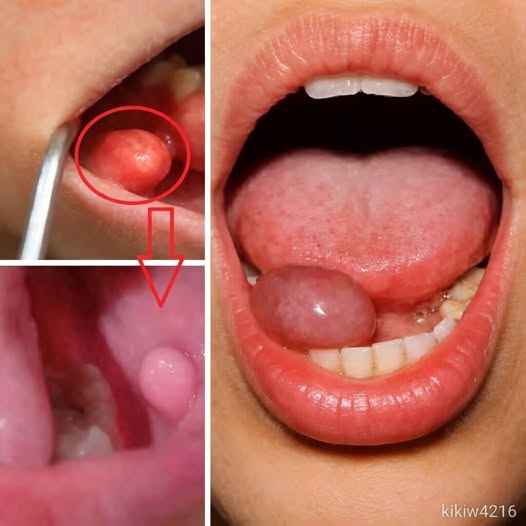
That unsettling moment when you first notice a strange bump inside your mouth can feel surprisingly alarming. Whether you catch a glimpse of it in the mirror or feel it with your tongue while eating or speaking, the sudden appearance of a soft, rounded swelling—especially one that looks translucent, bluish, or slightly pink—can quickly spark worry. Many people immediately fear infection, a serious growth, or even something far more dangerous. However, in a large number of cases, what you are seeing is something far less concerning: a common and benign condition known as an oral mucocele.
An oral mucocele, often referred to as a mucous cyst, is one of the most frequently encountered minor salivary gland conditions. Despite its sometimes alarming appearance, it is typically harmless, painless, and self-limiting. Understanding what it is, why it forms, and how it behaves can significantly reduce anxiety and help you respond appropriately if you ever encounter one.
The first signs of a mucocele usually appear quite suddenly. Many individuals report that the bump seemed to appear “overnight” or within a very short period of time. It often presents as a smooth, dome-shaped swelling that feels soft and fluid-filled, almost like a tiny water balloon under the skin. The size can vary widely—some are barely noticeable at just a couple of millimeters, while others can grow large enough to interfere with speaking or chewing.
Color is one of the features that often causes concern. Superficial mucoceles frequently appear translucent or bluish because the trapped mucus beneath the thin lining of the mouth reflects light differently. In other cases, especially if the lesion is deeper or slightly irritated, it may appear pinkish or even mildly red. This variation in color can make it resemble other oral conditions, which is why people often worry when they first notice it.
The most common location for a mucocele is the inner surface of the lower lip. This area is particularly vulnerable to minor trauma, such as accidental biting, friction from teeth, or habitual behaviors like lip chewing or sucking. However, mucoceles can also appear on the inside of the cheeks, under the tongue, on the floor of the mouth, or even on the palate. When they occur under the tongue and become larger, they are sometimes referred to as ranulas.
One of the defining characteristics of a mucocele is that it is usually painless. Unlike infections or ulcers, which often cause discomfort or burning sensations, mucoceles tend to be asymptomatic. Some people may feel slight pressure or mild irritation, especially if the cyst becomes large or is repeatedly disturbed, but true pain is uncommon. This absence of pain can be both reassuring and confusing, as many people expect something visible and unusual to hurt.
Another hallmark feature is fluctuation in size. A mucocele may grow gradually over several days, then suddenly shrink or even disappear if it ruptures. When this happens, a clear, sticky fluid may be released into the mouth. However, if the underlying cause—usually a damaged or blocked salivary duct—remains unresolved, the cyst may refill and return. This cycle can repeat multiple times, which often leads people to seek professional evaluation.
To understand why mucoceles form, it helps to know a bit about how salivary glands function. The mouth contains numerous tiny salivary glands that continuously produce saliva to keep the oral tissues moist, aid digestion, and maintain overall oral health. These glands release saliva through small ducts. If one of these ducts becomes damaged or blocked, saliva can no longer flow properly. Instead, it leaks into the surrounding tissue or accumulates behind the blockage, forming a cyst-like swelling.
In most cases, mucoceles are caused by minor trauma. This can include accidentally biting your lip while eating, irritation from braces or dental appliances, or repeated habits like chewing on the inside of your cheek. Even subtle, unconscious behaviors—often linked to stress or concentration—can contribute to the development of these lesions. Lip piercings and sharp or misaligned teeth can also increase the risk by continuously irritating the delicate tissues inside the mouth.
There are two primary types of mucoceles: extravasation and retention. The extravasation type is by far the most common. It occurs when a salivary duct is ruptured, allowing mucus to leak into the surrounding tissue. The body responds by forming a small sac around the pooled mucus, creating the characteristic swelling. Retention mucoceles, on the other hand, occur when the duct is blocked rather than ruptured. In this case, saliva builds up behind the obstruction, leading to a similar but slightly different type of cyst.
One reassuring fact about mucoceles is that they are not dangerous. They are not cancerous, not contagious, and not caused by infections. While their appearance can mimic more serious conditions, they are considered benign and rarely lead to complications. This is why healthcare providers often recommend a conservative approach initially, especially for small and asymptomatic lesions.
Diagnosis of a mucocele is typically straightforward. Dentists and oral health professionals can usually identify it based on its appearance, location, and the patient’s history. The soft, fluid-filled nature of the bump, combined with its tendency to fluctuate in size, provides strong clues. In most cases, no additional testing is required.
However, if the lesion has unusual features—such as rapid growth, persistent pain, a firm texture, or an atypical location—further evaluation may be necessary. This could include imaging studies like ultrasound or, in rare cases, a biopsy to rule out other conditions. While these scenarios are uncommon, they highlight the importance of seeking professional advice if something doesn’t seem typical.
When it comes to treatment, many mucoceles resolve on their own. The body may gradually reabsorb the trapped mucus, and the damaged duct may heal naturally. This process can take anywhere from a few days to several weeks. During this time, it is important to avoid irritating the area further. This means resisting the urge to poke, bite, or try to pop the cyst, as doing so can increase the risk of infection or recurrence.
For those that persist, grow larger, or interfere with daily activities, medical intervention may be recommended. Treatment options vary depending on the size, location, and recurrence of the lesion. One common approach is surgical excision, where the cyst and the affected salivary gland are removed. This is a minor procedure typically performed under local anesthesia and has a high success rate with minimal risk.
Other treatment methods include laser therapy, which offers precise removal with less bleeding and faster healing, and cryotherapy, which involves freezing the lesion. In certain cases, especially for larger cysts under the tongue, a technique called marsupialization may be used to create a permanent drainage pathway.
Recurrence is possible, particularly if the underlying cause is not addressed. For example, if someone continues to bite their lip or if an irritating dental issue remains unresolved, a new mucocele may form. However, when the affected gland is properly removed and contributing factors are managed, the likelihood of recurrence is significantly reduced.
Prevention plays a key role in minimizing the risk of developing mucoceles. Becoming aware of habits like lip or cheek biting is an important first step. Stress management techniques can also help, as many of these behaviors are linked to anxiety or concentration. Maintaining good oral hygiene and addressing dental issues promptly can further reduce irritation and protect the delicate tissues inside the mouth.
Regular dental check-ups are another essential aspect of prevention. Dentists can identify potential sources of irritation, such as sharp teeth or ill-fitting restorations, and recommend appropriate solutions. For individuals with braces or other orthodontic appliances, following care instructions carefully can help prevent unnecessary trauma.
Ultimately, the experience of discovering a mucocele often begins with concern but ends with reassurance. What initially թվում like a mysterious and potentially serious issue is, in most cases, a minor and manageable condition. The key is understanding its nature and knowing when to seek professional guidance.
The human body is remarkably resilient, and the mouth, in particular, is constantly adapting to minor injuries and stresses. A mucocele is simply one example of how the body responds to small disruptions in normal function. While it may look unusual, it is rarely a cause for alarm.
If you ever notice a similar bump, the best approach is to stay calm, observe it, and avoid interfering with it. If it doesn’t resolve within a few weeks, continues to grow, or causes discomfort, a visit to a dental professional can provide clarity and peace of mind.
In the end, knowledge is the most effective remedy for the anxiety these lesions often cause. By understanding what a mucocele is and how it behaves, you can approach the situation with confidence rather than fear. What begins as a moment of uncertainty quickly becomes an opportunity to better understand your body—and to appreciate that not every unusual change signals something serious.