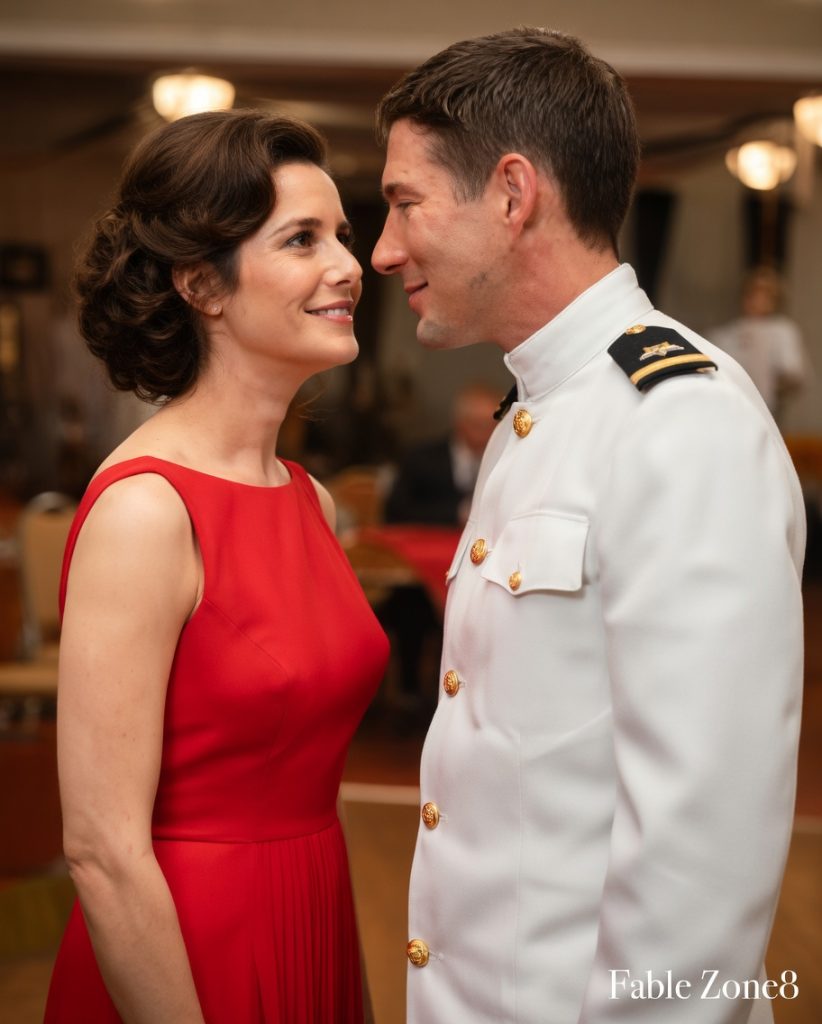
Few films manage to leave a lasting emotional imprint across generations, but An Officer and a Gentleman is undeniably one of them. Decades after its release, it continues to resonate with audiences through its powerful blend of romance, discipline, and personal transformation. On the surface, it tells the story of a troubled young man navigating the harsh realities of military training while forming a deep emotional connection. Beneath that polished narrative, however, lies a far more complicated and turbulent story—one filled with uncertainty, creative tension, and countless moments that nearly changed the film forever.
What makes the legacy of this film even more fascinating is not just what appears on screen, but everything that happened behind it.
From the earliest stages, the production faced a fundamental challenge: defining its identity. Was it primarily a love story? A character-driven drama? Or a gritty depiction of military life? The lack of a clear direction initially created hesitation among those involved. Studios questioned its tone, unsure whether audiences would embrace a story that blended emotional vulnerability with the rigid intensity of naval training.
This uncertainty extended directly into casting.
The role of Zack Mayo, eventually portrayed by Richard Gere, was not an immediate or obvious choice. Several actors were considered, each bringing a different interpretation of the character. The filmmakers struggled to find someone who could convincingly portray both toughness and emotional depth—qualities essential to the role. When Gere was ultimately cast, he brought a quiet intensity that reshaped the character, giving Zack Mayo a layered complexity that became central to the film’s success.
But casting him was only the beginning of the challenges.
Behind the scenes, the working relationship between Gere and his co-star Debra Winger was famously strained. While their on-screen chemistry felt natural and compelling, the reality off camera was far more complicated. Reports from the set describe a dynamic filled with friction, creative disagreements, and personality clashes. Their differing approaches to acting and communication often led to tension, creating an environment that was anything but harmonious.
Paradoxically, this tension may have contributed to the authenticity audiences experienced. The emotional distance and occasional discomfort between the actors translated into a realism that made their interactions feel raw and genuine. It is one of those rare instances where conflict behind the scenes enhanced the emotional truth of the story rather than undermining it.
Another key figure in shaping the film’s intensity was Louis Gossett Jr., who played the tough and unforgettable drill instructor. His performance would go on to earn him an Academy Award, but achieving that level of authenticity required a deliberate approach. The director encouraged Gossett Jr. to maintain a strict separation from the rest of the cast during filming, reinforcing the authority and intimidation his character needed to embody.
This method created a palpable sense of unease among the actors, particularly during training scenes. The environment was intentionally challenging, pushing performers both physically and emotionally. These sequences were not merely staged—they were designed to feel real, and that realism came at a cost.
Filming the training scenes proved to be one of the most demanding aspects of production. Actors underwent rigorous physical routines to convincingly portray military candidates. The exhaustion, frustration, and pressure seen on screen were not entirely fabricated. In some cases, performers were pushed beyond their comfort zones, resulting in genuine fatigue and occasional injuries.
These challenges slowed production and forced adjustments to the shooting schedule. Scenes had to be reworked, timelines shifted, and expectations constantly recalibrated. Yet despite these setbacks—or perhaps because of them—the final result carried a sense of authenticity that would have been difficult to replicate under more controlled conditions.
Beyond the physical demands, emotional scenes presented their own set of complications.
At the time the film was made, industry standards around actor comfort and consent were not as clearly defined as they are today. Some actors later reflected on moments that felt unexpectedly intense or insufficiently discussed beforehand. These experiences added another layer of complexity to the production, highlighting the evolving nature of filmmaking practices and the importance of communication on set.
Still, the performances that emerged were undeniably powerful.
One of the most surprising elements of the film’s journey lies in the scenes that almost didn’t make it into the final cut. During post-production, there was significant debate about the tone and pacing of certain moments. Some scenes were considered too emotional, too dramatic, or inconsistent with the film’s grounded narrative style.
The most famous example, of course, is the ending.
The iconic final scene—where Zack Mayo arrives in full uniform to carry Paula out of the factory—was initially met with skepticism. Critics within the production team argued that it felt overly sentimental, almost unrealistic compared to the film’s otherwise restrained tone. There were serious discussions about altering or even removing it altogether.
Yet when the scene was tested with audiences, the response was overwhelming.
Viewers connected deeply with its emotional payoff, embracing it as a satisfying and uplifting conclusion. What had once been considered a potential misstep became the defining moment of the film—a scene that would go on to be referenced, parodied, and celebrated for decades.
This turning point illustrates an important truth about filmmaking: creators do not always know which elements will resonate most strongly with audiences. Sometimes, the risks that feel uncertain during production become the very aspects that define a film’s legacy.
In addition to major creative decisions, the film also contains numerous small imperfections—details that attentive viewers may notice upon closer inspection. Continuity errors, subtle inconsistencies in props or wardrobe, and minor shifts between shots are scattered throughout the movie. These flaws are not unusual, especially in productions facing tight schedules and logistical challenges.
Rather than detracting from the experience, however, these imperfections add a layer of authenticity. They serve as reminders that even the most celebrated films are the result of human effort—complex, imperfect, and constantly evolving.
What ultimately makes An Officer and a Gentleman so enduring is not just its story, but the way it was shaped by adversity. The film did not emerge from a seamless process guided by perfect alignment. Instead, it was forged through uncertainty, disagreement, and persistence.
Each challenge forced the cast and crew to adapt, to rethink, and to push forward despite obstacles. Creative differences led to stronger performances. Production setbacks encouraged innovation. Emotional tension translated into compelling storytelling.
In many ways, the film’s journey mirrors the transformation of its main character.
Just as Zack Mayo is shaped by hardship and discipline, the film itself was shaped by the difficulties of its creation. It is a testament to the idea that meaningful results often emerge not from ideal conditions, but from the ability to navigate imperfection.
Looking back, it is difficult to imagine the film any other way.
The casting feels inevitable, the performances iconic, the ending unforgettable. Yet each of these elements was once uncertain, debated, or at risk of being lost entirely. The version audiences now cherish is the result of countless decisions—some intentional, others born out of necessity.
This is what gives the film its lasting power.
It is not just a story about love or ambition. It is a reflection of the creative process itself—a reminder that art is rarely linear, rarely predictable, and rarely perfect. It is shaped by the people involved, the challenges they face, and the choices they make along the way.
In the end, An Officer and a Gentleman stands as more than just a successful film. It is an example of how tension, risk, and uncertainty can come together to create something enduring. It shows that behind every polished final product lies a complex journey, filled with moments that could have changed everything.
And perhaps that is why it continues to resonate.
Because beneath its iconic scenes and emotional impact lies a deeper truth: that greatness is not the absence of flaws, but the ability to transform them into something meaningful.