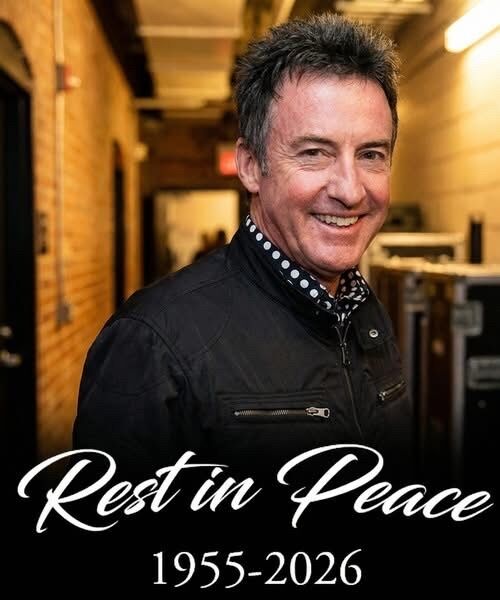
The news of his passing settled slowly, like the final reverberation of a drum struck with intention and restraint, leaving behind a silence that felt heavier than sound. At seventy, after a long and unflinching battle with pancreatic cancer, the founding drummer of Midnight Oil died not as a fading echo of a former era, but as a figure whose influence remained vividly present at the moment it ceased. For decades, his rhythms had functioned as a kind of moral pulse, steady and insistent, driving songs that refused comfort in favor of truth. Midnight Oil was never background music, and neither was he a background presence. Together, they helped shape a national and international consciousness, using rock not as escape but as engagement. His death was felt not only by fans of Australian music, but by anyone who had ever believed that art could challenge power, provoke reflection, and demand accountability without sacrificing emotional force. The grief that followed was not loud or theatrical; it was thoughtful, reflective, and shared quietly across generations who had grown up with his music as a companion to political awakening, personal conviction, and collective responsibility.
When Midnight Oil formed in Sydney in 1972, Australia was in the midst of social and cultural change, and the band emerged not as commentators from a distance but as participants deeply embedded in the tensions of their time. From the beginning, the drummer’s approach to his instrument reflected a philosophy rather than a pursuit of spectacle. His playing was precise, economical, and disciplined, built around the belief that rhythm exists to serve meaning. While many rock drummers chased virtuosity or volume, he focused on structure and momentum, understanding that restraint could be more powerful than excess. This sensibility became foundational to Midnight Oil’s sound, allowing the band to navigate complex emotional terrain without losing clarity or urgency. In small pubs and crowded venues, his beats held everything together, giving shape to performances that often felt confrontational, communal, and cathartic all at once. As the band’s reputation grew, so did the recognition that their power came not from individual showmanship, but from collective purpose, with the drummer acting as both anchor and compass.
The band’s rise to international prominence in the 1980s marked a turning point not only for Midnight Oil, but for the idea of what Australian rock could represent on the global stage. Albums such as Diesel and Dust and Blue Sky Mining carried explicitly political messages into mainstream consciousness, challenging listeners to confront issues of Indigenous land rights, environmental destruction, and corporate exploitation. Songs like “Beds Are Burning” became anthems not because they softened their message, but because they delivered it with clarity, urgency, and conviction. Behind these songs was a drummer who was not content to remain a technician, but who actively contributed to songwriting and conceptual development. His involvement in lyrics and structure reflected a mind deeply engaged with the ethical implications of the band’s work. He understood that rhythm could underscore protest just as effectively as words, creating tension, propulsion, and resolve. This fusion of music and message earned Midnight Oil both commercial success and critical respect, culminating in numerous awards and recognition, including induction into the ARIA Hall of Fame, an acknowledgment of significance rather than mere popularity.
Despite global acclaim, he remained notably grounded, resistant to the trappings of celebrity that often distort creative purpose. Colleagues consistently described him as thoughtful, analytical, and quietly principled, someone who valued preparation and integrity over spontaneity or ego. Within the band, he was often the stabilizing force, bringing perspective during moments of disagreement and focus during periods of transition. His influence extended beyond the stage and studio into the culture of the group itself, shaping how decisions were made and how responsibility was shared. Outside of Midnight Oil, his artistic life continued to evolve in ways that revealed different dimensions of his character. His solo work explored more introspective themes, allowing space for reflection that contrasted with the band’s collective urgency. One of the most poignant chapters of his later life involved a musical collaboration with his daughter, formed after reconnecting years into adulthood. Their shared project was not simply an artistic endeavor, but an act of reconciliation and discovery, demonstrating how music can heal fractures and create new forms of understanding across generations.
The band’s reunion in 2016 carried emotional weight precisely because it did not feel like a nostalgia exercise. In a music industry transformed by digital platforms and shortened attention spans, Midnight Oil returned with the same seriousness of intent that had defined their earlier work. Their final studio album, Resist, released in 2022, was uncompromising in tone and message, addressing contemporary injustices with undiminished urgency. It stood as evidence that age had not softened their convictions, but sharpened them. The farewell tour that followed was both celebratory and defiant, offering audiences a chance to witness a body of work that had never retreated from its principles. Night after night, the drummer delivered performances marked by focus and endurance, aware, perhaps, of the significance of these final moments. Even as his health declined, he continued to speak about songwriting as an enduring presence, something that remains when physical strength fades. There was dignity in this persistence, a refusal to disengage from the world or from the creative process that had defined his life.
In the wake of his death, tributes arrived from across continents, reflecting a legacy that extended far beyond national borders. Fellow musicians spoke of his intelligence, his economy of expression, and his unwavering commitment to meaning. Fans revisited albums that had once accompanied protests, personal transformations, and moments of moral reckoning. Statements from the band acknowledged the inadequacy of words in the face of such loss, while affirming that the music endures as a living testament. His daughter’s reflections added a deeply human dimension, reminding the world that behind the public figure was a father, collaborator, and individual capable of growth and reconciliation. Ultimately, his legacy is not confined to recordings or accolades, but lives on in the continued relevance of the questions his music asked. Through rhythm, restraint, and resolve, he demonstrated that rock music can be a vehicle for conscience as well as sound. Though the final drumbeat has faded, its echo continues to challenge, inspire, and remind listeners that purpose and passion need not be sacrificed to power or time.