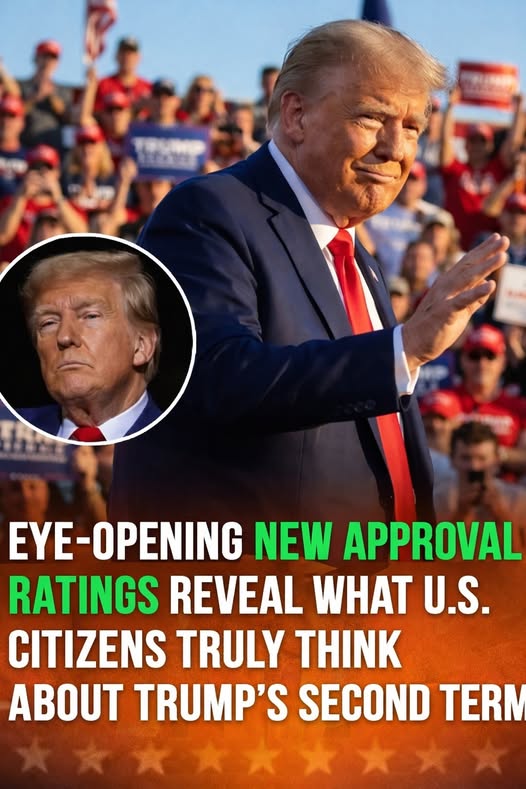
If you only listened to President Donald Trump and his closest allies, you might assume his second term has already transformed the nation. In speeches, interviews, and social media posts, Trump presents a narrative of unbroken success: booming revenue from tariffs, historically low inflation, strengthened national defense, and policies designed to revitalize American influence abroad. His messaging emphasizes victory, progress, and momentum, painting a picture of a country moving confidently toward prosperity under his leadership. The imagery is consistent and clear: America is winning, and the administration’s claims suggest that every measure of performance confirms it.
Yet beneath the confident messaging, public opinion tells a more nuanced story. Critics argue that much of Trump’s rhetoric relies on selective interpretation of data and highly framed successes, often overlooking complications or unintended consequences. While administration officials highlight positive statistics, many Americans experience economic, social, and political pressures that contradict the rosy narrative. Unemployment numbers, cost-of-living concerns, and ongoing debates about healthcare, housing, and security reveal a society that does not uniformly feel the benefits Trump emphasizes. This divergence between official messaging and lived experience fuels debate about whether reported achievements align with what ordinary citizens encounter daily.
Foreign policy and immigration policies have emerged as particularly contentious areas. Trump continues to present himself as a stabilizing figure internationally, yet specific decisions and public statements have triggered concern among foreign policy experts and segments of the American electorate. Domestically, immigration enforcement remains a polarizing issue, with some voters praising strict measures while others express unease over potential humanitarian impacts and social tensions. Unresolved controversies from previous political battles, coupled with ongoing investigations, also shape public perception, creating a climate where optimism from the administration is met with deep skepticism in many communities.
Polling data illustrate this divide vividly. A recent survey conducted by the AP-NORC Center for Public Affairs Research shows that approval of Trump’s performance remains relatively steady, with about 40% of adults expressing support and 59% voicing disapproval. This consistency suggests entrenched political loyalties rather than shifting opinions, with long-time supporters maintaining strong backing and critics holding firm opposition. Even on key policy areas such as the economy, immigration, foreign affairs, and trade, approval ratings hover in the high 30% range, while disapproval exceeds 60%. The data underscore a persistent polarization, highlighting the gap between presidential optimism and public sentiment.
Economic issues, often central to Trump’s platform, show particularly mixed reactions. While the administration points to tariff revenues and inflation control as markers of success, many Americans continue to report difficulty managing day-to-day expenses, housing costs, and household budgets. On trade and international agreements, opinions are similarly divided, with some citizens crediting Trump’s assertive policies for perceived gains and others questioning their long-term impact. This tension between official statistics and personal experience contributes to a broader sense that, despite visible achievements, tangible benefits are unevenly felt, reinforcing the skepticism reflected in polling trends.
Ultimately, the early months of Trump’s second term illustrate the complex interplay between rhetoric, policy, and public perception. While the president and his administration portray steady momentum and national resurgence, the majority of Americans remain unconvinced, assessing the nation’s progress through personal experience, broader societal concerns, and the unresolved controversies that continue to shape political discourse. This enduring divide—between confidence and skepticism, between projected success and lived reality—highlights the challenges of leadership in a polarized society and frames the ongoing narrative of Trump’s presidency as one where perception and policy frequently diverge.