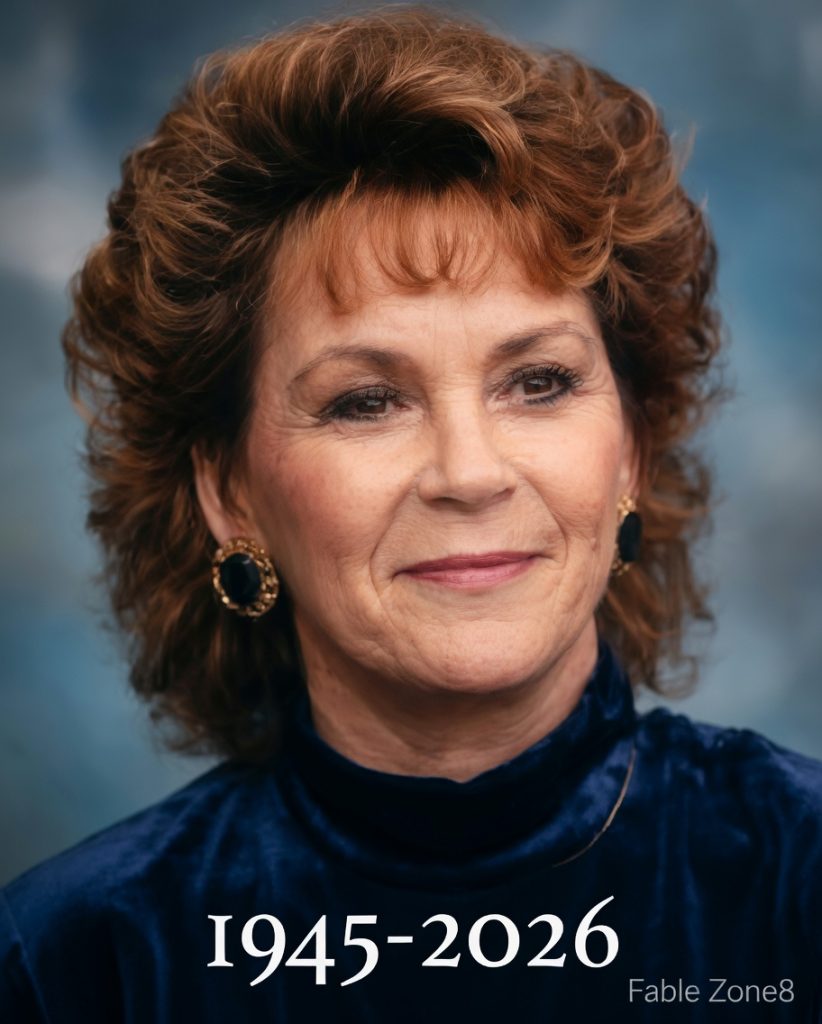
The passing of Lauren Ann Chapin at the age of 80 marks the end of a life that resonated deeply across generations, both for the joy she brought to audiences as a child and for the honesty and resilience she later showed as an adult. Best known for her role as Kathy “Kitten” Anderson on the beloved television series Father Knows Best, Chapin’s story extends far beyond the laughter and warmth of mid-century entertainment. It is a story of transformation—of navigating the challenges of early fame, confronting personal struggles, and ultimately finding purpose and meaning in a life that evolved far beyond the screen.
Born on May 23, 1945, Lauren Chapin entered the entertainment industry at a time when television itself was still in its formative years. The 1950s marked a period of rapid growth in American media, with families gathering around black-and-white sets to watch stories that reflected both reality and aspiration. Within this landscape, Chapin found her place as one of the most recognizable child actors of her era.
Her breakthrough came with Father Knows Best, a show that would go on to define an entire generation’s understanding of family life. The series, which aired from 1954 to 1960, starred Robert Young as Jim Anderson and Jane Wyatt as Margaret Anderson, portraying an idealized American household grounded in values of love, understanding, and moral clarity. Within this setting, Chapin’s character—Kathy, affectionately called “Kitten”—served as the youngest and perhaps most endearing member of the family.
Kathy Anderson was a character full of life—curious, playful, and emotionally expressive in ways that resonated deeply with viewers. Chapin’s natural talent allowed her to bring authenticity to the role, making Kathy feel real rather than scripted. Her laughter, her questions, and her innocent mischief became central to the show’s charm. For many viewers, she embodied the essence of childhood itself.
But the impact of Father Knows Best went beyond entertainment. It offered a vision of family life that many aspired to, even if it was not always reflective of reality. The Anderson household was a place where problems were resolved with calm conversations, where misunderstandings led to lessons, and where love was always the underlying force. Chapin’s role within this environment contributed significantly to its emotional appeal, making her an integral part of the show’s lasting legacy.
During her time on the series, Chapin also appeared in other productions, including a small role in the 1954 film A Star Is Born, starring Judy Garland. These early experiences demonstrated her versatility as a performer and hinted at a promising career beyond a single role. Yet, despite these opportunities, it was Kathy Anderson who would remain her most iconic character.
As the show concluded and Chapin transitioned out of childhood, her life took a direction that contrasted sharply with the image audiences had come to associate with her. Like many child actors, she faced the challenge of redefining herself in a world that no longer saw her as the character she once portrayed. The transition from public adoration to personal independence can be difficult under any circumstances, but for those who grow up in the spotlight, it often comes with added complexity.
Chapin later spoke openly about the struggles she faced during this period. These included personal hardships, emotional challenges, and the difficulty of finding stability after years of being defined by a single role. Her experiences shed light on a broader issue within the entertainment industry—the pressures placed on young performers and the lack of support systems available to them once their early success fades.
Her willingness to share these aspects of her life was both courageous and impactful. At a time when many public figures chose to maintain a carefully curated image, Chapin embraced honesty. She spoke about her journey not to seek sympathy, but to offer understanding and connection to others who might be facing similar challenges.
Over time, her story began to shift from one of struggle to one of resilience. Chapin found strength through personal reflection and faith, gradually rebuilding her life and discovering new avenues for purpose. She became involved in ministry work, using her experiences to reach out to others and provide support and encouragement. Her message was simple yet profound—that no matter how difficult the past may be, it is always possible to move forward.
This phase of her life introduced a new dimension to her legacy. She was no longer just remembered as a child star from a beloved sitcom, but as a woman who had faced adversity and emerged with a renewed sense of purpose. Her journey resonated with many who saw in her story a reflection of their own struggles and hopes.
Despite the challenges she faced, Chapin never lost her connection to the role that first brought her into the public eye. She remained engaged with fans of Father Knows Best, attending events, participating in interviews, and sharing memories of her time on the show. For those who had grown up watching the series, seeing her in later years provided a sense of continuity—a reminder that the characters they loved were connected to real people with evolving lives.
The enduring popularity of Father Knows Best played a significant role in keeping Chapin’s legacy alive. The show’s themes of family, respect, and moral guidance continued to resonate with audiences long after its original run. Reruns introduced new generations to the Anderson family, allowing Chapin’s performance to reach viewers who had not been alive during the show’s initial broadcast.
For many, watching the series became a shared experience across generations. Parents who had grown up with the show introduced it to their children, creating a sense of continuity that extended beyond the screen. In this way, Chapin’s work became part of a larger cultural tradition, one that celebrated the values and storytelling style of a bygone era.
As news of her passing on February 24, 2026, spread, tributes began to pour in from fans, historians, and members of the entertainment community. Social media platforms were filled with images of her as Kathy Anderson, accompanied by messages of gratitude and remembrance. For many, these tributes were not just about nostalgia, but about appreciation for the role she played in their lives.
Her family confirmed that she had been battling cancer, and that she passed away peacefully, surrounded by loved ones. Their announcement emphasized not only her contributions to entertainment, but also the strength and character she demonstrated throughout her life. They expressed gratitude for the support she received during her illness and for the lasting impact she had on those who knew her work.
Chapin’s legacy can be understood in two distinct but interconnected ways. On one hand, she will always be remembered as Kathy “Kitten” Anderson—the cheerful, curious child who brought warmth and humor to millions of viewers. On the other hand, she will be remembered as Lauren Ann Chapin—the woman who faced life’s challenges with honesty, resilience, and a commitment to growth.
These two aspects of her identity are not separate, but complementary. Together, they create a fuller picture of a life that encompassed both public success and private transformation. They remind us that behind every character is a person, and that the stories we see on screen are only part of a much larger narrative.
Her journey also serves as a broader reflection on the nature of fame and identity. It highlights the importance of support systems for young performers, the challenges of transitioning out of early success, and the potential for growth and renewal even after difficult experiences. In sharing her story, Chapin contributed to a deeper understanding of these issues, offering insights that remain relevant today.
In the years to come, her work will continue to be revisited by those who appreciate the history of television and the performances that shaped it. Father Knows Best will remain a touchstone of its era, and Chapin’s role within it will continue to be celebrated as one of its most memorable elements.
At the same time, her personal journey will serve as an inspiration to those who value resilience, honesty, and the courage to evolve. It is a reminder that life is not defined solely by its early chapters, but by the choices we make as we move forward.
As we reflect on her life, it becomes clear that Lauren Ann Chapin’s impact extends far beyond the boundaries of a single role or a single period of time. She touched lives through her performances, her words, and her willingness to share her experiences with others. She demonstrated that even in the face of adversity, it is possible to find meaning, connection, and hope.
Her story is one of contrast and continuity, of innocence and experience, of challenge and triumph. It is a story that resonates because it is deeply human, reflecting the complexities and possibilities that define us all.
And as the world remembers her—not only as the bright-eyed child on a television screen, but as the woman she became—it is clear that her legacy will endure, carried forward by the memories she created and the lives she touched.
She will be remembered with affection, respect, and gratitude—a lasting presence in the history of television and in the hearts of those who grew up watching her smile.