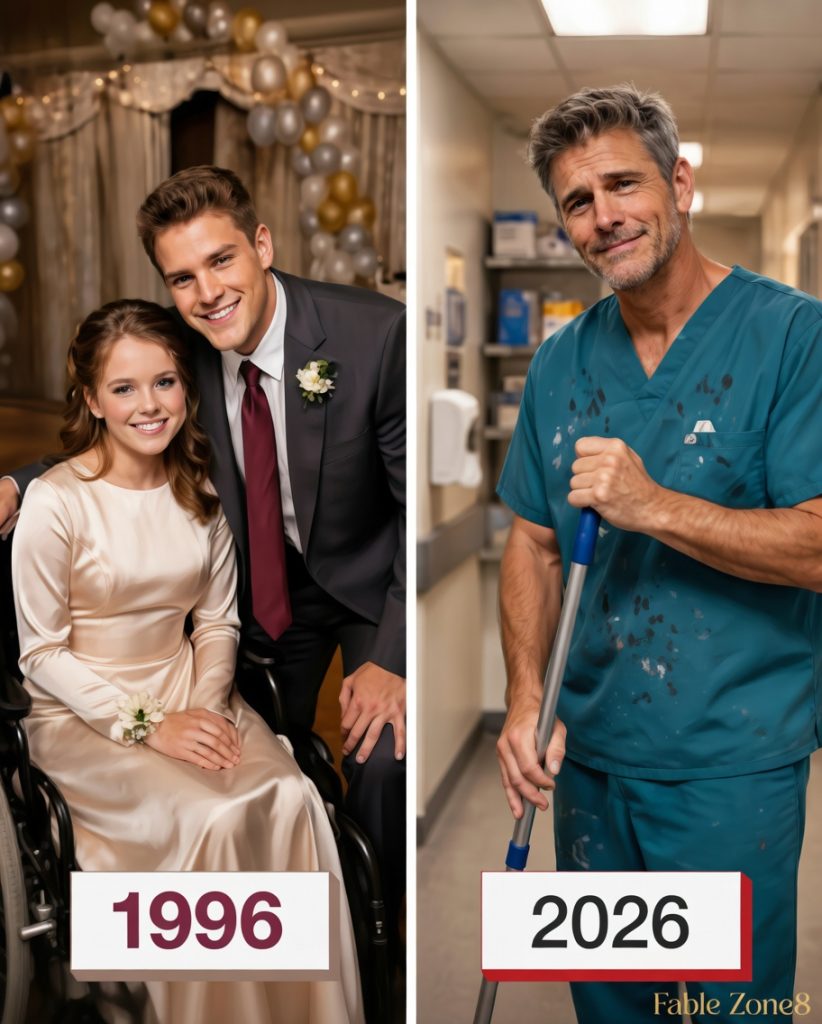
Six months after the accident, I barely recognized myself—not just in the mirror, but in the quiet spaces inside my own mind where confidence used to live so effortlessly. Before everything changed, my life had been simple in the best possible way. School days blurred into laughter with friends, small plans felt exciting, and the future seemed like something I could step into without hesitation. I didn’t overthink who I was or how others saw me. I simply existed, comfortably, without question.
Then, in a single moment, that version of my life disappeared.
The recovery that followed wasn’t something anyone could fully prepare me for. People talked about healing as if it were a straight path, something you moved through step by step until you reached the other side. But it wasn’t like that at all. It was uneven, unpredictable, filled with small victories that often went unnoticed and setbacks that felt far larger than they should have been. Some days I felt almost like myself again. Other days, I felt like a stranger trying to learn how to exist in a body and life that no longer felt familiar.
What made it harder was the awareness of how I was seen by others. People were kind—genuinely kind—but there was something behind their words that I couldn’t ignore. A softness. A caution. As if they weren’t quite sure how to interact with me anymore. I became aware of every glance, every pause, every shift in tone. Even when no one said anything, I felt it.
By the time prom season arrived, I had already decided I wouldn’t go.
The idea of dressing up, standing in a room full of people, pretending everything was normal—it felt impossible. I couldn’t imagine myself there without feeling exposed, like everyone would be watching me, noticing every difference, every limitation I was still learning to accept.
But my mother didn’t push. She didn’t try to convince me or argue or tell me I would regret it. She simply said, “Life doesn’t pause while we heal. Sometimes you don’t go because you’re ready. Sometimes you go because you hope you might be.”
That stayed with me.
So I went.
Not because I felt confident. Not because I believed it would be fun. But because a small, quiet part of me wanted to believe she was right.
The gymnasium looked exactly as I remembered it—decorations strung carefully across the walls, lights dimmed just enough to create atmosphere, music echoing across the room in a way that made everything feel slightly surreal. It was familiar, but I wasn’t.
I stood near the wall, trying to convince myself that being there was enough. That I didn’t need to participate fully to belong. People came over, one by one, offering kind words, compliments, gentle questions about how I was doing. I appreciated it, I really did. But their attention was brief, and understandably so. They had their own nights to live, their own memories to create.
And so they returned to the dance floor.
I stayed where I was.
Watching.
Not bitter. Not angry. Just… separate.
It felt like I was observing a life I used to be part of, but couldn’t quite reach anymore.
And then, without warning, everything shifted.
Marcus walked over.
I knew who he was, of course. We had shared classes, exchanged a few words over the years, existed in the same spaces without ever truly crossing paths in a meaningful way. He wasn’t someone I expected to approach me, and yet there he was—calm, steady, completely at ease.
There was no hesitation in him. No awkwardness.
He smiled, simple and genuine, and asked, “Do you want to dance?”
For a moment, I didn’t know how to respond. My instinct was to protect myself—to avoid the situation before it could become uncomfortable. So I told him the truth, quietly, carefully.
“I can’t really dance like everyone else.”
I expected him to nod politely. To say something kind and move on. That’s what most people did when faced with something they didn’t quite understand.
But Marcus didn’t move.
He didn’t rush to fill the silence or pretend it didn’t matter.
Instead, he said something I didn’t expect.
“Then we’ll do it differently.”
There was no pity in his voice. No hesitation. Just a simple statement, as if it were the most natural thing in the world.
I didn’t believe him at first.
But he stayed.
Patient.
Present.
As if there was nowhere else he needed to be.
Slowly, we found a rhythm. Not one that matched the music perfectly, not one that would have impressed anyone watching—but one that worked for us. He adjusted without making it obvious. He followed when I needed to lead, and guided gently when I felt unsure.
At no point did he make me feel like I was slowing him down.
At no point did he make me feel like I was different.
For the first time since the accident, I laughed without thinking about it first.
It came naturally. Effortlessly. Like it used to.
And in that moment, something inside me shifted.
It wasn’t dramatic. It didn’t fix everything. But it mattered.
Because for those few minutes, I wasn’t defined by what had happened to me.
I wasn’t the girl recovering.
I wasn’t the girl people approached carefully.
I was just… me.
That night didn’t transform my life overnight. The days that followed were still complicated. Recovery was still slow. There were still moments of doubt, frustration, and quiet exhaustion.
But something had changed.
That experience stayed with me—not as a grand turning point, but as a quiet reminder.
I wasn’t as alone as I felt.
And maybe, just maybe, I wasn’t as limited as I believed.
As time passed, I began to rebuild my life in small, steady ways. Confidence didn’t return all at once—it came in pieces. In moments. In choices.
Eventually, I discovered a passion I hadn’t expected.
Design.
But not just design in the traditional sense. I wasn’t interested in creating spaces that simply looked beautiful. I wanted to create spaces that felt different. Spaces where people didn’t have to question whether they belonged.
Spaces where no one felt like they had to stand on the sidelines.
I didn’t fully realize it at the time, but that desire came directly from that night. From the feeling of being included without conditions. From the way Marcus had made something simple feel possible.
Years passed.
Then decades.
Life unfolded the way it always does—unpredictably, imperfectly, but meaningfully. I built a career, relationships, a life that felt grounded not in what I had lost, but in what I had learned.
Marcus became a memory.
A good one.
But distant.
Something I carried quietly without thinking about too often.
Until one afternoon, everything shifted again.
I was sitting in a small café, the kind of place you don’t think twice about until it becomes important later. It was quiet, comfortable, filled with the soft sounds of conversation and the steady rhythm of everyday life.
I was focused on my coffee when I felt someone pause near my table.
I looked up.
And for a moment, nothing made sense.
It took a second to recognize him.
But when I did, it was immediate.
Marcus.
Older, of course. Just like me.
But unchanged in the ways that mattered.
The same calm presence.
The same quiet kindness.
He smiled, and it felt like no time had passed at all.
We started talking—about life, about where we had been, about everything and nothing. But beneath the surface, there was something deeper.
A shared understanding.
A memory that had never fully disappeared.
As we talked, I learned that his life hadn’t been easy either. He had faced challenges I hadn’t known about, taken on responsibilities that shaped him in ways I was only beginning to understand.
But there was no bitterness in him.
Only honesty.
And strength.
We didn’t try to recreate the past.
We didn’t need to.
Instead, we let the present unfold naturally.
What started as a chance meeting became something more—not built on nostalgia, but on who we had become.
We supported each other.
Respected each other.
Understood each other in ways that didn’t require explanation.
Over time, that connection grew into something lasting.
Something real.
We began working together, combining our shared values into something tangible. We created spaces designed for inclusion, for comfort, for connection.
Spaces where no one felt invisible.
And one evening, at the opening of one of those spaces, I found myself standing in a room filled with people—laughing, moving, existing freely.
For a moment, I was transported back to that gymnasium.
But this time, I wasn’t standing by the wall.
Marcus walked over.
Just like he had all those years ago.
He didn’t say much.
He didn’t need to.
He simply held out his hand.
“Do you want to dance?”
This time, I didn’t hesitate.
Because we already knew how.
And as we moved—imperfectly, naturally, together—I understood something I hadn’t fully grasped before.
That one moment at prom hadn’t just changed that night.
It had shaped everything that came after.
It had shown me what kindness can do when it expects nothing in return.
Some moments don’t seem important when they happen.
They pass quietly.
Almost unnoticed.
But they stay with us.
Guiding us.
Shaping us.
Leading us, sometimes, back to where we’re meant to be.
And sometimes, if we’re lucky…
Life gives us the chance to continue the story they began.