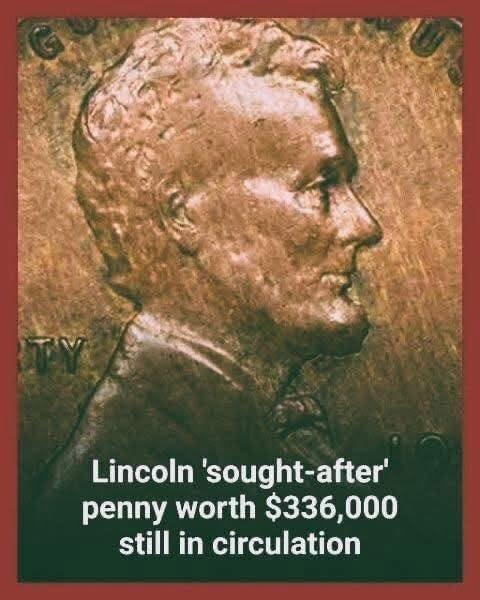
It sounds almost unbelievable, but one of the most valuable coins in American history could still be hiding in plain sight—mixed in with everyday pocket change, forgotten coin jars, or old piggy banks. The legendary 1943 Bronze Lincoln Penny is not just rare; it’s a mistake that turned into a treasure. And because it once circulated like any ordinary coin, there remains a small but real possibility that one could still be out there, waiting to be discovered by someone who knows what to look for.
To understand why this coin is so valuable, you have to go back to 1943, during the height of World War II. At the time, copper was considered a critical material for the war effort, used in ammunition, wiring, and military equipment. To conserve resources, the United States Mint made a significant change: instead of producing pennies from bronze (which is mostly copper), they began minting them from zinc-coated steel. These steel pennies had a shiny, silver-like appearance, making them easy to distinguish from the traditional reddish-brown coins Americans were used to.
However, in the transition from bronze to steel, something unexpected happened. A few leftover bronze planchets—metal blanks from 1942—were accidentally left inside the coin presses. When production began for the new 1943 pennies, these leftover blanks were struck with the 1943 date, creating a coin that was never meant to exist. This small oversight resulted in one of the most famous minting errors in history: the 1943 Bronze Lincoln Cent.
Experts believe that fewer than 20 authentic examples were ever produced across all mint locations. That extreme rarity is what drives their incredible value today. While most 1943 pennies are common steel versions worth only a small amount, the bronze error coins have sold for astonishing prices at auction. Some have reached over $200,000, and others have climbed into the million-dollar range depending on condition, origin, and history.
Part of what makes this story so fascinating is how these coins first came to light. In the late 1940s, people began noticing unusual 1943 pennies that didn’t match the typical steel appearance. At first, many assumed they were fakes. Even the Mint initially denied their existence. But as more examples surfaced and underwent testing, experts confirmed they were genuine minting errors. That revelation sparked a nationwide treasure hunt. People began checking every penny they encountered, hoping to find one of these rare coins hiding in plain sight.
So how can you tell if you might have one? There are a few simple tests. First, look at the color. A genuine 1943 bronze penny will have the familiar copper-brown tone, unlike the silvery steel version. Second, try the magnet test. Steel pennies are magnetic, while bronze ones are not. If your 1943 penny sticks to a magnet, it’s steel and not the rare version. If it doesn’t, that’s your first clue—but not proof. Weight and professional authentication are essential, as many counterfeit coins exist, including copper-plated steel pennies or altered dates from other years.
The story of this coin isn’t just about money—it’s about history, chance, and human error. Each 1943 bronze penny represents a moment when industrial efficiency met imperfection, creating something unexpectedly valuable. It’s a reminder that even in highly controlled systems, small oversights can lead to extraordinary outcomes.
Over the years, stories of everyday people discovering valuable coins have kept the legend alive. One of the most famous cases involved a teenager who found a 1943 bronze penny in his school cafeteria change. He kept it for decades, and it later sold for a significant sum, proving that these coins were not just theoretical rarities—they truly circulated among ordinary Americans.
Today, the 1943 Bronze Lincoln Cent is often considered one of the “holy grails” of coin collecting. Alongside other legendary rarities, it represents the dream that something small and overlooked could hold immense value. That idea continues to capture people’s imagination, encouraging collectors and casual observers alike to take a closer look at the coins they handle every day.
Of course, it’s important to remain realistic. The chances of finding one are extremely low. Millions of 1943 steel pennies were produced, and only a tiny handful of bronze versions exist. Still, the possibility—however small—is enough to keep the curiosity alive. After all, every one of those rare coins started as an unnoticed object, passed from hand to hand without anyone realizing its true worth.
In a broader sense, the appeal of the 1943 Bronze Lincoln Penny goes beyond its price tag. It represents a connection to a pivotal moment in history, a time when even the smallest objects reflected the priorities of a nation at war. It also reflects something deeply human: our fascination with hidden value, unexpected discovery, and the idea that something ordinary can become extraordinary under the right circumstances.
So the next time you empty your pockets or sort through old coins, take a second look. Most of what you’ll find will be ordinary—but every once in a while, history has a way of hiding in plain sight. And while the odds are slim, the story of the 1943 bronze penny reminds us that sometimes, the smallest discoveries can carry the greatest surprises.