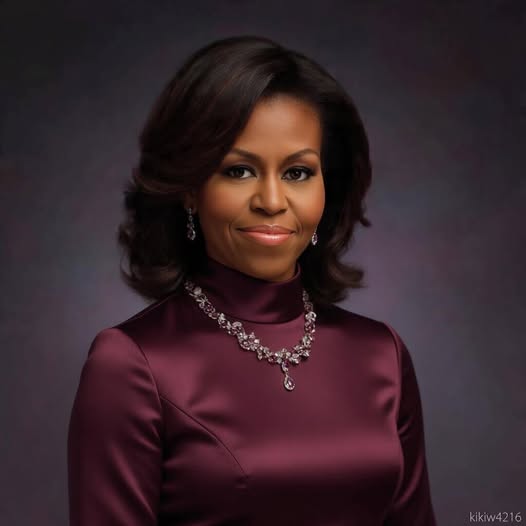
In a series of deeply personal and widely discussed interviews and podcast appearances throughout 2025 and 2026, Michelle Obama has offered one of her most transparent reflections on life after decades of public service, motherhood, and global visibility. What emerges from these conversations is not just a portrait of a woman adjusting to a quieter phase of life, but one actively redefining what fulfillment, freedom, and identity mean on her own terms. At 61, Obama describes herself as entering a stage she once could barely imagine—one where her decisions are no longer primarily shaped by obligation, but by intention, curiosity, and personal joy.
Central to this transformation is the reality that her daughters, Malia Obama and Sasha Obama, are now fully independent adults. For decades, much of Obama’s identity revolved around being a hands-on mother while simultaneously navigating the extraordinary pressures of being married to Barack Obama. From the intensity of political campaigns to the global scrutiny of the White House years, her life operated within a framework where personal needs were often secondary. Now, with the “empty nest” phase firmly in place, she describes an almost unfamiliar sense of spaciousness—time and emotional bandwidth that belong entirely to her.
Rather than framing this shift as a loss of purpose, Obama speaks of it as a liberation. She has shared vivid examples of what this freedom looks like in practice: choosing travel destinations based purely on her interests, exploring creative pursuits without needing external validation, and setting boundaries that prioritize her well-being over expectations. These are not dramatic changes on the surface, but for someone who has lived under constant observation and responsibility, they represent a profound shift in mindset. It is, as she explains, not about rejecting her past roles but integrating them in a way that no longer confines her.
A recurring theme in her reflections is how society often overlooks or undervalues this stage of life for women. Particularly for women who have been conditioned to equate strength with endurance and sacrifice, stepping into personal freedom can feel unfamiliar—even uncomfortable. Obama challenges this narrative by presenting midlife not as a winding down, but as a powerful period of reinvention. Her message resonates across generations: that fulfillment should not be indefinitely postponed, and that self-discovery does not have an expiration date.
Closely tied to this newfound freedom is her candid discussion about therapy. In multiple conversations, including episodes of her podcast “IMO,” which she co-hosts with her brother Craig Robinson, Obama has emphasized that returning to therapy was not a reaction to crisis but a proactive decision. She describes it as a “tune-up”—a way to recalibrate during a major life transition. This framing is significant, as it challenges lingering stigmas around mental health support, particularly among high-achieving individuals and within communities where therapy has historically been underutilized.
Obama explains that the transition into an empty nest brought unexpected questions about identity and purpose. Without the daily structure of parenting, she found herself reflecting on who she is outside of her roles. Therapy, in this context, became a space to unpack long-standing patterns—habits formed during her upbringing in Chicago, reinforced during her years in public life, and shaped by the expectations placed upon her as a global figure.
One of the key insights she shares is the tendency to tie self-worth to productivity. Like many high achievers, Obama admits she spent years measuring her value by what she accomplished or contributed to others. Through therapy, she has worked to separate her inherent worth from her output—a shift that she describes as both challenging and liberating. Techniques such as journaling, mindfulness, and regular self-reflection have become part of her routine, helping her stay grounded while navigating ongoing public attention.
Her openness has had a ripple effect, encouraging broader conversations about mental health. By normalizing therapy as a tool for growth rather than a sign of weakness, she continues to use her platform to reshape perceptions. Importantly, she also connects this inner work to her broader theme of freedom, noting that true autonomy requires self-awareness. Without understanding one’s patterns and triggers, it is easy to carry old limitations into new phases of life.
Another area where Obama’s reflections have drawn significant attention is her marriage. After more than three decades together, she and Barack Obama are experiencing a new dynamic—one no longer centered around raising children or navigating political life. She describes this phase as an opportunity to rediscover each other, to reconnect in ways that were difficult during busier years.
In addressing persistent public speculation about their relationship, Obama has been both candid and firm. She dismisses rumors of serious issues with a mix of humor and clarity, emphasizing that their relationship, like any long-term partnership, has evolved over time. What stands out in her discussions is not an idealized portrayal of marriage, but a realistic one—acknowledging both the challenges and the ongoing effort required to maintain connection.
She highlights the role of communication, noting that couples therapy has been a valuable tool in strengthening their relationship. By creating space for honest dialogue, they have been able to address patterns that may have gone unnoticed during more hectic periods. Simple practices, such as intentionally setting aside time to connect or expressing appreciation for small gestures, have taken on new importance.
Interestingly, Obama frames a strong partnership not as a limitation on personal freedom, but as something that can enhance it. When both individuals feel secure and supported, they are better able to pursue their own interests while maintaining a shared bond. This perspective challenges traditional notions of independence within relationships, offering a more nuanced understanding of how personal and relational growth can coexist.
Beyond her marriage, Obama has also spoken extensively about breaking generational patterns. Reflecting on her upbringing, she expresses deep gratitude for the values instilled by her parents—resilience, discipline, and a strong work ethic. At the same time, she acknowledges that some of these inherited mindsets, such as perfectionism or over-responsibility, require reevaluation in order to support a more balanced life.
Through therapy and self-reflection, she has worked to identify these patterns and consciously reshape them. This process, she emphasizes, is not about rejecting one’s roots but evolving them. By setting healthier boundaries, allowing herself to rest, and embracing imperfection, she is not only transforming her own experience but also modeling a different approach for future generations.
Her discussions often extend to broader cultural contexts, exploring how systemic challenges influence family dynamics and expectations. In doing so, she connects her personal journey to a collective one, encouraging others to examine their own inherited beliefs and consider how they might adapt them.
Living under constant public scrutiny remains an ongoing challenge, even years after leaving the White House. Obama speaks openly about the impact of media narratives, social media commentary, and the persistent curiosity surrounding her life. While she has developed coping strategies over time, she admits that it is not always easy to remain unaffected—particularly when misinformation involves her family or personal choices.
In response, she has become more intentional about setting boundaries. This includes being selective about what she shares publicly and choosing when to engage with external narratives. She emphasizes that not every rumor or criticism deserves a response, a mindset that has helped her preserve her mental and emotional energy.
Her approach to public life reflects a balance between engagement and self-protection. She continues to participate in meaningful conversations and initiatives, but on her own terms. This shift is another manifestation of the freedom she describes—an ability to prioritize authenticity over expectation.
Underlying all of these themes is a focus on self-worth. Obama speaks about this not as a fixed state but as an ongoing practice. Despite her accomplishments, she acknowledges moments of self-doubt, particularly during periods of transition. What has changed, she explains, is her response to those moments. Rather than being defined by them, she meets them with greater compassion and perspective.
She shares practical ways she nurtures this sense of self-worth: maintaining strong friendships, engaging in activities that bring intrinsic joy, and practicing gratitude. These habits, while simple, form the foundation of a more устойчив inner confidence—one that is less dependent on external validation.
Her message to others, particularly women, is both encouraging and realistic. She urges younger generations to begin cultivating self-worth early, while also reminding those later in life that it is never too late to strengthen it. This inclusive perspective is part of what makes her reflections so widely resonant.
Taken together, Michelle Obama’s recent interviews offer more than personal anecdotes—they provide a thoughtful exploration of what it means to evolve. Her willingness to share both the clarity and the complexity of this phase of life creates a narrative that is both relatable and inspiring. It is a reminder that growth does not end with achievement, and that each stage of life holds the potential for reinvention.
In embracing freedom, prioritizing mental health, nurturing relationships, challenging inherited patterns, and building unshakable self-worth, Obama presents a vision of midlife that is expansive rather than limiting. It is a vision grounded not in perfection, but in continuous learning—a perspective that invites others to approach their own lives with the same openness and intention.