Hard-boiled eggs are one of those quietly reliable foods that seem to fit into almost any routine. They’re simple to prepare, easy to store, and versatile enough to be eaten on their own or added to a variety of meals. Whether sliced into a salad, turned into a quick sandwich filling, or eaten with a pinch of salt, they offer both convenience and nutrition in a compact form.
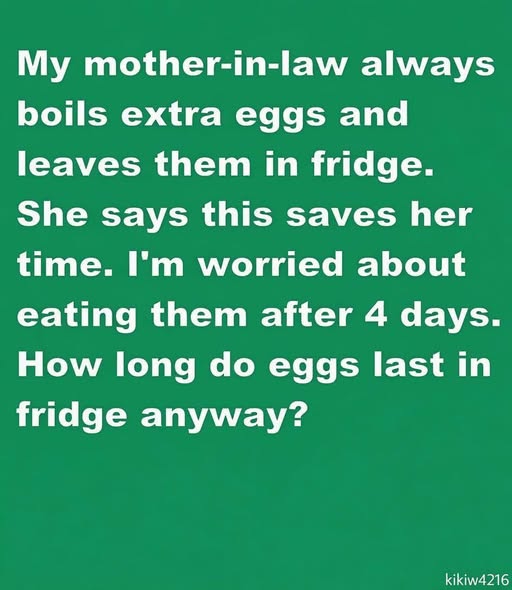
Because of that convenience, many people prepare them in batches—boiling several at once and storing them in the refrigerator for later use. It’s an efficient habit, especially in busy households. But with that efficiency often comes a lingering question: how long do hard-boiled eggs actually last in the fridge, and when should you stop eating them?
This question becomes particularly relevant a few days after preparation. By day four or five, hesitation can creep in. The eggs might still look fine, but uncertainty begins to replace confidence. Understanding what’s actually happening during storage—and how to evaluate safety—can remove that uncertainty entirely.
The Standard Shelf Life
In most cases, hard-boiled eggs can safely be stored in the refrigerator for up to seven days. This applies especially when the eggs are kept in their shells and stored properly at a consistent, cold temperature.
The shell plays an important role. Even after boiling, it acts as a protective barrier that helps reduce exposure to air, moisture, and potential contaminants. While it’s not as protective as it was before cooking, it still offers a meaningful layer of defense.
Once eggs are peeled, however, their protection decreases. Without the shell, they become more vulnerable to drying out, absorbing odors from other foods, and exposure to bacteria. Peeled eggs can still last several days, but they require more careful storage and attention.
Why Refrigeration Matters
Temperature is one of the most critical factors in determining how long food remains safe. Refrigerators slow down the growth of bacteria, which is what ultimately leads to spoilage.
For hard-boiled eggs, maintaining a steady temperature—ideally at or below 4°C (40°F)—is essential. This is why where you place the eggs in the fridge matters. The main compartment is typically more stable than the door, which experiences frequent temperature changes every time it’s opened.
Even small fluctuations can gradually reduce the quality and safety of stored food. Keeping eggs toward the back of the fridge, where temperatures are most consistent, helps preserve them longer.
The Importance of Proper Cooling
What happens immediately after boiling also affects how long eggs last.
After cooking, eggs should be cooled quickly. Placing them in cold water—or even an ice bath—helps stop the cooking process and brings their temperature down safely. This not only improves texture but also reduces the amount of time they spend in a temperature range where bacteria can grow more easily.
Once cooled, they should be dried and refrigerated promptly. Leaving them at room temperature for extended periods can shorten their safe storage time significantly.
What About Day Four?
By the fourth day, properly stored hard-boiled eggs are still well within the safe consumption window. If they were cooked thoroughly, cooled quickly, and kept refrigerated consistently, there is generally no reason for concern.
The hesitation many people feel at this point often comes from uncertainty rather than actual risk. Without clear guidelines, it’s easy to assume that anything stored for several days might no longer be safe. In reality, eggs handled correctly remain stable for nearly a week.
That said, time alone isn’t the only factor. Storage conditions, cleanliness, and the original freshness of the eggs all play a role. This is why it’s helpful to combine time guidelines with simple observational checks.
Recognizing Spoilage Signs
Even with general rules in place, it’s always wise to evaluate food before eating it—especially items that have been stored for several days.
Hard-boiled eggs offer several clear indicators when something is no longer right:
- Smell: A strong, unpleasant, sulfur-like odor is the most obvious sign that an egg has spoiled. Fresh hard-boiled eggs may have a mild scent, but it should never be overpowering or offensive.
- Texture: A slimy or sticky surface is a warning sign. The egg white should feel smooth and firm, not slippery or tacky.
- Appearance: While a greenish ring around the yolk can sometimes appear, it is usually harmless and caused by a reaction between sulfur and iron during cooking. However, unusual discoloration elsewhere should be treated with caution.
- Taste: If something seems off after a small bite, it’s best not to continue eating it.
These sensory checks are simple but effective. They add an extra layer of safety beyond just counting days.
Best Storage Practices
How you store hard-boiled eggs can significantly affect both their longevity and quality.
Keep them in the shell whenever possible.
The shell helps retain moisture and provides protection from external elements.
Use airtight containers for peeled eggs.
This prevents them from absorbing odors from other foods and keeps them from drying out.
Avoid overcrowding or pressure.
Stacking heavy items on top of eggs can crack shells and compromise their safety.
Label the storage date.
A simple note indicating when the eggs were boiled can eliminate guesswork later on.
Keep the fridge clean.
Cross-contamination from other foods can shorten shelf life, so maintaining a clean storage environment matters.
The Role of Freshness Before Cooking
Not all eggs start at the same point. The freshness of the eggs before boiling can influence how long they remain good afterward.
Eggs that were already close to their expiration date before cooking may not last as long as fresher ones. While boiling does kill many surface bacteria, it doesn’t reset the internal age of the egg.
Using fresher eggs from the start gives you a longer and more reliable storage window.
Nutritional Value Over Time
Hard-boiled eggs are valued for their nutritional content, offering protein, vitamins, and essential nutrients. Over time, while the nutritional value doesn’t disappear quickly, the quality of the egg can decline.
The texture may become firmer or slightly rubbery, and the flavor may become less appealing. These changes don’t necessarily mean the egg is unsafe, but they can affect the eating experience.
Using eggs earlier within the storage window typically provides the best balance of safety and taste.
When to Be Extra Cautious
Certain situations call for more careful consideration:
- If the refrigerator has lost power for an extended period
- If the eggs were left out at room temperature for too long
- If storage conditions were inconsistent or uncertain
In these cases, it’s safer to shorten the usual timeframe and rely more heavily on sensory checks.
Additionally, for individuals with weakened immune systems, children, or elderly family members, it may be wise to consume eggs sooner rather than later.
Reducing Waste While Staying Safe
Throwing away food unnecessarily can be frustrating, especially when it seems perfectly fine. Understanding proper storage and spoilage signs helps reduce waste while maintaining safety.
If eggs are approaching the end of their recommended storage time, using them in cooked dishes—such as salads, spreads, or baked meals—can be a practical way to use them before they lose quality.
A Balanced Perspective
Hard-boiled eggs are neither as fragile nor as long-lasting as some might assume. They sit somewhere in the middle—reliable for several days, but not indefinitely.
The key is balance:
- Follow general time guidelines
- Store them properly
- Check for obvious signs of spoilage
With these simple steps, there’s no need for guesswork or unnecessary concern.
Final Thoughts
In most cases, hard-boiled eggs stored correctly in the refrigerator remain safe to eat for up to a week. By day four, they are still comfortably within that range.
What often causes hesitation isn’t the eggs themselves, but a lack of clear information. Once you understand the basic principles—temperature control, proper storage, and simple sensory checks—the uncertainty disappears.
What remains is what hard-boiled eggs have always been: a practical, nutritious, and dependable option that fits easily into everyday life.