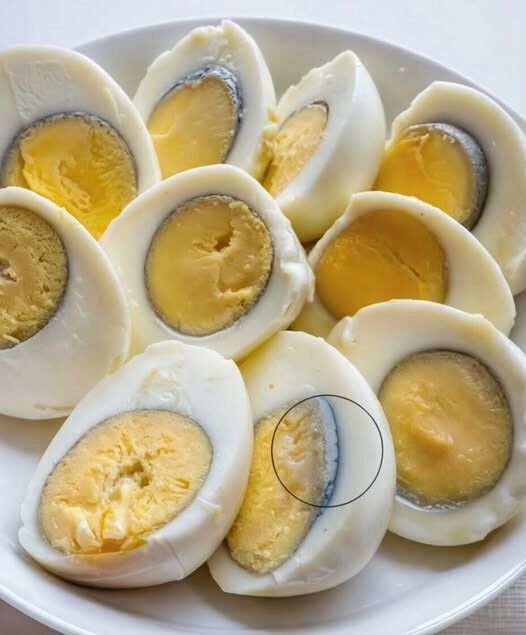
Few kitchen experiences are as simple and satisfying as preparing hard-boiled eggs—until you slice one open and notice an unappetizing greenish ring encircling the yolk. For many home cooks, this moment sparks confusion and even concern. Did something go wrong? Is the egg still safe to eat? Why does such a simple dish sometimes produce such an unexpected result?
The good news is that this phenomenon is both common and harmless. The green ring that forms around the yolk of a hard-boiled egg is not a sign of spoilage or contamination. Instead, it is the result of a natural chemical reaction that occurs when eggs are cooked under certain conditions. Understanding this process not only removes any uncertainty but also gives you the tools to prevent it entirely.
At the heart of this issue lies the composition of the egg itself. Eggs are made up of two primary components: the white (albumen) and the yolk. Each contains different nutrients and elements. The egg white is rich in proteins that contain sulfur, while the yolk contains iron. Under normal cooking conditions, these elements remain separate and stable. However, when exposed to excessive heat or prolonged cooking times, they begin to interact in a way that produces the green discoloration.
When an egg is overcooked, sulfur compounds in the egg white break down and release hydrogen sulfide gas. This gas then travels toward the yolk, where it reacts with the iron present there. The result of this reaction is the formation of iron sulfide, a compound that appears as a green or grayish-green ring on the surface of the yolk.
This reaction is influenced by both temperature and time. The hotter the cooking environment and the longer the egg is exposed to that heat, the more likely the reaction is to occur. This is why eggs that are boiled rapidly for extended periods are especially prone to developing the green ring.
Despite its appearance, iron sulfide is completely safe to consume. The egg remains nutritious and edible, although some people notice a slightly stronger sulfur-like taste and a drier texture in overcooked yolks. From a culinary perspective, however, the goal is often to achieve a bright yellow yolk with a smooth, creamy texture—qualities that are compromised when overcooking occurs.
Preventing the green ring is not complicated, but it does require attention to a few key details. The most important factor is controlling the cooking process. Many people make the mistake of keeping eggs at a rolling boil for the entire cooking time. While this approach may seem efficient, it exposes the eggs to unnecessarily high temperatures, increasing the likelihood of overcooking.
A better method involves a more controlled approach. Start by placing the eggs in a pot and covering them with cold water. Gradually bring the water to a boil over medium heat. Once the water reaches a boil, reduce the heat to a gentle simmer. This lower temperature is sufficient to cook the eggs thoroughly without triggering the chemical reaction that leads to discoloration.
Timing is equally important. For most standard-sized eggs, a cooking time of 9 to 12 minutes is ideal for achieving a fully set yolk without overcooking. Smaller eggs may require slightly less time, while larger eggs may need a bit more. The key is to avoid extending the cooking time beyond what is necessary.
Another crucial step in preventing the green ring is rapid cooling. Even after eggs are removed from hot water, they continue to cook due to residual heat. This carryover cooking can push the eggs past the optimal point, especially if they are left to cool slowly at room temperature.
To stop the cooking process immediately, transfer the eggs to an ice bath or run them under cold water as soon as they are done. This sudden drop in temperature halts the chemical reaction and helps preserve the desired texture and color of the yolk. As an added benefit, rapid cooling also makes the eggs easier to peel by causing the egg white to contract slightly away from the shell.
Peeling hard-boiled eggs is another aspect that often frustrates home cooks. While it may seem unrelated, the age of the eggs plays a significant role in how easily they peel. Fresh eggs tend to have a lower pH level, which causes the egg white to adhere more tightly to the shell membrane. As eggs age, their pH increases, making them easier to peel after cooking. For this reason, slightly older eggs are often preferred for boiling.
Storage also matters when it comes to maintaining the quality of hard-boiled eggs. Once cooked, eggs should be stored in the refrigerator if they are not consumed immediately. Keeping them cool not only preserves freshness but also prevents any further chemical changes that could affect taste or texture.
It is worth noting that variations in cooking methods can produce slightly different results. Some people prefer to use alternative techniques such as steaming or pressure cooking. These methods can also yield excellent results when done correctly, often with even greater consistency. Steaming, for example, allows for more precise temperature control and can reduce the likelihood of overcooking.
Cultural preferences and culinary traditions also influence how hard-boiled eggs are prepared and served. In some cuisines, a slightly softer yolk is preferred, while others favor a fully set center. Regardless of these variations, the underlying principles remain the same: controlled heat, proper timing, and rapid cooling are the keys to success.
Understanding the science behind the green ring can also deepen your appreciation for cooking as a whole. Many kitchen mishaps that seem mysterious at first are actually rooted in simple chemical and physical processes. By learning how these processes work, you can gain greater control over your cooking and achieve more consistent results.
In the case of hard-boiled eggs, the green ring serves as a reminder of how sensitive food can be to small changes in temperature and timing. It highlights the importance of precision, even in the simplest recipes. At the same time, it demonstrates that not every imperfection is a problem. The eggs remain safe to eat, and the issue can be easily corrected with minor adjustments.
For those who enjoy meal preparation or rely on hard-boiled eggs as a convenient source of protein, mastering this technique can make a noticeable difference. Whether you are preparing eggs for salads, sandwiches, or quick snacks, achieving the ideal texture and appearance enhances both the visual appeal and the eating experience.
In professional kitchens, attention to detail is what sets apart good dishes from great ones. While a green ring may seem like a small flaw, it can affect presentation and perception. This is why chefs take care to follow precise cooking methods, ensuring that each component of a dish meets high standards.
At home, the same principles can be applied without requiring advanced skills or equipment. With a bit of practice and awareness, anyone can consistently produce perfectly cooked hard-boiled eggs. The process becomes second nature, and the results speak for themselves.
It is also helpful to remember that cooking is not about perfection, but about learning and improvement. Mistakes are part of the process, and each one provides an opportunity to refine your technique. The next time you encounter a green ring, you will know exactly what caused it and how to prevent it in the future.
Ultimately, the key takeaway is simple: the green ring around hard-boiled eggs is a natural result of overcooking, driven by a chemical reaction between sulfur and iron. By managing heat, timing, and cooling, you can avoid this reaction and achieve the desired outcome every time.
With these insights in mind, you can approach egg preparation with confidence. What once seemed like a puzzling flaw becomes an easily manageable detail. And with just a few small adjustments, you can transform a basic kitchen task into a reliable and satisfying part of your cooking routine.
In the end, even the simplest foods have their complexities. But with a little knowledge and attention, those complexities become opportunities—ways to improve, refine, and enjoy the process just a bit more each time you step into the kitchen.