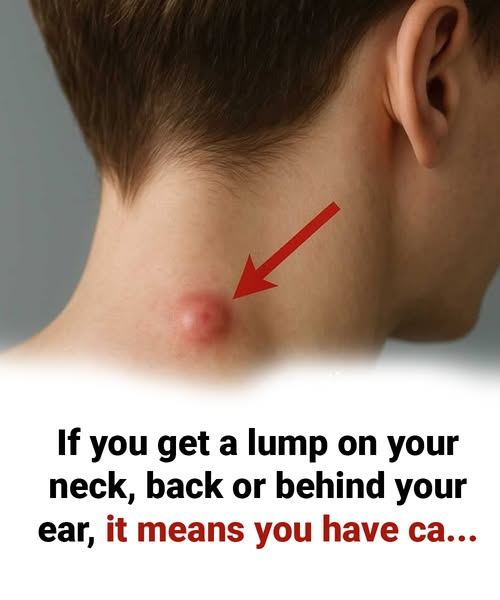
Noticing a lump on your neck, back, or behind your ear can feel instantly alarming. It’s one of those moments where your mind jumps straight to worst-case scenarios. But in reality, most lumps in these areas are harmless and caused by common, non-serious conditions. Understanding what these lumps might be—and how to recognize when something needs medical attention—can help replace fear with clarity.
Lumps can appear for many different reasons, and their size, texture, and behavior often provide useful clues. Some develop slowly over time, while others seem to show up overnight. Some are soft and movable, while others feel firm or fixed in place. These differences matter, but they don’t automatically signal something dangerous.
One of the most common causes of lumps under the skin is an epidermoid cyst. These form when skin cells don’t shed properly and instead become trapped beneath the surface. Over time, they multiply and create a small sac filled with keratin—a soft, cheese-like material. These cysts typically grow slowly and are often found on the neck, back, scalp, or behind the ears.
In most cases, an epidermoid cyst is smooth, round, and painless. It may stay the same size for months or even years without causing any issues. Many people live with them without ever needing treatment. However, problems can arise if the cyst becomes irritated or infected. When that happens, it may turn red, swell, feel tender, or begin to drain a thick substance. These are signs that it should be evaluated by a healthcare professional.
Another very common cause of lumps—especially in the neck or behind the ear—is a swollen lymph node. Lymph nodes are part of your immune system and act as filters that help your body fight infections. When you have a cold, throat infection, or even a minor skin issue nearby, these nodes can temporarily enlarge as they do their job.
Swollen lymph nodes are usually soft, slightly tender, and movable under the skin. They often appear suddenly and then gradually shrink back to normal once the underlying issue resolves. In most cases, this is a completely normal response and not something to worry about.
Lipomas are another possibility. These are benign (non-cancerous) growths made of fat tissue. They tend to feel soft, rubbery, and easily movable under the skin. Lipomas usually grow slowly and are painless. They are more common on the back and shoulders but can appear in other areas as well. Like cysts, they are generally harmless and only need treatment if they become uncomfortable or bothersome.
Sometimes, lumps can form due to blocked hair follicles or minor skin injuries. These may look similar to cysts or small boils and can develop after irritation, shaving, or acne. In these cases, the lump may be slightly inflamed but often resolves on its own over time.
While most lumps fall into these harmless categories, there are certain signs that should not be ignored. A lump that continues to grow, becomes hard and immovable, or persists for several weeks without improvement should be checked. Pain that worsens over time, unexplained weight loss, fever, or night sweats alongside a lump may also require medical evaluation.
Location can also provide hints. Lumps behind the ear are often linked to lymph nodes reacting to scalp or ear conditions. Lumps on the back are more likely to be cysts or lipomas. Neck lumps can be a mix of lymph nodes, cysts, or other structures, so they sometimes require closer attention depending on how they behave.
It’s important to avoid the temptation to squeeze or drain a lump yourself. While it might seem like a quick fix, this can lead to infection, inflammation, or scarring. In the case of cysts, squeezing can actually push contents deeper into the skin, making the problem worse rather than better.
Simple care, like applying a warm compress, can sometimes help reduce discomfort or encourage minor drainage if a cyst is irritated. However, this does not remove the cyst itself. Only proper medical treatment can fully address it if needed.
Healthcare professionals may evaluate a lump by examining its size, texture, and location. In some cases, imaging tests or a small sample (biopsy) may be used to confirm what it is. Most of the time, though, a physical exam is enough to identify common, harmless causes.
The key takeaway is that not all lumps are dangerous—in fact, most are not. The body is constantly responding to internal and external changes, and lumps can simply be part of that process. What matters most is paying attention to how the lump behaves over time.
If it stays small, painless, and unchanged, it is likely harmless. If it changes, grows, becomes painful, or comes with other symptoms, it’s worth getting checked. This balanced approach helps avoid unnecessary panic while still taking your health seriously.
In the end, awareness is your best tool. Knowing what’s normal for your body makes it easier to spot when something isn’t. And when in doubt, a quick medical check can provide reassurance and ensure that nothing important is overlooked.