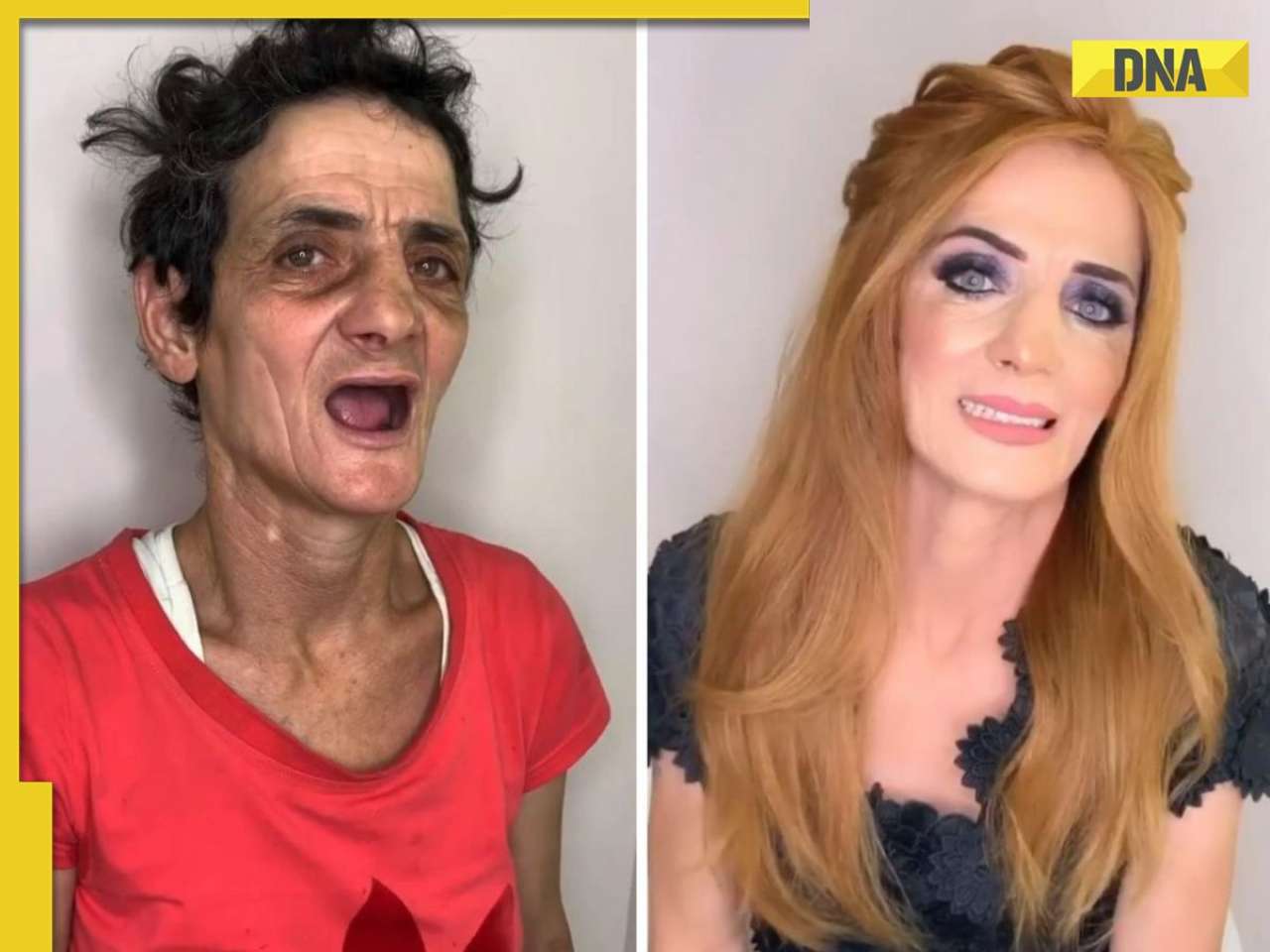
Rita had become someone the world no longer noticed.
Each day, she walked through crowded streets carrying a worn plastic bag, quietly collecting bottles others had thrown away without a second thought. People passed her constantly—busy, distracted, or simply unwilling to look too closely. To them, she was just another figure on the margins, someone who blended into the background of city life. But beneath her tired expression was a story shaped by loss, endurance, and a quiet, persistent longing for something more than survival.
Life had not always been this way.
There was a time when Rita had dreams—simple, honest dreams of stability, connection, and belonging. But those hopes slowly unraveled under the weight of circumstances she could neither predict nor control. What remained was a life defined not by ambition, but by endurance. Each coin she earned was not just money—it was a fragile link to another day, another chance to keep going.
The turning point in her life came not from a single mistake, but from a heartbreak so profound it reshaped her entire world.
The loss of her only son left an emptiness that words could never fully capture. Grief consumed her quietly but completely. It did not just bring sadness—it dismantled her sense of purpose. Without a support system to help her navigate that pain, isolation crept in. Slowly, almost imperceptibly at first, her connections to others began to fade.
Friends drifted away. Opportunities disappeared. And over time, Rita found herself alone.
As her circumstances worsened, so did the way others perceived her. Employers saw only her worn appearance, not the capable and resilient person she still was. Strangers avoided eye contact, reinforcing a painful truth—she had become invisible.
Yet even then, a part of her still wanted to rebuild.
She searched for work. She tried to regain a sense of normalcy. But rejection after rejection wore her down. Eventually, hope began to feel like something dangerous—something that hurt more to hold onto than to let go.
So she learned to expect less.
To survive quietly.
To exist without being seen.
Then, one unexpected moment changed everything.
It wasn’t dramatic or planned. There were no grand gestures, no sudden miracles. Just a simple encounter with someone who chose to look a little closer.
Where others had turned away, this person paused.
They saw not just Rita’s outward condition, but the humanity behind it—the story written in her posture, her eyes, her silence. And instead of offering pity, they offered something far more powerful: recognition.
What followed was not just a makeover, but the beginning of restoration.
It started with care—real, intentional care.
A visit to the dentist restored her smile, but more importantly, it restored a piece of her confidence. It was a reminder that she was still worthy of attention, effort, and dignity. From there, the process continued slowly and thoughtfully.
There was no rush to transform her into someone new.
Instead, each step was about helping her reconnect with who she had always been.
Simple acts—like having her nails cared for or her hair gently styled—carried deeper meaning. They were not about vanity. They were about reclaiming self-worth. About remembering what it felt like to be treated with kindness.
Her appearance began to change, but the most important transformation was happening beneath the surface.
For the first time in years, Rita looked at herself and didn’t see someone to hide.
She saw someone worth caring for.
The shift was subtle at first—a straighter posture, a steadier gaze. But over time, it grew into something undeniable. The heaviness she carried began to lift, replaced by something she had not felt in a long time:
Hope.
Tears came easily in those moments—not from sadness, but from the overwhelming realization that she had not been forgotten. That despite everything she had endured, there was still a path forward.
This emotional awakening changed everything.
With renewed confidence came the courage to imagine a different future. Opportunities that once felt impossible now seemed within reach. The road ahead was still uncertain, but for the first time in years, it no longer felt closed.
Rita’s transformation was not about becoming someone new.
It was about rediscovering who she had always been beneath the layers of hardship.
Her story challenges a common misconception—that people in difficult circumstances lack ambition or ability. In reality, many are navigating deeply complex struggles that remain unseen by the world around them.
What Rita needed was not judgment.
She needed someone to see her.
To acknowledge her humanity.
To remind her that she mattered.
And that simple act of recognition changed the course of her life.
Her journey stands as a powerful reminder of the impact compassion can have. Not the kind of compassion that stays at a distance, but the kind that engages, that listens, that invests.
It shows that transformation does not always begin with grand gestures.
Sometimes, it begins with something much smaller.
A moment of attention.
A willingness to care.
A decision to see someone others have overlooked.
From that, everything else can grow.
Rita did not just regain her appearance—she regained her sense of self.
She found strength where there had been exhaustion.
Confidence where there had been doubt.
And hope where there had once been only survival.
Her story is not just about change.
It is about possibility.
It is about the quiet power of empathy in a world that often moves too fast to notice those left behind.
And most importantly, it is a reminder that no one is ever truly beyond reaching—sometimes, all it takes is one person willing to look closer.