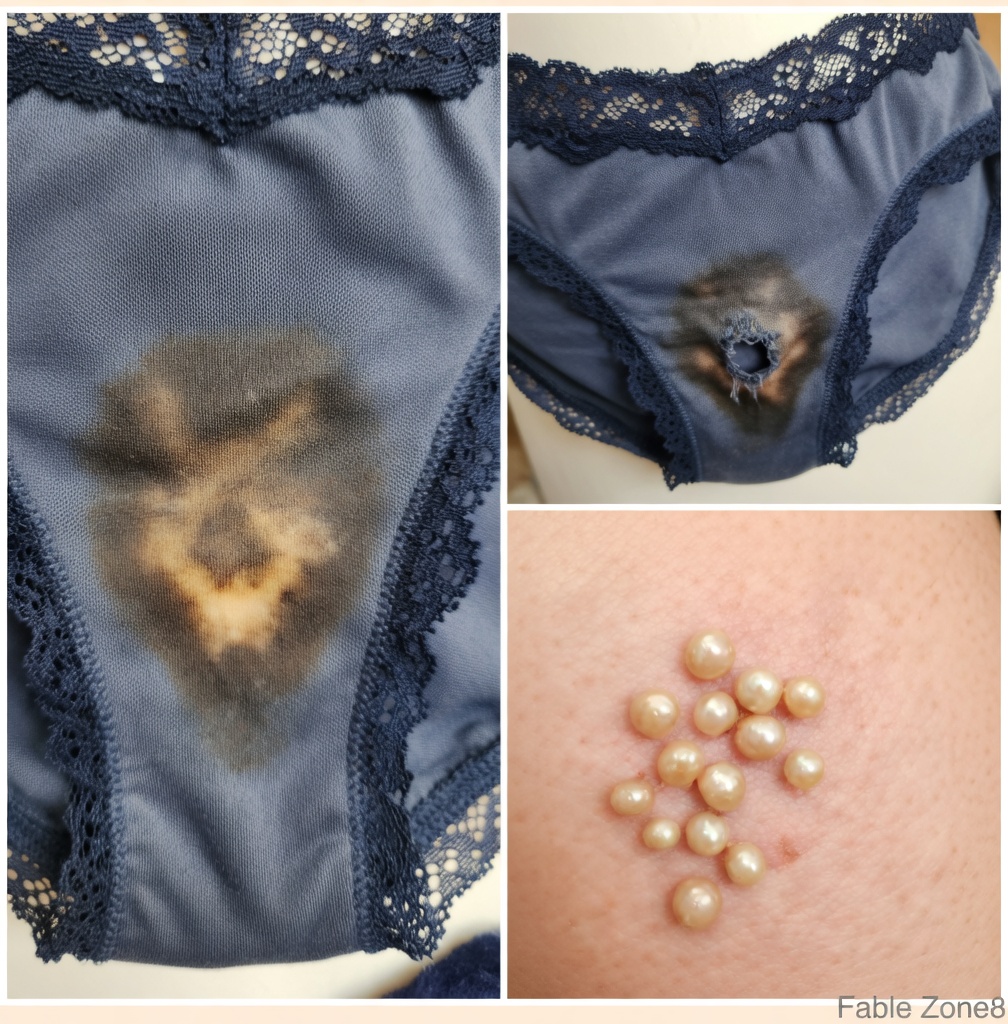
For years, many women have noticed something puzzling—lighter, almost bleach-like patches appearing in the crotch area of their underwear. These marks often spark confusion, concern, or even embarrassment. Questions arise quietly: Is this normal? Is something wrong? Is it a hygiene issue?
The truth, however, is far more reassuring—and scientifically fascinating.
These marks are most commonly caused by a completely normal and healthy biological process linked to the natural environment of the vagina. Medically, this relates to the balance of the vaginal microbiome and its naturally acidic pH, a key factor in maintaining reproductive and overall health.
The real reason behind the “bleach” spots
The vagina maintains a slightly acidic environment, typically with a pH between 3.8 and 4.5. This acidity plays a crucial protective role by preventing the growth of harmful bacteria and infections such as Bacterial vaginosis or Candidiasis.
This environment is largely maintained by beneficial bacteria, especially Lactobacillus, which produce substances like lactic acid and small amounts of hydrogen peroxide.
When natural vaginal discharge—containing these mildly acidic compounds—comes into contact with fabric over time, it can gradually alter or lighten the dye. The result is those familiar pale or bleached-looking patches.
In simple terms:
Your body is not damaging your clothes—it’s protecting itself.
A sign of a healthy balance
Contrary to many myths, these marks are not a sign of poor hygiene. In fact, they often indicate the opposite.
A well-balanced vaginal environment:
- Maintains proper acidity
- Supports beneficial bacteria
- Helps prevent infections
- Produces normal, healthy discharge
Women who notice these marks frequently are often experiencing normal hormonal function and a stable microbiome. While the intensity can vary from person to person, the presence of these spots alone is generally not a cause for concern.
Why it varies from person to person
Not every woman will notice the same degree of discoloration. Several factors can influence it:
1. Hormonal changes
During ovulation, pregnancy, or certain phases of the menstrual cycle, discharge may increase, making the effect more noticeable.
2. Fabric type
Cotton and certain blends react differently to acidity. Some dyes are more sensitive and show discoloration faster.
3. Individual body chemistry
Each person’s microbiome is unique, which can affect pH levels and discharge composition.
4. Hygiene products or medications
Some products may alter pH temporarily, though a healthy body usually restores balance naturally.
When to pay attention
While bleach-like spots themselves are harmless, it’s important to recognize when something might need medical attention.
You should consider consulting a healthcare provider if you notice:
- Strong or unusual odor
- Itching or irritation
- Unusual colors (green, gray, or thick white discharge)
- Pain or discomfort
These could indicate infections or imbalances that require treatment.
Breaking the stigma
One of the most important aspects of this topic is how misunderstood it has been. For many women, these marks have been a quiet source of embarrassment—something hidden, ignored, or even blamed on personal habits.
In reality, they are a natural result of how the body maintains its internal balance.
Understanding this helps shift the perspective:
- From embarrassment → to awareness
- From confusion → to confidence
- From myth → to science
Do you need to “fix” it?
No. There is nothing to fix.
There is no medical need to prevent these marks, and attempting to alter the natural vaginal environment—through harsh soaps, douching, or chemical products—can actually do more harm than good.
Maintaining vaginal health is best supported by:
- Gentle hygiene (external only)
- Breathable fabrics like cotton
- Avoiding unnecessary chemical products
- Regular medical checkups when needed
The bigger picture
The presence of these marks is a small but meaningful reminder of how the body works to protect itself every day. The vaginal environment is a finely tuned system designed to maintain balance, prevent infection, and support overall health.
What may appear as a flaw or inconvenience is, in reality, a sign of that system doing exactly what it is supposed to do.
Final thought
Sometimes, the things we worry about most turn out to be signs that everything is working perfectly.
Understanding your body doesn’t just bring peace of mind—it brings confidence. And in this case, those mysterious marks are not something to hide.
They are simply biology, quietly doing its job.