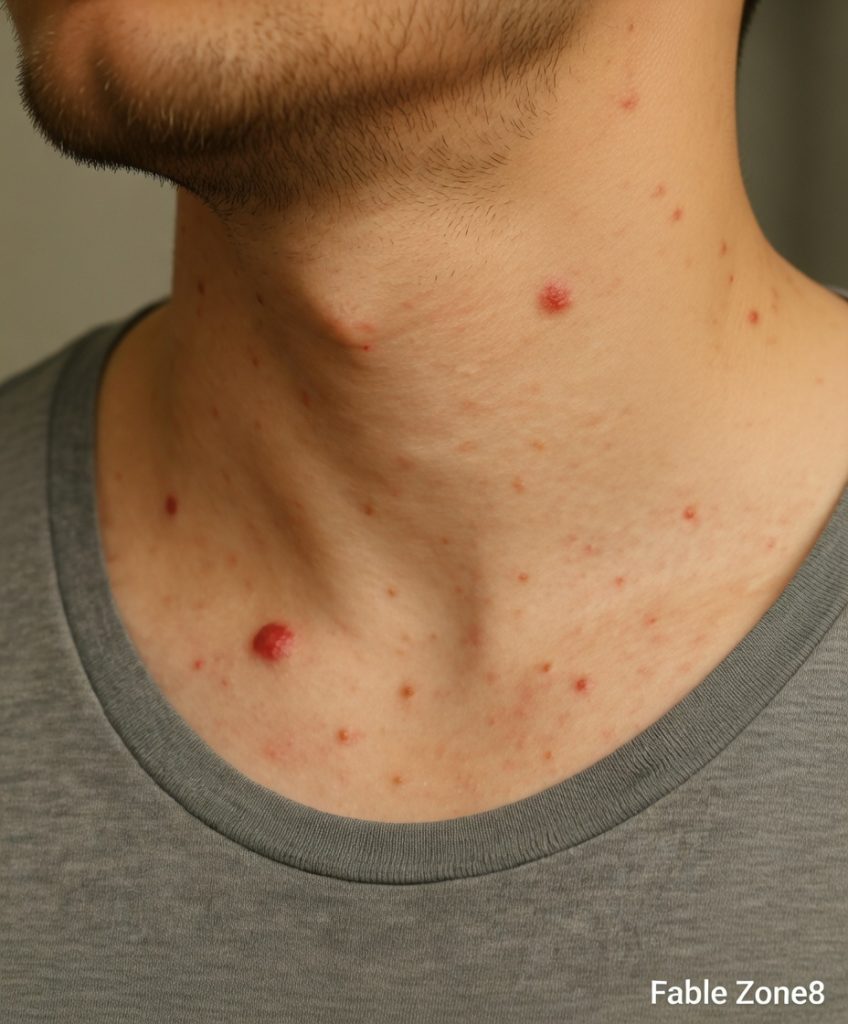
Red moles, medically known as Cherry angioma (also called Campbell de Morgan spots), are among the most common skin changes people notice as they get older. These small, bright red or purplish bumps often appear on the chest, back, arms, or neck, and while they can seem alarming at first, they are usually completely harmless. Despite many claims circulating online, they are not typically warning signs of hidden disease. Understanding what they actually represent can help you avoid unnecessary fear while still knowing when to pay attention.
What red moles actually are
Cherry angiomas are benign (non-cancerous) growths made up of tiny blood vessels that have expanded or clustered together near the surface of the skin. They can be flat or slightly raised and vary in size from a pinpoint to several millimeters.
They are extremely common:
- Many people start developing them after age 30
- They tend to increase gradually with age
- Some people have just a few, while others may have dozens
In most cases, they are simply a normal part of skin aging—similar to wrinkles or gray hair.
What causes them
The exact cause isn’t fully understood, but several well-established factors play a role:
1. Aging
The strongest link is simply getting older. Blood vessels naturally change over time, and cherry angiomas are one of those changes.
2. Genetics
If your parents had many red moles, you’re more likely to develop them too.
3. Hormonal changes
They may appear or increase during pregnancy or other hormonal shifts, but this is not considered dangerous.
4. Environmental factors
Some studies suggest possible links with chemical exposure or certain medications, though evidence is still limited.
What they are NOT (common myths)
There are many exaggerated claims about red moles being “warning signs” of serious internal problems. Most of these are not supported by medical evidence.
❌ Liver disease:
There is no strong scientific proof that cherry angiomas indicate poor liver function.
❌ Toxin overload:
The idea that they are a sign your body is “full of toxins” is not medically established.
❌ Metabolic syndrome or cholesterol problems:
While overall health affects your body in many ways, cherry angiomas are not reliable indicators of these conditions.
❌ Circulatory failure:
They are not a sign your blood vessels are “failing”—just localized benign growths.
When you SHOULD pay attention
Although cherry angiomas are harmless, there are a few situations where it’s smart to consult a doctor:
- Sudden appearance of many new spots at once
- Rapid growth or change in size
- Bleeding without injury
- Unusual color (very dark, black, or mixed colors)
- Itching, pain, or ulceration
These changes don’t automatically mean something serious, but they should be evaluated by a dermatologist to rule out other skin conditions.
Can you remove them?
Yes—if they bother you cosmetically, they can be safely removed by a dermatologist using:
- Laser therapy
- Electrocautery (burning technique)
- Cryotherapy (freezing)
These procedures are quick and usually leave minimal scarring.
What actually matters for your health
Instead of focusing on red moles as warning signs, it’s better to pay attention to proven indicators of health, such as:
- Balanced diet
- Regular physical activity
- Healthy weight
- Stable blood pressure and blood sugar
- Good sleep and stress management
These factors have a real, measurable impact on your long-term well-being.
The bottom line
Cherry angiomas may look dramatic, but in the vast majority of cases, they are completely harmless and a normal part of aging. They are not your body sounding an alarm about hidden disease.
That said, your skin is still an important window into your health. Paying attention to new or changing spots—and getting them checked when necessary—is always a smart habit.
In the end, the most powerful approach isn’t fear—it’s understanding.