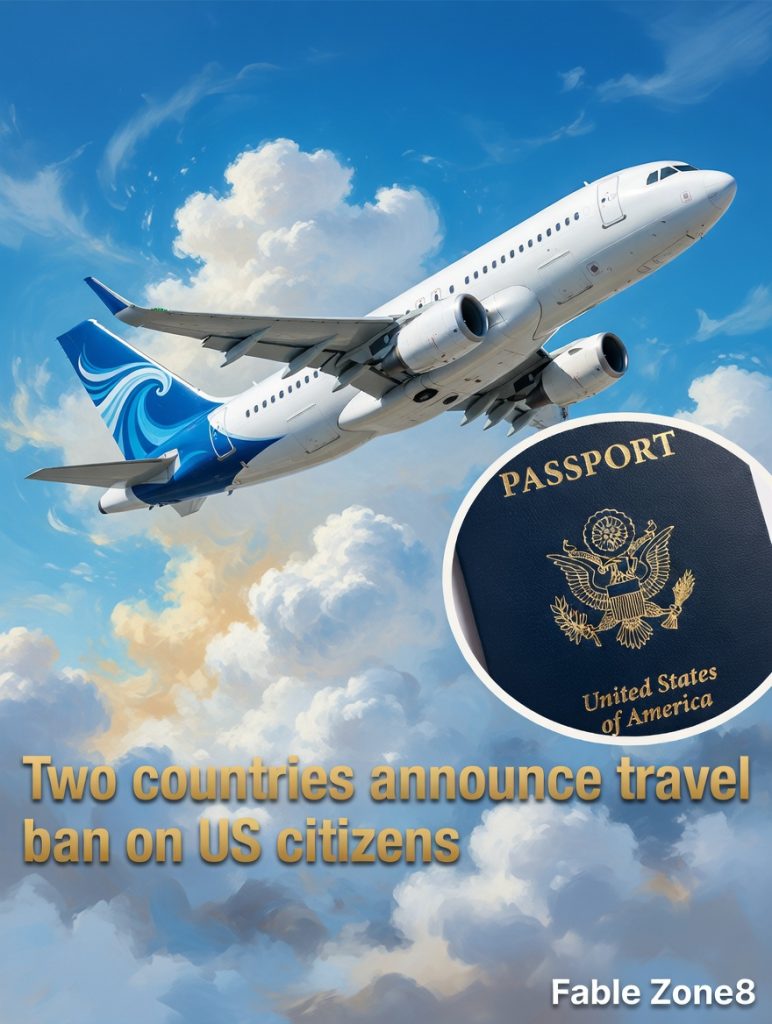
What may initially appear to be a routine travel restriction is, in reality, a signal of a deeper geopolitical transformation. Recent moves by countries such as Mali and Burkina Faso to restrict entry for citizens of the United States are not isolated or purely administrative decisions. Instead, they reflect a growing assertion of sovereignty and a shift in how nations in the Sahel region perceive global power dynamics. Beneath the surface of visa policies lies a broader conversation about dignity, fairness, and the evolving balance of international influence.
These developments gain further significance when viewed alongside similar actions by Niger and Chad. Together, these decisions suggest a coordinated regional posture rather than a series of unrelated incidents. For decades, global mobility has reflected deep inequalities, with passports from wealthier nations granting relatively easy access across borders, while others face strict limitations. By implementing reciprocal restrictions, these governments are challenging that imbalance, sending a clear message that access must be mutual rather than one-sided.
From the perspective of the United States, visa regulations are typically framed as matters of security, immigration control, and administrative necessity. Policies are often presented as neutral and procedural. However, for many countries whose citizens face frequent denials, lengthy processing times, or invasive screening procedures, these policies are experienced quite differently. What may appear bureaucratic in Washington can feel exclusionary elsewhere, reinforcing perceptions of unequal treatment in the global system.
The impact of these restrictions extends far beyond diplomacy. Families with ties across continents find themselves separated, unsure when they will be able to reunite. Students hoping to study abroad face uncertainty, while professionals and humanitarian workers encounter delays that disrupt critical projects in healthcare, education, and development. In these cases, the consequences are deeply personal, affecting individuals who have little influence over the political decisions driving such policies.
On a broader level, these actions highlight how mobility itself has become a symbol of global inequality. The ability to travel freely is often tied to nationality, creating a hierarchy of access that reflects historical and economic disparities. By enforcing reciprocal measures, Sahel nations are not only asserting legal equality but also reclaiming a sense of agency. They are demonstrating that entry into their territories is not automatic and that respect in international relations must operate in both directions.
This shift is also tied to changing regional dynamics. Over recent years, countries in West Africa have begun reassessing long-standing relationships with Western powers, particularly in areas such as security cooperation and development partnerships. In this context, control over borders becomes a visible and powerful expression of independence. Policies on visas and entry are no longer just administrative tools—they are instruments of political messaging and national identity.
Public perception plays a key role as well. Within these nations, such measures are often viewed as acts of strength, reflecting a desire for dignity and equal treatment on the global stage. Internationally, however, they may be interpreted as confrontational or destabilizing. This difference in perspective underscores a persistent gap between how policies are understood domestically and how they are perceived abroad, contributing to misunderstandings and tension.
At the heart of the issue is a breakdown in dialogue. The contrast between Washington’s administrative framing and the reciprocity-based arguments from West African governments reveals a disconnect in communication. Without meaningful engagement, unilateral actions on both sides risk deepening mistrust and solidifying divisions that could extend well beyond the immediate issue of travel restrictions.
Importantly, this moment does not necessarily signal the end of global cooperation. Rather, it points to the need for updated frameworks that reflect a changing world. As more nations assert their interests and demand equal treatment, international systems must adapt. The era in which a small group of countries could dictate the terms of global mobility is increasingly being challenged.
For individuals observing these developments, the implications are significant. Travel, education, and cultural exchange—often seen as neutral or apolitical—are closely tied to power structures. When tensions rise, these areas are among the first to be affected. What begins as a visa policy can quickly become a symbol of broader geopolitical shifts.
Ultimately, the decisions by Mali, Burkina Faso, Niger, and Chad are less about targeting one country and more about redefining relationships on the global stage. They signal a move toward reciprocity, a reassertion of sovereignty, and a challenge to long-standing inequalities in international mobility. Whether this moment leads to greater balance or deeper fragmentation remains uncertain, but it clearly marks a turning point in how nations engage with one another in an increasingly multipolar world.