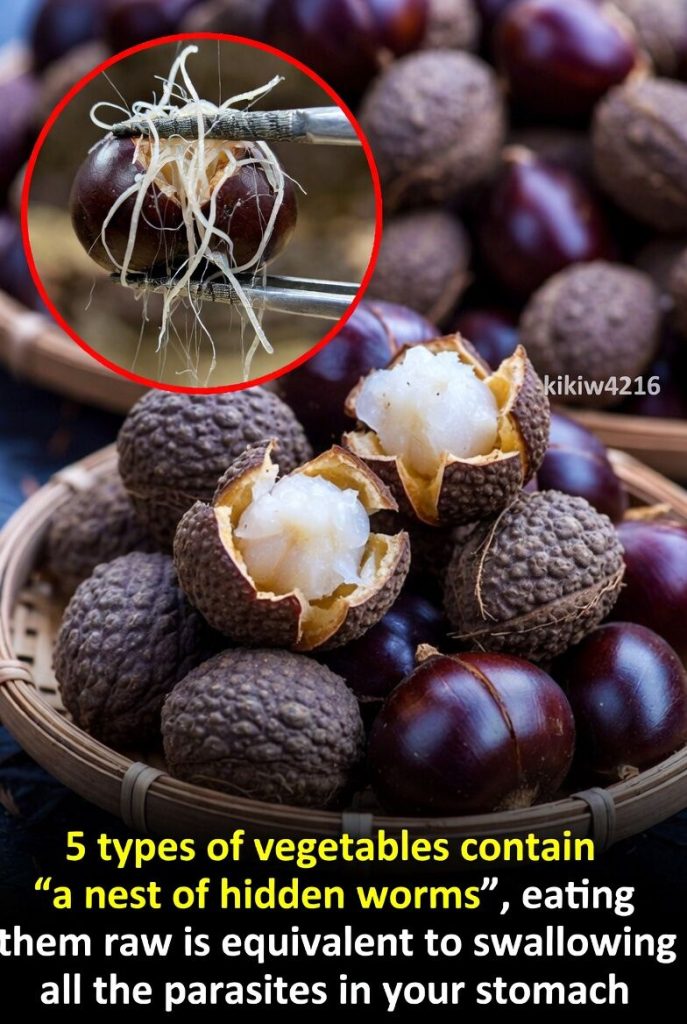
In recent weeks, a viral image showing cracked-open black water chestnuts piled in a woven basket, with thin white worms being extracted by tweezers, has sparked alarm across social media platforms. Accompanying the image were claims that five common vegetables could carry “a nest of hidden worms,” implying that consuming them raw could be equivalent to ingesting parasites directly. While such posts often exaggerate the risks for shock value, the underlying public health concerns are genuine: certain vegetables, particularly those grown in or near contaminated water or soil, can carry parasitic organisms. Awareness and proper handling are crucial to prevent infections without compromising the nutritional benefits of fresh produce.
Water chestnuts (Eleocharis dulcis) are a prime example of an aquatic vegetable that can harbor parasites. Popular in Asian cuisine for their crisp texture, water chestnuts grow submerged in ponds, lakes, or flooded fields. If these waters are contaminated with eggs from infected animals or humans, the tubers can become a vector for parasites like the giant intestinal fluke, Fasciolopsis buski. This parasite’s life cycle involves freshwater snails as intermediate hosts, after which cercariae encyst on aquatic plants. Once ingested by humans, these metacercariae develop into adult flukes in the small intestine, potentially causing fasciolopsiasis. Symptoms can range from abdominal discomfort and diarrhea to malnutrition or intestinal obstruction in severe cases. While viral images dramatize the issue, thorough peeling and high-temperature cooking eliminate the parasite, making the vegetable safe for consumption.
Cabbage, with its dense layers, can also pose a risk if not properly washed. Its tightly packed leaves create natural crevices where soil, insect eggs, or parasite cysts can hide. In regions where hygiene practices are limited and manure is used as fertilizer, cabbage may harbor helminth eggs, including Taenia solium (pork tapeworm). While sensational headlines referring to “brain worms” are exaggerated, ingestion of tapeworm eggs can result in neurocysticercosis, a severe condition affecting the central nervous system. Washing leaves thoroughly under running water, soaking them, or opting for cooking significantly reduces these risks. Leafy greens like spinach and kale face similar challenges; their textured surfaces trap soil and microscopic contaminants. While bacteria are a more frequent concern in developed regions, protozoa and helminth eggs remain a documented hazard in areas with poor sanitation.
Cruciferous vegetables such as broccoli and cauliflower have intricate florets that can hide small insects, larvae, or parasite eggs if grown under suboptimal conditions. Viral content often exaggerates these risks, claiming invisible worms multiply inside the body. In reality, the presence of true parasitic worms in these vegetables is rare and typically results from environmental contamination rather than the plant itself. Still, in locales where untreated water or livestock proximity is common, cross-contamination is possible. Blanching or cooking these vegetables ensures safety, especially for children, pregnant women, and immunocompromised individuals. Cooking also enhances digestibility, improves nutrient bioavailability, and reduces naturally occurring goitrogens that can affect thyroid function when consumed in large amounts raw.
Eggplants (aubergines) and certain gourds, such as ridge gourd, occasionally show visible pest infestations. While such occurrences are uncommon, viral warnings often exaggerate the threat of parasites. Scientific studies highlight that contamination is more likely in regions with inadequate sanitation and agricultural oversight. Protozoan cysts and helminth eggs have been detected on various vegetables, including leafy greens, radishes, and spring onions. Transmission pathways typically involve irrigation with contaminated water, soil contact, or handling by individuals with poor hygiene. In developed countries, strict regulations and food safety practices minimize the risk, but imported produce or small local farms using untreated manure remain potential sources of exposure.
Preventing parasitic contamination in vegetables relies on multiple strategies. Health organizations advocate the “five keys to safer food”: maintaining cleanliness, separating raw and cooked foods, cooking thoroughly, keeping food at safe temperatures, and using safe water and raw materials. For raw salad enthusiasts, rigorous washing under running water, peeling when possible, and using vinegar or saltwater soaks can lower risks. Freezing, approved sanitizers, and sourcing from trusted suppliers add additional layers of protection. Education is critical: while social media often sensationalizes “hidden worms,” understanding the biology behind these claims empowers consumers to make informed decisions, reducing unnecessary fear while promoting safe dietary practices.
Ultimately, the goal is informed consumption rather than paranoia. Not all vegetables carry parasites, and the human body can tolerate low-level exposures. However, with a global food supply chain of varying regulation, vigilance is essential. Cooking remains the most reliable method to eliminate biological hazards, transforming potentially risky items into safe, nutritious meals. Water chestnuts, for instance, retain their signature crunch when peeled and boiled or stir-fried. Leafy greens can be lightly steamed or sautéed, preserving nutrients while minimizing risk. Travelers to endemic regions should exercise particular caution with raw street foods or salads. By pairing enthusiasm for fresh produce with practical safety measures, individuals can enjoy a diverse, nutritious diet while reducing the risk of parasitic infections.