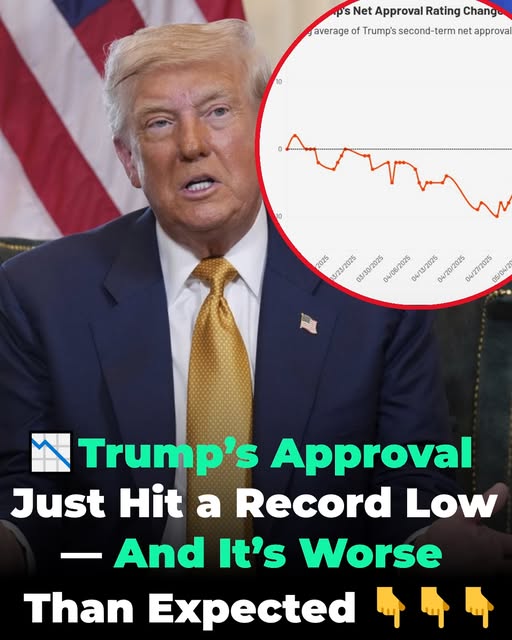
Donald Trump is navigating one of the most challenging stretches of his political life, as new polling data places his approval rating at its lowest point yet. Recent surveys indicate a steady slide into negative territory, sparking intense discussion among journalists, analysts, and citizens alike. For many Americans, the numbers are no longer abstract; they have become a touchstone for political conversations, shaping public perception and influencing the tone of debates across the country. Headlines highlight not just the decline, but the growing visibility of voter dissatisfaction, signaling a potential shift in the political landscape that could reverberate far beyond the next election cycle.
The downward trend did not occur in isolation. Weeks of provocative rhetoric, controversial statements, and renewed scrutiny of Trump’s past remarks preceded the latest polling. At rallies, interviews, and social media appearances, he doubled down on familiar claims, labeling polls as “rigged,” accusing mainstream media outlets of “lying again,” and asserting that he maintains “the strongest base this country has ever seen.” While such statements fired up loyal supporters, they also appear to have reinforced opposition among undecided voters and moderates, who describe feeling alienated by constant confrontation and divisive messaging.
One striking feature of the data is the consistency of the decline. Approval ratings show a persistent downward slope, with short-lived spikes quickly erased by subsequent polling. Analysts note growing dissatisfaction even among demographics that historically leaned more favorably toward Trump. Independent voters, in particular, express fatigue with repeated conflict and uncertainty, emphasizing a desire for “less chaos and more stability” from national leadership. This widening gap between expectation and perception highlights the difficulty of reversing the current trend without substantive shifts in messaging or policy.
Despite mounting negative numbers, Trump has not tempered his approach. In recent statements, he insisted, “People are hurting because of bad leadership, and they know I’m the only one who can fix it.” He blamed economic insecurity, immigration concerns, and international tensions on opponents, framing himself as the singular solution in a nation beset by challenges. The strategy is clear: energize the core base, attack critics, and dismiss unfavorable polls as irrelevant or misleading. Political observers note that such a strategy has historically helped him withstand short-term setbacks, but the cumulative effect of ongoing negative trends presents a different set of challenges.
The online reaction underscores the emotional weight of these developments. Social media platforms are filled with commentary from voters expressing frustration, disappointment, or a desire for change. Longtime political observers suggest that the widening gap between Trump and significant segments of the electorate transforms the approval rating from a simple metric into a vivid public gauge of political pressure. Unlike previous periods of low approval that remained relatively contained, today’s climate shows voters increasingly vocal, organized, and unwilling to overlook perceived leadership failures.
Whether this historic low marks a turning point or another chapter in Trump’s political narrative remains uncertain. He has rebounded from similar moments through spectacle, strategic messaging, and mobilization of his base. Yet the current environment is different: persistent low approval, amplified criticism, and active public scrutiny create a scenario where missteps could carry greater consequences than before. As the political landscape continues to evolve, one thing is evident — the public is watching closely, the pressure is mounting, and the path forward will demand careful navigation, strategic recalibration, and perhaps a confrontation with the realities of record-low support.