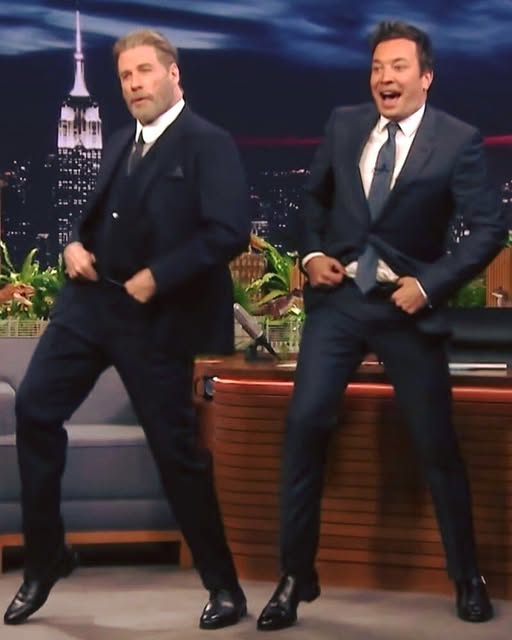
Few films in cinematic history have captured youthful energy, romance, rebellion, and musical joy as completely as Grease, and at the center of that phenomenon stands John Travolta. When the film premiered in 1978, it did more than entertain—it crystallized a cultural moment, blending 1950s nostalgia with the vibrant confidence of the late 1970s to create something timeless. Travolta’s Danny Zuko was not just a character; he was an attitude, a rhythm, and a feeling that audiences immediately recognized and embraced. His leather jacket, relaxed posture, and effortless movement spoke volumes before he ever delivered a line of dialogue. Decades later, when Travolta casually steps into those familiar dance moves during public appearances or celebrations, the response is instant and electric. Cheers erupt, smiles spread, and generations connect in a shared memory. The enduring fascination with Grease is not merely about revisiting a beloved film, but about reconnecting with a moment in time that continues to feel alive, joyful, and emotionally resonant.
At its core, Grease tells a deceptively simple story about young love, identity, and the pressure to fit in, themes that remain universal across generations. Danny Zuko’s struggle to balance his carefully crafted “cool” persona with genuine emotion reflects a tension many people experience at some point in their lives. Travolta infused Danny with layers that went beyond swagger, revealing vulnerability beneath the bravado. This emotional duality made the character relatable rather than cartoonish, allowing audiences to see themselves in his uncertainty. Olivia Newton-John’s Sandy provided the perfect counterbalance, embodying sincerity, courage, and transformation. Their chemistry grounded the film emotionally, giving weight to the playful musical numbers and heightened scenarios. What elevated the storytelling even further was the way movement and music conveyed inner conflict and desire. Travolta’s dancing was not decoration; it was narrative. Every step, turn, and gesture expressed emotion, making the story felt as much as it was seen.
Music serves as the heartbeat of Grease, and its soundtrack remains one of the most recognizable in film history. Songs like “Summer Nights,” “Greased Lightnin’,” and “You’re the One That I Want” transcend generations, instantly transporting listeners back to high school gyms, drive-in dreams, and the intensity of first love. Travolta’s performances within these numbers blended technical precision with unfiltered enthusiasm, creating an energy that felt contagious. His background in dance gave him confidence, but it was his playfulness that made the performances unforgettable. The choreography never appeared stiff or overly rehearsed; instead, it carried a sense of spontaneity, as though Danny Zuko was simply moving because he had to. That quality explains why, decades later, when Travolta recreates the same steps on a talk show or stage, the magic instantly returns. The movements may be familiar, but they still feel alive, reminding audiences that great performance is driven by joy rather than perfection.
Behind the scenes, the creation of Grease demanded discipline, collaboration, and creative trust. While the film radiates freedom and fun, it was built through long rehearsals, physical endurance, and careful coordination. Travolta’s dedication went beyond learning choreography; he actively contributed creative ideas drawn from his own experiences with dance and youth culture. One of the most iconic examples is the simple “four corners” move in the finale, a step he suggested based on dances he remembered from his younger years. That small, authentic choice became one of the most recognizable moments in the film, illustrating how personal memory can elevate performance into something universal. The cast’s camaraderie translated into genuine on-screen chemistry, making friendships and rivalries feel organic rather than staged. This collective energy helped Grease avoid artificiality, instead capturing the exuberant chaos and emotional intensity of teenage life in a way that continues to resonate.
Fashion played an equally powerful role in shaping the film’s legacy, and Travolta’s Danny Zuko quickly became a style icon. The black leather jacket, white T-shirt, and slicked-back hair symbolized confidence, rebellion, and youthful allure, influencing fashion far beyond the movie theater. These choices were deliberate, reflecting character identity and group dynamics rather than simple aesthetics. The T-Birds’ coordinated look reinforced bravado and belonging, while the Pink Ladies’ pastel jackets balanced femininity with strength. Travolta wore his costume as an extension of the character, using it to amplify Danny’s physicality and attitude. Even decades later, the visual language of Grease remains instantly recognizable, frequently referenced in fashion, advertising, and popular culture. When Travolta revisits Danny’s dance moves, he is not just performing steps; he is reactivating a powerful visual symbol embedded in collective memory.
More than forty years after its release, Grease endures because it taps into something timeless: the desire to belong, to express oneself freely, and to feel seen. John Travolta’s lasting appeal lies in his ability to embody these themes with sincerity and confidence. His willingness to revisit Danny Zuko is not an act of nostalgia alone, but a celebration of connection across generations. Rather than distancing himself from the role, he embraces it, understanding that Grease is not a constraint but a cornerstone of his legacy. Each time he performs those familiar steps, audiences are reminded that true star power is not defined by age, but by presence, authenticity, and emotional openness. Grease continues to shine because it captures joy without cynicism and romance without irony, and as long as music invites people to dance and stories invite them to dream, the unmistakable charisma of John Travolta will continue to light up the screen—and the collective imagination.