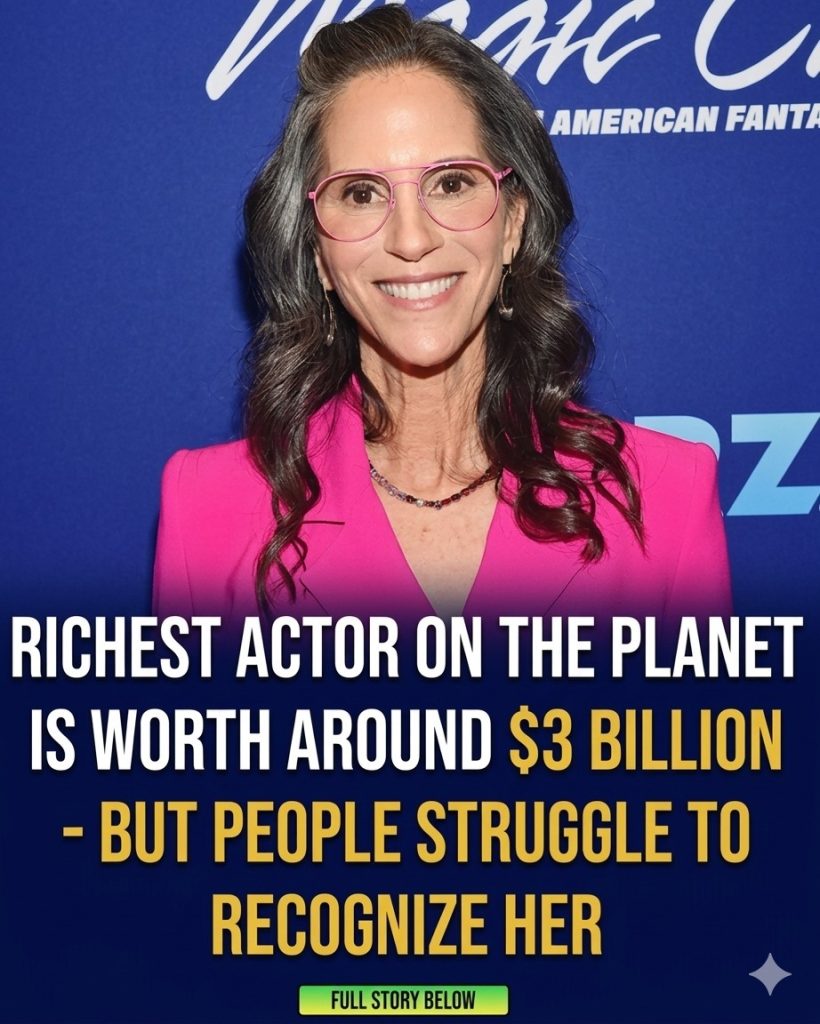
The Quiet Billionaire: How Jami Gertz Redefines Wealth, Fame, and Success in Hollywood
When people think of wealth in Hollywood, their minds usually gravitate toward familiar names—actors whose faces dominate movie posters, award shows, and headlines. The assumption feels natural: the most famous must also be the richest. After all, visibility and success often seem intertwined in the entertainment industry.
But every so often, a story emerges that quietly challenges that assumption.
The story of Jami Gertz is one of those rare cases—a story that doesn’t rely on constant publicity, blockbuster dominance, or relentless self-promotion. Instead, it unfolds in a quieter space, where wealth, influence, and identity intersect in unexpected ways.
A Familiar Face From an Earlier Era
For those who grew up in the 1980s and 1990s, Jami Gertz is not entirely unknown.
She appeared in several well-known films that helped define the tone of their time, including Sixteen Candles, The Lost Boys, and Twister.
Her roles weren’t always leading ones, but they were memorable. She had a presence that fit naturally into ensemble casts—grounded, expressive, and relatable.
Unlike actors who aggressively pursued the spotlight, Gertz’s career followed a steadier, less headline-driven path. She worked consistently, built credibility, and became a recognizable figure without becoming an overwhelming media presence.
At the time, no one would have predicted that she would one day be associated with a fortune measured in billions.
The Surprising Claim of Extreme Wealth
In recent years, headlines have circulated claiming that Jami Gertz is the richest actor in the world, with a net worth estimated around $3 billion.
At first glance, the claim seems almost unbelievable.
How could someone with a relatively modest Hollywood profile surpass globally recognized figures like Oprah Winfrey, Taylor Swift, or Rihanna?
The answer lies in a reality that challenges traditional ideas about fame and fortune.
The Role of Partnership in Wealth Building
A significant portion of Jami Gertz’s wealth is tied to her marriage to Tony Ressler, a powerful figure in the world of finance.
Ressler co-founded major investment firms, including Ares Management, which manages billions of dollars in assets across industries.
His business ventures extend far beyond traditional investing. They include ownership stakes in professional sports, most notably the Atlanta Hawks.
This kind of financial ecosystem operates on a scale that is fundamentally different from income earned through acting.
While a successful actor may earn millions per film, private equity investments can generate wealth that compounds exponentially over time.
Beyond the Simplified Narrative
It would be easy to reduce Gertz’s story to a simple explanation: she married into wealth.
But that interpretation overlooks important nuance.
In interviews, Jami Gertz has emphasized that she contributed financially in the early years of their relationship. At a time when her husband’s ventures were still developing, her acting income provided stability.
This detail shifts the narrative.
It transforms her from a passive participant in wealth to an active contributor during its formative stage.
And that distinction matters.
The Difference Between Fame and Financial Power
The entertainment industry often equates success with visibility.
Actors who dominate headlines, win awards, and command large salaries are seen as the pinnacle of achievement.
But Gertz’s story highlights a different dimension of success—one that operates outside the traditional metrics of fame.
Financial power, especially when rooted in investments, operates quietly.
It doesn’t require constant public validation.
It doesn’t depend on box office numbers.
It grows over time, often unnoticed by the broader public.
This is why her wealth feels surprising.
Not because it’s impossible—but because it exists outside the narrative people are used to.
A Life Lived Outside the Spotlight
One of the most striking aspects of Jami Gertz’s story is her relative absence from the constant churn of celebrity culture.
She is not a daily presence in entertainment news.
She does not dominate social media.
She is not associated with high-profile controversies or dramatic public narratives.
Instead, her life appears structured around a different set of priorities—family, business involvement, and philanthropy.
This distance from the spotlight creates a kind of paradox:
She is extraordinarily wealthy, yet not widely perceived as a central figure in modern celebrity culture.
Philanthropy as a Core Identity
Perhaps the most meaningful aspect of Gertz’s public life is her commitment to philanthropy.
Together with Tony Ressler, she has contributed substantial resources to causes including:
- Education initiatives
- Healthcare systems
- Arts and cultural institutions
- Medical research
Their philanthropic work has been recognized repeatedly, placing them among the most generous donors in the United States.
This focus on giving reframes the conversation around wealth.
Instead of asking how much someone has, it invites a different question:
What do they do with it?
The Changing Nature of Celebrity Wealth
Jami Gertz’s story reflects a broader shift in how wealth is created and perceived.
In earlier eras, actors built fortunes primarily through their craft—film salaries, endorsements, and royalties.
Today, the landscape is more complex.
Wealth can come from:
- Strategic investments
- Business ownership
- Brand development
- Equity stakes in companies
- Partnerships and marriages that connect different industries
This diversification means that the richest individuals associated with entertainment are not always the ones earning the highest salaries on screen.
Challenging Assumptions About Success
There is a subtle lesson embedded in this story.
It challenges the idea that visibility equals value.
In many ways, Jami Gertz represents the opposite of that assumption.
Her wealth exists largely outside public perception.
Her influence operates quietly.
Her story doesn’t rely on constant recognition.
And yet, her financial position surpasses many of the most recognizable figures in entertainment.
The Power of Quiet Influence
There is something compelling about success that does not demand attention.
In a world where visibility is often pursued relentlessly, Gertz’s low-profile approach stands out.
It suggests that influence does not always need to be visible to be significant.
That power can exist without performance.
That impact can be felt without constant acknowledgment.
A Broader Cultural Reflection
The fascination with her wealth reveals something about society as well.
People are drawn to stories that disrupt expectations.
They are intrigued by contradictions—fame without fortune, or in this case, fortune without overwhelming fame.
These stories create moments of reflection.
They force us to reconsider what we assume to be true.
Redefining What It Means to “Make It”
For aspiring actors, the traditional definition of success often centers on recognition.
Awards. Leading roles. Public acclaim.
But Gertz’s story expands that definition.
It suggests that success can take many forms.
That a career in entertainment does not have to follow a single path.
That long-term stability and influence can be built in ways that are not immediately visible.
The Human Element Behind the Numbers
It is easy to focus on the figure—$3 billion.
But numbers alone do not tell the full story.
Behind that number is a life shaped by choices, relationships, timing, and opportunities.
A career that began in acting.
A partnership that expanded into finance.
A commitment to giving that continues to shape communities.
When viewed in this way, the story becomes less about wealth and more about trajectory.
Final Reflection
The narrative surrounding Jami Gertz is not just about being the “richest actor.”
It is about redefining what that phrase even means.
It is about understanding that wealth, like success, is not always tied to visibility.
That influence can operate quietly.
That stories worth telling are not always the loudest ones.
In the end, her journey offers something more meaningful than surprise.
It offers perspective.
A reminder that the paths people take—and the outcomes they reach—are often far more complex than they appear from the outside.
And sometimes, the most extraordinary stories are the ones unfolding just beyond the spotlight.