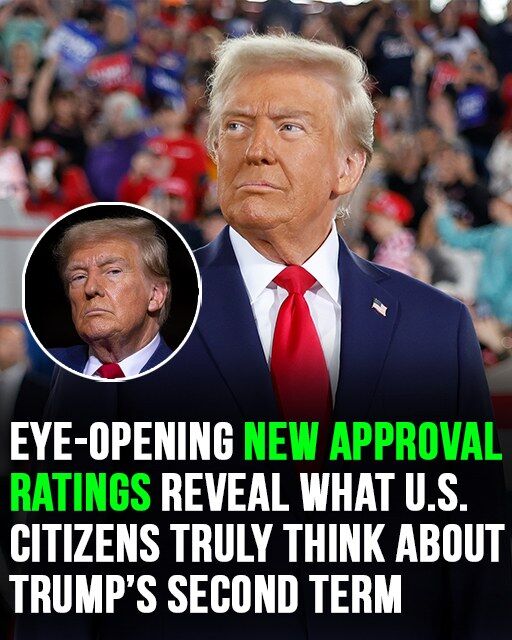
Listening to Donald Trump speak at rallies, press briefings, or through his steady stream of social media messages, one could easily conclude that his second term represents a period of sweeping success and renewed national confidence. The president regularly points to economic indicators, tariff revenues, and assertions of restored global leverage as evidence that his administration is delivering exactly what voters wanted when they returned him to office. Cabinet members and allies echo this message, framing the current moment as one of momentum and vindication after years of political conflict. In this telling, skepticism has faded, opposition has weakened, and the country is steadily aligning behind a vision of strength, growth, and unapologetic leadership. Yet this narrative, confident and repetitive as it is, does not fully align with how a large portion of the American public appears to feel. When measured against independent polling data, the national mood looks far more conflicted, revealing a public that remains divided not only along partisan lines but also in how it experiences the practical consequences of policy. The contrast between official rhetoric and public sentiment underscores a familiar but unresolved tension in modern American politics: the gap between what leaders say is happening and what citizens believe they are living through.
Recent national polling paints a picture of opinion that is remarkably stable, yet persistently polarized. Roughly a year into Trump’s second term, approval of his job performance sits at a level that suggests neither collapse nor broad endorsement. About four in ten Americans express approval, while a clear majority say they disapprove. What stands out is not a sudden surge of opposition or enthusiasm, but the consistency of these numbers over time. Since the early months following Trump’s return to office, public opinion has shown little movement, indicating that many Americans have settled into firm views that are resistant to change. Support remains intense within his core base, particularly among Republicans who see his leadership as a corrective to policies they opposed under previous administrations. At the same time, disapproval remains strong among Democrats and many independents, who view his presidency as disruptive, divisive, or misaligned with their priorities. This entrenchment suggests that the political environment is less about persuasion than consolidation, with relatively few voters shifting positions despite ongoing developments.
A closer look at attitudes toward specific policy areas reinforces the sense that approval is selective and uneven. The economy, often highlighted by Trump as his strongest issue, receives mixed evaluations that complicate claims of widespread satisfaction. While some Americans credit the administration with promoting business confidence or asserting control through trade measures, a majority remain dissatisfied with how economic policy affects their daily lives. Concerns about the cost of living, housing affordability, healthcare expenses, and financial security continue to weigh heavily on households, dampening enthusiasm even when broader indicators are framed positively. Inflation, whether rising or stabilizing, is experienced not as an abstract statistic but as a grocery bill, a rent payment, or a monthly budget that feels increasingly strained. Immigration, another cornerstone of Trump’s platform, shows a similar pattern. Though his supporters applaud a hardline approach as decisive and necessary, overall approval has slipped, reflecting discomfort among many voters with aggressive enforcement tactics and the social consequences that accompany them. On foreign policy and trade, skepticism persists as well, with many Americans unconvinced that confrontational strategies have translated into lasting benefits or greater stability on the global stage.
The persistent disconnect between presidential messaging and public perception emerges as one of the most striking features of the current political landscape. Trump’s communication style emphasizes certainty, success, and strength, often leaving little room for nuance or acknowledgment of trade-offs. For supporters, this clarity is reassuring, signaling resolve and confidence in a political environment they perceive as chaotic. For critics and undecided voters, however, the same messaging can feel disconnected from lived experience. Polling suggests that many Americans believe the administration’s policies have done more harm than good in key areas, particularly when it comes to managing prices and easing economic pressure. Claims of economic victory ring hollow for those who feel financially squeezed, just as declarations of border control fail to resonate with voters concerned about humanitarian impact or community cohesion. This divergence highlights a broader challenge for leadership in a polarized era: repetition of a narrative does not necessarily translate into acceptance when it clashes with personal reality.
Another dimension revealed by polling involves perceptions of focus and priorities. About half of Americans say the president is concentrating on the wrong issues, a judgment that goes beyond disagreement over specific policies. This sentiment reflects a belief that the administration’s attention is misaligned with what many citizens see as urgent concerns, such as affordability, healthcare access, education, or social stability. Even among some who support elements of Trump’s agenda, there is unease about the prominence of conflict-driven rhetoric and the energy devoted to symbolic battles. This sense of misplaced focus can erode trust, as voters begin to question not only what decisions are being made, but why. Leadership, in this view, is measured not just by decisiveness but by responsiveness to shared challenges. When a significant portion of the public feels unheard or deprioritized, approval ratings can stagnate even in the absence of a singular crisis.
Comparisons with Trump’s first term further contextualize the current moment. Approval levels during his second presidency closely resemble those seen during similar periods of his initial term, which were among the lowest sustained ratings for modern presidents. This continuity suggests that the return to office did not dramatically alter how Americans perceive him, but rather reinforced preexisting judgments. Disapproval remains particularly pronounced among younger voters, independents, and many racial and ethnic minority groups, with younger generations expressing especially strong skepticism about his leadership style and policy direction. At the same time, loyalty among his base remains intense, underscoring a political environment defined by sharp divides rather than shifting consensus. These patterns point to a nation still wrestling with fundamental disagreements about governance, values, and the role of the presidency itself.
Taken together, the polling data reveal a complex and divided picture that resists simple narratives of success or failure. Trump’s second term is marked by unwavering support from a dedicated base and equally persistent opposition from a majority of the public, leaving little middle ground. The gap between official rhetoric and public sentiment highlights the limits of messaging in an era where personal experience carries immense weight. For many Americans, approval is not determined by slogans or statistics alone, but by whether leadership feels responsive to their realities. As the term continues, the challenge for the administration will not only be advancing its agenda, but addressing the perception that it speaks more confidently than it listens. Until that gap narrows, national opinion is likely to remain where it is now: firmly divided, deeply skeptical, and emblematic of a country still searching for common ground in a polarized age.