At first glance, it honestly looked fake.
Not “fake” in the sense of harmless.
Fake in the sense that it appeared too bizarre to exist naturally at all.
I had walked into the garage late one evening to grab a flashlight during a thunderstorm. The power had flickered twice already, rain hammered the roof hard enough to sound like gravel, and the entire garage smelled faintly of wet concrete and old cardboard boxes. I was halfway toward the storage shelf when something unusual caught my eye near the wall beside the side door.
I stopped immediately.
Clinging motionless to a web near the corner was the strangest spider I had ever seen in my life.
For several seconds, my brain refused to process it properly.
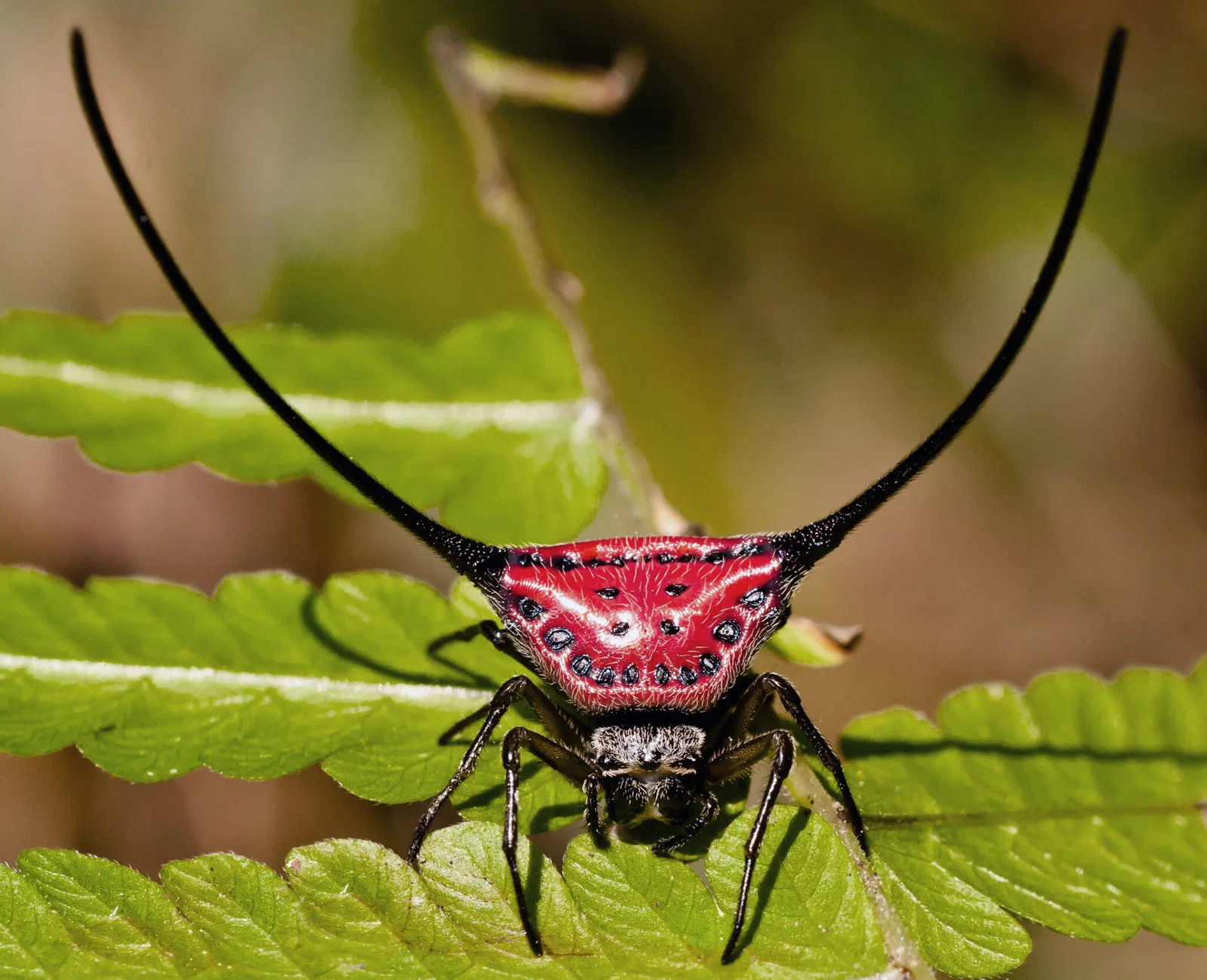
The creature was bright yellow with black markings across its back, but what truly terrified me were the spikes. Six sharp-looking projections extended outward from its body like tiny black horns or thorns, giving it the appearance of some miniature medieval weapon brought to life.
It looked hostile.
Engineered.
Almost mechanical.
The body shape alone was unsettling enough, but combined with the spikes, it triggered every instinctive fear humans seem biologically programmed to have about unfamiliar insects and spiders.
I froze.
My first reaction was not scientific curiosity.
It was immediate, irrational panic.
My brain cycled through increasingly dramatic possibilities in under five seconds.
Poisonous spider.
Dangerous invasive species.
Some kind of mutated insect.
A creature that absolutely should not exist inside a suburban garage.
The spider itself remained perfectly still, suspended in the center of its web as though it had been waiting specifically for me to notice it.
The longer I stared, the more unnatural it appeared.
Its shell-like body reflected the dim garage light in a strange glossy way. The spikes curved outward dramatically, almost symmetrical enough to look designed rather than evolved. Even its posture felt unsettlingly deliberate.
I slowly stepped backward.
Carefully.
Quietly.
As though sudden movement might somehow provoke it.
Looking back now, the absurdity makes me laugh. At the time, though, my fear felt entirely real. Human beings have an extraordinary talent for interpreting unfamiliar shapes as threats, especially when those shapes involve too many legs and sharp-looking body parts.
I grabbed my phone from my pocket without taking my eyes off the spider and zoomed in carefully with the camera.
The photo somehow made it look even worse.
Up close, the creature resembled something from a science fiction film — tiny black eyes, armored yellow abdomen, and spikes sharp enough to convince anyone it possessed some horrifying defense mechanism.
I immediately sent the picture to several friends.
That was my second mistake.
Instead of calming me down, they amplified the panic almost instantly.
“Absolutely not.”
“Why does it look like a boss battle?”
“Burn the garage.”
“That thing definitely bites people.”
One friend zoomed into the photo and replied, “I think that’s venomous.”
Which, to be fair, he admitted later was based on absolutely nothing except the spider looking emotionally threatening.
For several minutes I genuinely considered calling pest control.
I even searched online using phrases that probably revealed far too much about my mental state at the time:
“Yellow spider with spikes dangerous”
“Alien-looking spider in garage”
“Poisonous spiked spider”
Unfortunately, internet searches involving unidentified creatures rarely begin calmly. Search results included horrifying close-up images of exotic spiders from tropical rainforests, alarming forum posts written by people who clearly enjoyed terrifying strangers online, and dramatic headlines about invasive species spreading across regions.
Naturally, my anxiety escalated further.
One article showed a spider with similar coloring beside a warning label that read: DO NOT HANDLE.
Another described “painful defensive bites” without clarifying whether the species was remotely related to the creature in my garage.
At one point I became convinced the spider might jump.
That fear alone kept me standing several feet away from the wall like someone negotiating with a hostage situation.
Meanwhile, the spider itself had still not moved even once.
Eventually, after comparing enough images carefully, I finally found a match.
The terrifying creature was not an invasive mutant nightmare.
It was a Spiny orb-weaver.
And surprisingly, it was almost completely harmless.
I stared at the screen in disbelief.
There was no way the tiny armored monster hanging in my garage could belong to a species described online as “beneficial,” “non-aggressive,” and “harmless to humans.”
But every image matched perfectly.
The yellow shell-like body.
The black markings.
The dramatic spikes.
Everything.
As I continued reading, the fear slowly began dissolving into fascination.
Spiny orb-weavers are famous specifically because they look so alarming. Their bizarre appearance acts as a defense mechanism against predators like birds and larger insects. The spikes are not weapons designed for attacking humans; they exist largely to make the spider appear difficult or dangerous to eat.
In other words, the spider survives partly by terrifying creatures exactly the way it had terrified me.
That realization genuinely made me laugh.
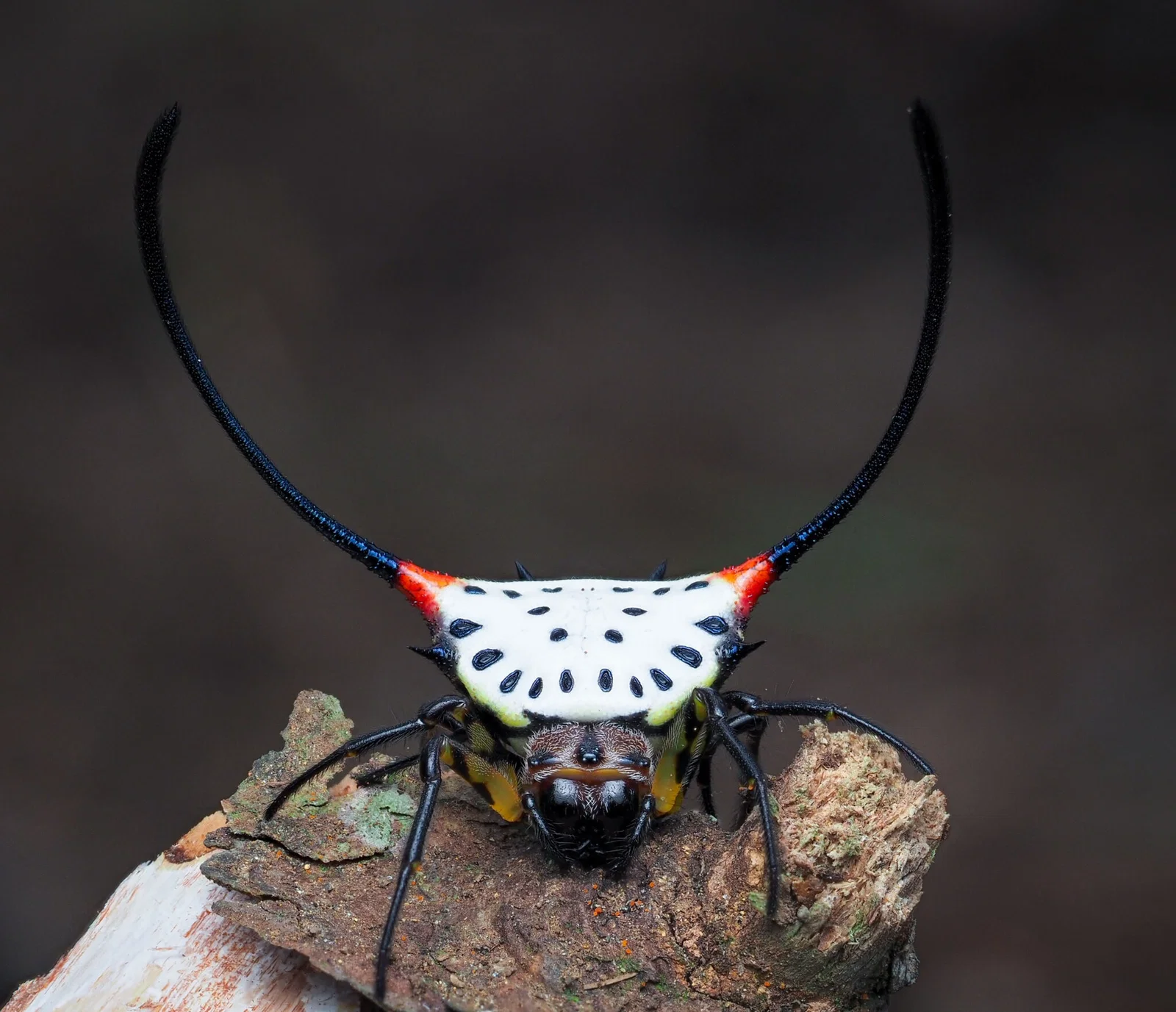
Nature had essentially evolved a tiny creature whose entire strategy involved looking emotionally alarming enough to avoid trouble.
And honestly?
It worked perfectly.
The more I researched, the more interesting the spider became. These orb-weavers build intricate circular webs designed to trap mosquitoes, flies, gnats, and other flying insects. Far from being dangerous invaders, they actually help control pests around homes and gardens.
The spider in my garage was not waiting to attack me.
It was quietly doing free pest-control work.
My fear began transforming into admiration almost immediately after understanding replaced uncertainty.
I walked closer to the web again, this time much more slowly and carefully.
Without panic distorting my perspective, I noticed details that had seemed invisible before.
The spider was actually tiny.
Much smaller than my imagination initially interpreted it to be.
Its web shimmered beautifully under the garage light, delicate and geometric against the dark wall. The spikes that once appeared aggressive now looked strangely elegant, almost artistic in their symmetry.
Most importantly, the spider itself seemed calm.
Indifferent.
Entirely uninterested in me.
All that panic I experienced had existed almost entirely inside my own head.
The creature never chased me.
Never threatened me.
Never even moved.
Yet my imagination had transformed it into a miniature alien monster simply because it looked unfamiliar.
That realization stayed with me longer than I expected.
Human beings often fear appearance before understanding. We instinctively interpret sharp shapes, unusual patterns, and unfamiliar creatures as dangerous because our brains evolved to prioritize caution over curiosity. Sometimes that instinct protects us.
Other times it makes harmless things appear terrifying.
The Spiny orb-weaver is a perfect example of that strange relationship between perception and reality.
Objectively speaking, it does look intimidating.
Its bright colors and dramatic spikes trigger immediate emotional reactions because they resemble warning signals found throughout nature. Many dangerous animals use sharp contrasts, spikes, or unusual body shapes as protection, so our brains naturally react cautiously when we encounter similar features unexpectedly.
But the fascinating part is how often appearance exaggerates reality.
This tiny spider looked like something capable of destroying ecosystems.
In reality, it spent its evenings catching mosquitoes in silence.
I ended up leaving the web untouched.
Over the following days, I actually found myself checking on the spider periodically whenever I walked through the garage. Once the fear disappeared, curiosity took over completely.
I watched it rebuild parts of its web after heavy rain.
I noticed how motionless it stayed during daylight hours.
I even caught myself appreciating the bizarre beauty of its design.
The yellow shell glowed almost golden in morning sunlight.
The black spikes looked sharp but strangely delicate.
It resembled a tiny piece of living artwork suspended in the air.
Friends who originally told me to “burn the garage down” became equally fascinated once I explained what it actually was.
Several admitted they would have reacted exactly the same way I did.
One friend looked at the photo again afterward and laughed.
“It still looks evil,” he said.
And honestly?
He wasn’t entirely wrong.
Nature sometimes creates creatures so visually dramatic they seem invented specifically to challenge human comfort levels.
But that discomfort often says more about us than the creature itself.
The longer I thought about the experience, the more I appreciated the strange lesson hidden inside it.
Fear thrives in uncertainty.
The less we understand something, the easier it becomes for imagination to exaggerate it into danger. My panic reached its peak before I learned anything factual at all. Once information replaced assumption, the terrifying “monster” transformed into a harmless spider simply existing exactly as nature intended.
That emotional shift — from fear to understanding to fascination — happens more often than people realize.
Sometimes the things that initially scare us most are simply unfamiliar versions of ordinary life.
And sometimes nature’s strangest creatures are not dangerous villains at all.
Sometimes they are just tiny architects with dramatic appearances, quietly hanging in garage corners while humans completely overreact nearby.
Even now, whenever I see photos of Spiny orb-weavers online, I laugh remembering how convinced I was that I had discovered some horrifying alien species.
In reality, I had encountered one of nature’s most unusual little pest controllers — a harmless spider whose greatest survival skill is convincing larger creatures to leave it alone.
Mission accomplished, apparently.
