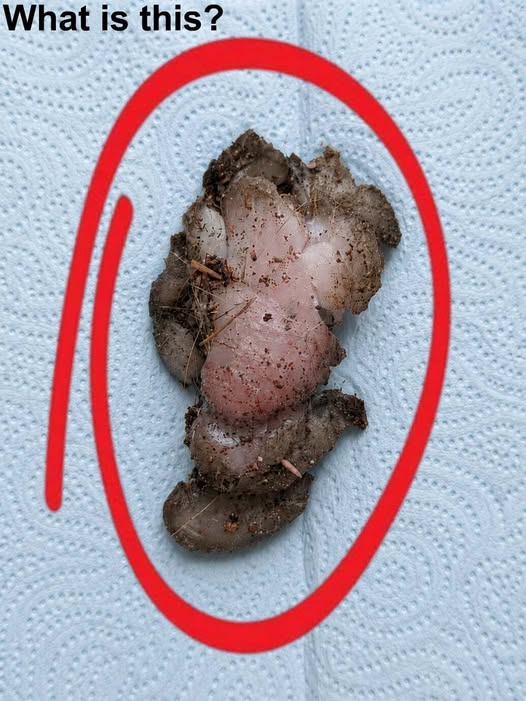
I kept staring at the object from across the bedroom like it might explain itself if I gave it enough time.
The rain outside had intensified, tapping against the windows in uneven bursts that somehow made the apartment feel smaller and quieter. The wardrobe cast a long shadow across the carpet, and the thing underneath it remained half-hidden in darkness despite the flashlight beam aimed directly at it.
I knew how ridiculous I was being.
That was the worst part.
A rational person would have reached under the wardrobe, pulled the object out, and identified it in under five seconds. But anxiety rarely behaves rationally once imagination gets involved. Instead of solving the mystery, I kept circling it mentally, building emotional momentum around something I still had not touched.
I crouched again, lower this time.
The flashlight trembled slightly in my hand.
The object looked tangled and compact, wrapped in what appeared to be dark fabric. Something metallic reflected faintly near one edge.
My brain immediately interpreted that reflection in the least reasonable way possible.
A knife.
Or jewelry.
Or some kind of hidden evidence.
I actually caught myself wondering whether this was the kind of moment people later described in documentaries with phrases like, “That’s when everything changed.”
Which, in hindsight, should have been my first warning that I had completely lost perspective.
I stood up and paced the room once.
Then twice.
Every ordinary memory involving Emma suddenly began rearranging itself into suspicious shapes.
Three months earlier, she had thrown away an old storage bin without letting me look inside.
Two weeks ago, she had become oddly defensive when I joked about snooping through her drawers while searching for batteries.
Last winter, she mentioned once living with roommates who “created chaos everywhere they went,” but refused to elaborate further.
At the time, none of these moments mattered.
Now my anxious brain treated them like clues.
I hated how quickly uncertainty became suspicion.
Not because I truly distrusted Emma, but because fear has a way of temporarily rewriting emotional reality. Once panic starts searching for patterns, it becomes disturbingly good at finding them everywhere.
I sat on the edge of the bed and rubbed both hands over my face.
“You are being insane,” I muttered aloud.
Unfortunately, hearing the sentence didn’t stop me from continuing.
I grabbed a broom from the hallway closet and carefully nudged the object from a distance.
It shifted slightly.
Soft.
Not heavy.
Dust rolled across the floor beneath it.
Nothing exploded.
Nothing moved.
Still, I didn’t feel calmer.
I bent lower again and used the broom to drag the object partially into the light.
Immediately, my imagination accelerated once more.
The faded fabric looked stained in places.
The tangled shape inside appeared uneven and strangely compact.
A thin strap or cord hung loose from one side.
I actually stepped backward again.
At that point, I was no longer investigating an object.
I was investigating my own anxiety while pretending it was a mystery.
Then I made another mistake.
I called my friend Daniel.
He answered on speaker while walking somewhere noisy.
“What’s up?”
I lowered my voice instinctively, despite being alone.
“I found something weird in our apartment.”
Daniel paused.
“What kind of weird?”
“I don’t know.”
“That’s not reassuring.”
I glanced toward the wardrobe again.
“It’s hidden under furniture. Wrapped in cloth or something.”
There was a brief silence.
Then, naturally, Daniel reacted in the most unhelpful way possible.
“Dude, what if it’s ashes?”
I closed my eyes.
“Why would you say that?”
“I don’t know! You said hidden cloth bundle.”
“It’s probably nothing.”
“Okay, but if it smells weird, don’t touch it.”
“It doesn’t smell like anything.”
“That’s exactly what someone says before uncovering a decades-old crime scene.”
I hung up immediately.
My anxiety did not appreciate his sense of humor.
For another several minutes I remained trapped in this ridiculous cycle where logic and imagination kept wrestling each other without resolution. Part of me wanted to laugh at myself already. Another part genuinely feared discovering something disturbing.
The apartment suddenly felt unfamiliar.
Not dangerous exactly.
Just emotionally distorted in the strange way ordinary places become distorted when fear temporarily changes perception.
I checked the clock.
Emma would probably be home soon.
A reasonable person would have waited.
Instead, I decided I needed answers before she returned because somehow I had convinced myself the suspense was becoming unbearable.
I grabbed the broom again and pulled harder.
The object slid fully from beneath the wardrobe.
Dust scattered across the floor.
I froze.
The thing collapsed awkwardly into itself under the overhead light.
And instantly—instantly—the terrifying mystery lost about eighty percent of its power.
Because now it no longer looked sinister.
It looked familiar.
Not completely recognizable yet, but familiar in the deeply embarrassing way where your brain slowly realizes it has been catastrophizing something ordinary for far too long.
I crouched carefully beside it.
The “fabric wrapping” was actually faded sweatshirt material.
The “metallic object” was a bent zipper.
The tangled shape underneath appeared soft and uneven because it was stuffed with smaller objects.
I stared at it for several seconds before understanding finally arrived.
It was a duffel bag.
An old dusty duffel bag shoved beneath the wardrobe and forgotten long enough to collect an absurd amount of dust and lint.
I exhaled so hard I nearly laughed from relief.
But curiosity still lingered.
What was inside?
I hesitated again before unzipping it, which now felt comically dramatic considering everything my imagination had already invented.
The zipper caught halfway because of dust buildup.
I tugged harder.
The bag opened.
Inside were exactly the kinds of things capable of surviving forgotten beneath furniture for years without anyone caring.
Old scarves.
A broken umbrella.
Two unmatched gloves.
A paperback novel swollen from water damage.
And, most embarrassingly of all, several tangled Halloween decorations.
That was the “organic twisted mass” that had terrified me.
Artificial cobwebs.
Black fabric strips.
Plastic spiders.
I sat back against the wardrobe and started laughing alone in the bedroom like a complete idiot.
Not polite laughter either.
The exhausted kind that appears after adrenaline suddenly realizes it has nowhere useful to go.
Every terrifying theory I had constructed dissolved instantly under ordinary reality.
No hidden crime.
No secret evidence.
No horrifying discovery.
Just forgotten seasonal decorations and clutter buried under years of dust.
At that exact moment, the apartment door opened.
Emma stepped inside carrying an umbrella and takeout containers.
“Hey,” she called from the hallway. “You still awake?”
I looked around at the scene before me.
Dust everywhere.
Wardrobe half-emptied.
Broom abandoned nearby.
Duffel bag spread open on the floor like forensic evidence.
Emma entered the bedroom and stopped immediately.
“What happened here?”
I considered lying for approximately one second.
Then embarrassment won.
“I thought I found something horrifying under the wardrobe.”
She blinked once.
“What?”
I pointed weakly toward the bag.
Emma stared at it.
Then at me.
Then back at the bag.
Recognition crossed her face almost instantly.
“Oh my God,” she said, already laughing. “I forgot that thing existed.”
I buried my face in my hands.
“It looked suspicious.”
“It’s Halloween decorations.”
“In my defense, it looked much worse in the dark.”
Emma set the takeout containers down and crouched beside the bag.
“I’ve been looking for these spiderweb decorations for two years.”
I groaned.
“You have no idea how dramatic my thoughts became.”
She looked up smiling.
“How dramatic?”
I hesitated.
Then decided honesty was the only surviving option.
“At one point I wondered if I’d uncovered criminal evidence.”
Emma laughed so hard she had to sit down on the carpet.
“No you didn’t.”
“I absolutely did.”
“You thought I was secretly hiding evidence under our wardrobe?”
“I wasn’t proud of the theory.”
“Oh my God.”
She laughed harder.
To her credit, though, there was no cruelty in it.
No humiliation.
Just genuine amusement at how wildly the human brain can spiral when uncertainty meets exhaustion and imagination.
Eventually she leaned against my shoulder, still grinning.
“You could’ve just asked me.”
“I know.”
“That would’ve saved you from emotionally investigating Halloween decorations.”
“I know.”
The warmth of that moment mattered more than the embarrassment.
Because beneath the humor sat something honest and strangely human: anxiety often grows fastest in silence. Left alone long enough, uncertainty fills itself with invented meaning. The less information we have, the more aggressively imagination tries to protect us by creating explanations—even absurd ones.
And once fear begins building narratives, ordinary details suddenly become “evidence.”
Emma’s forgotten duffel bag had never actually been frightening.
My interpretation of it was.
That distinction felt important afterward.
We ordered food onto paper plates and ate sitting on the bedroom floor beside the opened bag while rain continued tapping softly against the windows.
Emma held up one of the fake plastic spiders.
“So this was your terrifying discovery?”
“You’re making fun of me.”
“A little.”
“I deserve it.”
She smiled gently.
“For what it’s worth, your imagination is impressive.”
“That’s one word for it.”
She leaned her head against my shoulder again.
“I do the same thing sometimes,” she admitted quietly.
“What do you mean?”
“I overthink harmless things until they feel emotionally real.”
That surprised me less than it should have.
Most people do.
Some are simply better at hiding it.
The difference between anxiety and reality often comes down to time, perspective, and conversation. Alone in the apartment, my mind transformed forgotten clutter into emotional certainty. One thirty-second conversation with Emma dissolved the entire illusion immediately.
That contrast stayed with me long after the embarrassment faded.
Later that night, after cleaning the dust from the floor and returning the wardrobe to normal, I caught myself looking underneath it one final time before bed.
Nothing remained there except shadows and dust.
Ordinary shadows.
Ordinary dust.
The same apartment.
The same relationship.
The same life I had before my imagination briefly turned clutter into catastrophe.
Emma noticed me glancing downward and smirked.
“Careful,” she said. “There might be another criminal mastermind hiding under there.”
I laughed.
But quietly, I also appreciated the deeper lesson buried beneath the comedy.
Fear is persuasive.
Anxiety is creative.
And human beings are astonishingly talented at inventing stories around incomplete information.
Sometimes the scariest thing in the room is not the mysterious object hidden in darkness.
Sometimes it is simply the unchecked imagination staring back at it.