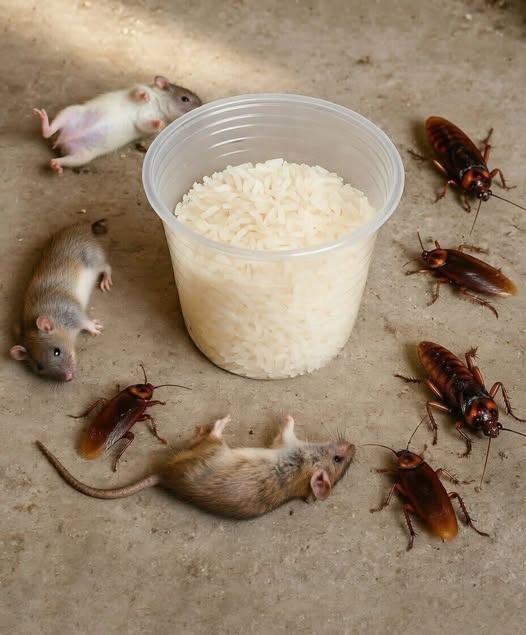
Most people think of rice as something that belongs in the kitchen — a simple pantry staple used in soups, family dinners, and recipes passed down through generations.
But surprisingly, rice can also play a helpful role in safer, natural pest-management routines when combined with smart cleaning habits and non-toxic household practices.
For generations, homeowners searched for ways to discourage unwanted pests without filling their homes with harsh fumes, dangerous sprays, or risky chemicals. Today, many people are returning to simpler approaches because they want solutions that feel safer around children, pets, food preparation areas, and everyday living spaces.
Cockroaches and rats remain two of the most frustrating household pests in the world. They invade kitchens, contaminate food, damage property, and create stress for families trying to maintain a clean and comfortable home.
The good news is that pest control is not always about using the strongest poison available.
Often, the most effective long-term strategy involves understanding why pests enter homes in the first place — and making the environment less attractive to them.
And surprisingly, something as ordinary as rice can help.
Why Rice Attracts Pests
Rice contains starches and mild natural aromas that can attract insects and rodents searching for food sources.
At first, that may sound like a bad thing.
But in controlled situations, rice can actually help homeowners monitor pest activity and identify where infestations are hiding.
Small portions of rice placed strategically in problem areas can reveal:
- Where cockroaches are traveling
- Which entry points rats use most often
- How severe an infestation may be
- Which rooms need deeper cleaning or sealing
Instead of functioning as poison, rice becomes a simple tracking tool that helps homeowners understand pest behavior more clearly.
And once you understand behavior, controlling pests becomes much easier.
Step One: Use Rice to Identify Activity Zones
One simple technique involves placing a small spoonful of dry rice in shallow lids or bottle caps near suspected activity areas overnight.
Good locations include:
- Behind refrigerators
- Under sinks
- Near pantry corners
- Behind stoves
- Along baseboards
- Near gaps in walls
- Around garage shelves
Check the rice the next morning.
If it has been disturbed, scattered, or partially eaten, you have likely identified an active pest route.
This helps you focus cleaning and prevention efforts exactly where they matter most.
Why Prevention Matters More Than Poison
Many people try to solve pest problems immediately with strong sprays or toxic bait.
But pests almost always return if the environment still provides:
- Easy food access
- Water sources
- Hiding spaces
- Warmth
- Open entry points
In reality, long-term pest control is mostly about habitat removal.
Cockroaches especially thrive in dark, humid areas with access to crumbs or moisture. Rats look for warmth, shelter, and dependable food.
Once those needs disappear, the home becomes much less attractive.
Safe Natural Approaches for Cockroaches
Instead of dangerous homemade poisons, many homeowners prefer safer deterrent methods that reduce roach activity gradually.
Keep Surfaces Completely Dry
Cockroaches can survive surprisingly long periods with very little food, but they desperately need moisture.
Even small leaks beneath sinks can support an infestation.
Focus on:
- Fixing dripping pipes
- Drying sinks overnight
- Avoiding standing water
- Wiping kitchen counters before bed
Removing moisture alone can dramatically reduce activity.
Use Airtight Food Storage
Roaches are highly sensitive to food smells.
Store grains, cereals, rice, flour, and snacks in sealed containers instead of thin cardboard packaging.
This prevents pests from smelling easy food sources.
Reduce Clutter
Cockroaches love cramped hiding spots:
- Cardboard boxes
- Paper piles
- Unused bags
- Crowded cabinets
Decluttering reduces safe nesting areas and makes infestations easier to detect.
Try Natural Repellent Scents
Some homeowners report success using strong scents roaches dislike, including:
- Peppermint oil
- Bay leaves
- Citrus peels
- Cedar
- Garlic near entry points
These are not miracle solutions, but they may help discourage activity in small spaces when combined with cleaning.
Safer Rat Prevention Strategies
Rats are intelligent, cautious animals that often enter homes searching for warmth and shelter.
The most effective control strategy is exclusion.
Seal Entry Points
Rats can squeeze through surprisingly tiny openings.
Inspect carefully for:
- Gaps beneath doors
- Open vents
- Pipe openings
- Cracks near foundations
- Garage gaps
Steel wool combined with proper sealant can help block smaller holes.
Eliminate Food Access
Never leave pet food out overnight.
Store dry goods in thick sealed containers.
Take garbage out regularly and use bins with tight lids.
Even tiny food scraps encourage rodent activity.
Remove Nesting Materials
Rats seek soft materials for nests.
Reduce access to:
- Loose paper
- Fabric piles
- Cardboard storage
- Unused clutter
Clean storage spaces regularly.
Why Homemade Poisons Can Be Dangerous
Online pest-control advice sometimes recommends mixing household chemicals into food bait.
But many homemade poison methods carry serious risks:
- Accidental poisoning of pets
- Harm to children
- Secondary poisoning of wildlife
- Dangerous chemical exposure
- Unpleasant odors from hidden dead pests
Even “natural” substances can become harmful when misused.
That is why safer prevention-focused approaches are often better for everyday households.
The Importance of Monitoring
Natural pest management requires consistency.
Check problem areas every few days and look for signs like:
- Droppings
- Chewed packaging
- Grease marks along walls
- Unusual smells
- Scratching sounds
- Dead insects
Early intervention is much easier than dealing with a large infestation later.
When Professional Help Is Necessary
Sometimes home remedies are not enough.
Professional pest-control experts should be contacted if you notice:
- Large numbers of roaches during daytime
- Persistent rat sightings
- Nesting evidence
- Structural damage
- Strong odors
- Ongoing activity despite prevention efforts
Professionals can identify hidden infestations safely and recommend targeted solutions.
Why Natural Methods Appeal to So Many People
Many households today are trying to reduce unnecessary chemical exposure.
Families with children, pets, allergies, or respiratory sensitivities often prefer gentler approaches whenever possible.
Natural prevention methods offer several advantages:
- Lower chemical exposure
- Safer indoor environments
- Reduced odors
- Lower cost
- Better long-term maintenance habits
Most importantly, they encourage homeowners to address the root causes of infestations rather than relying entirely on temporary fixes.
Small Habits Create Big Results
One of the most important lessons in pest control is that tiny daily habits matter more than dramatic treatments.
Wiping counters.
Sealing containers.
Fixing leaks.
Vacuuming crumbs.
Reducing clutter.
These simple routines quietly transform a home into a place pests struggle to survive.
And that is what makes natural prevention so powerful.
It is not about fear.
It is not about harsh chemicals.
It is about understanding how pests behave and making your home less inviting to them over time.
Sometimes the most effective solutions are not complicated at all.
Sometimes they begin with ordinary household awareness, a few practical habits, and even something as simple as a small bowl of rice helping reveal where unwanted visitors are hiding.
With patience, consistency, and smart prevention, it is possible to create a cleaner, calmer, and far more pest-resistant home naturally.