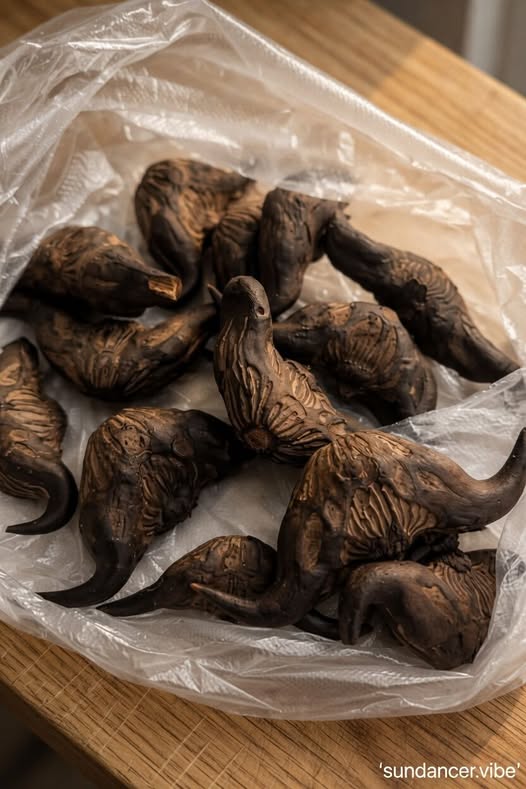
Dried water caltrops, widely known as bat nuts, buffalo nuts, ling nuts, or singhada, are among the most unusual traditional foods still found in Asian markets today. Their dark, horned shells appear almost prehistoric, resembling tiny carved animal skulls or ancient artifacts more than something edible. To many first-time observers, they look intimidating and mysterious, often causing confusion about whether they are decorative objects, medicinal ingredients, or even fossils collected from riverbeds. Yet hidden beneath their tough exterior lies a soft, starchy kernel that has nourished communities across Asia for centuries. These remarkable aquatic fruits come from floating water plants that grow in calm lakes, ponds, marshes, and slow-moving waterways, particularly throughout China, India, Bangladesh, Thailand, Vietnam, and other regions of Southeast Asia. Though unfamiliar to much of the Western world, water caltrops have long played an important role in traditional agriculture, seasonal diets, cultural rituals, and medicinal practices.
The plant responsible for producing water caltrops belongs primarily to the Trapa genus, especially Trapa natans and Trapa bicornis. These aquatic plants thrive in shallow freshwater ecosystems where warm temperatures and nutrient-rich waters allow them to spread across the surface in dense mats of floating leaves. Beneath the water, roots anchor themselves in muddy sediment while the fruit slowly develops over several months. As the fruit matures, it forms the hard shell and distinctive horns that later give the dried caltrop its famous bat-like appearance. Depending on the species and region, the horns may curve sharply upward, extend outward like buffalo horns, or create shapes resembling wings or claws. Long before modern agriculture industrialized food production, rural communities living near lakes and wetlands learned how to cultivate, harvest, and preserve these aquatic fruits as a dependable seasonal food source.
Historical records suggest that water caltrops were consumed in China thousands of years ago, with references appearing during the Han Dynasty. Ancient farmers recognized their value not only as a nourishing crop but also as a resilient food capable of growing in environments unsuitable for many land plants. Unlike grains that depended on dry fields and stable weather, water caltrops flourished in flooded areas and shallow wetlands, making them especially valuable in regions vulnerable to seasonal flooding. Over time, entire harvesting traditions developed around them. Families would gather during harvest season, wading through ponds or collecting the floating fruits by hand before bringing them home for drying and storage. Because fresh water caltrops spoil quickly, drying became an essential preservation method that allowed the food to remain edible for long periods. Once dried, the shells hardened into the black horned pods commonly sold in markets today.
Fresh water caltrops differ significantly from their dried form. Newly harvested fruits are often green, purple, or reddish-brown and contain moist, crisp flesh with a texture similar to water chestnuts. Their flavor is mild, slightly sweet, and refreshing. In local markets across Asia, fresh caltrops are frequently boiled or steamed and sold as seasonal street snacks. However, because they contain a high water content and perish rapidly, they are rarely exported internationally. Drying transformed them into a more practical commodity that could be transported, stored, traded, and consumed throughout the year. This preservation technique became especially important in ancient societies where food security depended heavily on seasonal planning and efficient storage methods.
The process of drying water caltrops is both practical and transformative. Once harvested, the fruits are cleaned and left to dry naturally under sunlight or in well-ventilated environments. As moisture gradually leaves the shell, the outer surface darkens and hardens dramatically. The interior kernel shrinks slightly but remains protected within the shell, preserving its nutrients and flavor. The resulting dried pods are extremely durable and can remain edible for months or even years when properly stored. In traditional marketplaces, piles of black horned caltrops often stand out immediately because of their unusual appearance. Their intimidating shells may discourage unfamiliar buyers, but experienced consumers recognize them as treasured seasonal ingredients.
Nutritionally, dried water caltrops offer far more than visual novelty. The kernels inside are rich in complex carbohydrates, making them a valuable source of slow-releasing energy. Historically, this quality made them especially important during periods of food scarcity or heavy physical labor. Farmers, laborers, and traveling merchants could rely on them as filling foods that provided lasting energy without requiring extensive preparation. In addition to carbohydrates, water caltrops contain dietary fiber, potassium, manganese, and moderate amounts of vitamins and antioxidants. Their nutritional profile has contributed to their reputation as both a survival food and a health-supporting ingredient.
In India, singhada has long been associated with fasting traditions and religious observances. During Hindu fasting periods, many grain-based foods are restricted, leading people to seek alternative sources of nutrition and energy. Water caltrops became particularly valuable because they are naturally gluten-free and considered acceptable during many fasting practices. Singhada flour, made by grinding dried kernels into a fine powder, is commonly used to prepare flatbreads, pancakes, sweets, and festival foods. Because the flour has a mild flavor and starchy texture, it adapts easily to both savory and sweet recipes. In many households, dishes made from singhada flour carry emotional and spiritual significance, connecting food preparation with ritual observance and seasonal celebration.
Traditional Chinese Medicine also gave water caltrops an important medicinal identity. Practitioners classified them as cooling foods believed to reduce excess internal heat, support digestion, and strengthen kidney function. They were often recommended during hot weather or after consuming heavily fried or warming foods. Some traditional remedies incorporated water caltrops into soups, herbal mixtures, or restorative dishes intended to rebalance the body. While modern scientific research on water caltrops remains relatively limited compared to more commercially important crops, contemporary nutritional studies have shown interest in their antioxidant compounds and low glycemic characteristics. Researchers continue exploring their potential role in supporting stable blood sugar levels, digestive health, and metabolic balance.
One of the most fascinating aspects of dried water caltrops is the ritual involved in preparing them. Their shells are incredibly hard and cannot simply be cracked like ordinary nuts. Preparation often begins with boiling or roasting the pods for an extended period to soften the interior. Once cooked, the shell must be broken open carefully using a nutcracker, hammer, or heavy kitchen tool. Families sometimes gather together for this process, turning preparation into a shared social activity. The cracking of shells, conversation around the table, and anticipation of the warm kernels inside become part of the experience itself. In many households, especially during festivals or colder seasons, eating water caltrops is associated with comfort, togetherness, and nostalgia.
The flavor of cooked water caltrop kernels is subtle but satisfying. They are mildly sweet, nutty, earthy, and starchy, often compared to chestnuts, taro, or boiled potatoes with a slightly firmer texture. Because their flavor is gentle, they absorb surrounding seasonings exceptionally well. This versatility allows them to appear in a wide variety of dishes across Asia. In China, roasted caltrops may be seasoned with salt, soy sauce, five-spice powder, or sugar to create flavorful snacks served during festivals and family gatherings. Some regions incorporate them into soups or braised dishes, where the kernels absorb rich broths and aromatic spices.
In Southeast Asia, water caltrops are frequently sold by street vendors who boil them fresh and serve them warm in paper bags or baskets. The experience resembles eating roasted chestnuts during winter markets in Europe. Customers crack open the shells one by one, enjoying the soft kernels as portable comfort food. In Vietnam and Thailand, fresh water caltrops may also appear in sweet desserts combined with coconut milk, syrup, or sticky rice. Their mild starchiness pairs well with creamy and sweet ingredients, making them surprisingly adaptable to dessert cuisine.
Modern chefs have recently begun rediscovering water caltrops as interest in heritage foods and traditional ingredients continues to grow. Contemporary culinary movements increasingly value ingredients that combine sustainability, historical significance, and nutritional benefits. Water caltrops fit naturally into this trend because they represent centuries of regional food knowledge tied closely to local ecosystems. Fine-dining chefs in Asia and beyond have experimented with transforming caltrop kernels into purees, crisps, flour-based pastries, dumpling fillings, and roasted garnishes. Their unusual appearance also provides dramatic visual appeal, making them attractive for artistic plating and storytelling-driven cuisine.
Sustainability discussions have also contributed to renewed interest in aquatic crops like water caltrops. Because the plants grow in freshwater environments, they offer alternative food production possibilities in regions affected by flooding or limited farmland availability. Historically, communities used lakes and wetlands not only for fishing but also for cultivating aquatic crops such as lotus roots, water chestnuts, and caltrops. These traditional systems reflected a sophisticated understanding of ecological balance and resource management. As modern agriculture faces challenges related to climate change, water shortages, and soil degradation, some researchers believe ancient aquatic farming methods may offer valuable insights for future food systems.
Despite their long history and cultural importance, water caltrops remain relatively unknown outside Asia. Several factors contribute to this limited global recognition. Their intimidating appearance can discourage unfamiliar consumers, while the preparation process requires patience and effort compared to more convenient packaged snacks. Additionally, because fresh caltrops spoil quickly and dried ones are often sold only in specialized Asian markets, many people never encounter them at all. The decline of traditional food knowledge in urbanized societies has also contributed to their fading visibility. Younger generations growing up with processed convenience foods may have fewer opportunities to learn about heritage ingredients that once formed important parts of seasonal diets.
However, the rise of social media and global food exploration has begun introducing water caltrops to wider audiences. Food bloggers, culinary historians, and cultural content creators frequently highlight their unusual appearance and fascinating history, attracting curiosity from viewers around the world. Videos showing the cracking of horned shells and the reveal of soft white kernels often generate surprise and fascination online. For many viewers, water caltrops symbolize the enormous diversity of traditional foods that exist beyond mainstream supermarket culture.
The symbolism associated with water caltrops also adds depth to their cultural identity. In several Asian traditions, the horned shape is linked to ideas of protection, resilience, and strength. Some communities believed the pointed horns could ward off evil spirits or negative energy, making them suitable offerings during festivals and ceremonial gatherings. In certain regions, they were included in harvest celebrations as symbols of abundance and prosperity. Their connection to water, fertility, and seasonal cycles further reinforced their importance within traditional belief systems.
For many families, the memory of eating water caltrops is tied closely to childhood and seasonal rhythms. Grandparents teaching children how to crack open the shells, market vendors steaming fresh harvests, and families sharing bowls of roasted caltrops during festivals all contribute to a collective cultural memory surrounding the food. These emotional connections often matter just as much as nutrition or flavor. Like many heritage foods, water caltrops represent continuity between generations and preserve traditions that might otherwise disappear in rapidly modernizing societies.
The culinary flexibility of water caltrops continues to inspire experimentation today. Some modern cooks blend cooked kernels into soups to create creamy textures without dairy. Others mash them into fillings for pastries or dumplings. Singhada flour remains popular in gluten-free cooking because it provides a naturally starchy texture suitable for breads and desserts. Health-conscious consumers increasingly appreciate minimally processed traditional foods, and water caltrops align well with interest in whole ingredients and plant-based nutrition.
Although scientific research remains ongoing, preliminary studies suggest that compounds found in water caltrops may possess antioxidant and anti-inflammatory properties. Researchers are investigating whether certain extracts could support cardiovascular health or metabolic regulation. While these studies are still developing and should not be overstated, they contribute to growing curiosity about traditional crops once overlooked by mainstream agriculture. Many ancient foods dismissed as outdated are now being reevaluated through the lens of nutrition science and sustainability.
The story of dried water caltrops ultimately reflects humanity’s ability to adapt creatively to natural environments. Long before industrial food systems dominated global diets, communities relied on deep ecological knowledge to identify, cultivate, and preserve nutritious local resources. Water caltrops emerged from this relationship between people and wetlands, becoming not merely survival foods but ingredients woven into culture, celebration, medicine, and identity. Their transformation from strange black pods into nourishing meals illustrates how unfamiliar appearances can conceal remarkable value.
Today, as people search for healthier diets, sustainable ingredients, and meaningful culinary traditions, water caltrops offer a powerful reminder that many forgotten foods still hold relevance in the modern world. Their story bridges ancient agriculture and contemporary gastronomy, connecting traditional wisdom with modern curiosity. Whether enjoyed as roasted festival snacks, ground into fasting flour, simmered in soups, or reinvented in fine dining kitchens, these mysterious horned pods continue to carry centuries of history within their shells.
For those willing to crack them open, dried water caltrops reveal far more than a simple starchy kernel. They reveal stories of lakeside harvests, family rituals, cultural resilience, medicinal beliefs, and culinary ingenuity passed across generations. Beneath their strange appearance lies a food deeply connected to human survival, creativity, and celebration. In a world increasingly dominated by uniform global ingredients, the enduring presence of bat nuts serves as a reminder that some of the most fascinating foods are also the ones most easily overlooked.