The morning began quietly.
Not beautifully. Not dramatically. Just quietly, in the ordinary way most mornings do after years of routine have worn soft paths through daily life.
The coffee maker hummed in the kitchen while pale sunlight filtered through the windows in uneven stripes. Somewhere outside, a dog barked twice before falling silent again. The house still carried that sleepy stillness that exists in the hours before everyone is fully awake.
I moved through my usual routine almost automatically.
Straightening blankets. Loading dishes into the dishwasher. Picking up abandoned socks from the hallway floor.
Normal things. Forgettable things.
My son had already left for school in a rush, barely pausing long enough to grab toast before racing out the front door with one shoe untied and his backpack half-zipped.
“Clean your room when you get home,” I had called after him.
“Yeah, okay!” he shouted back without turning around.
The universal language of children making promises they have no intention of keeping immediately.
I smiled to myself at the memory while carrying a basket of laundry upstairs.
His bedroom door was partially open.
From the hallway alone, I could already see the usual disaster waiting inside.
Clothes draped over a chair. A hoodie hanging halfway off the bed. Books scattered across the floor. Empty snack wrappers peeking out from beneath the desk.
Nothing unusual.
My son’s room had always looked like the physical representation of motion itself, as though life happened too quickly there for organization to catch up.
Normally, I would have ignored it until later.
But losing myself in small tasks had become strangely comforting lately.
The world feels more manageable when you can fold it into neat corners.
So I stepped inside.
The curtains were only half open, leaving portions of the room dim despite the growing daylight outside. Dust floated lazily through narrow beams of sun near the window.
I set the laundry basket on the bed and began gathering clothes from the floor.
A T-shirt. Two mismatched socks. A pair of sweatpants.
I bent to grab a notebook near the dresser when something caught my attention beside the bed.
At first, I thought it was broken plaster.
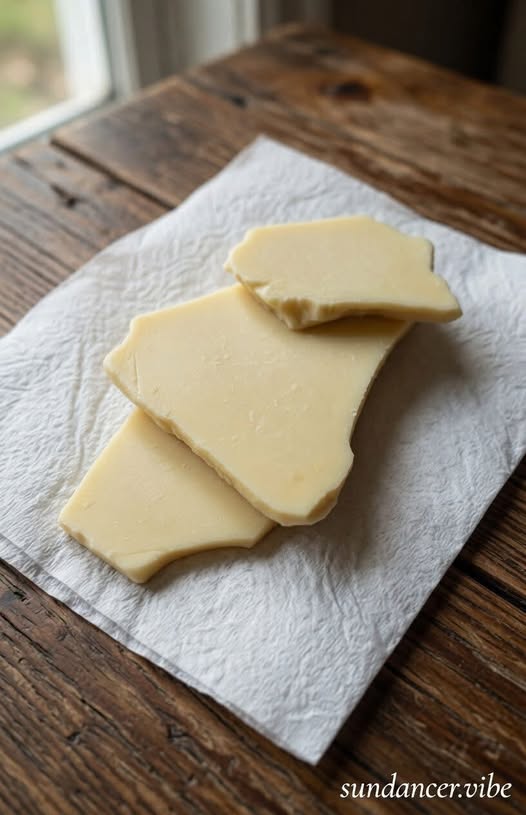
Pale fragments scattered across the floorboards near the wall. Small pieces. Irregular shapes. Some larger than others.
I frowned.
The pieces looked oddly out of place against the dark wood floor.
For a second, I simply stared.
Then something unpleasant moved quietly through my chest.
Not panic. Not yet.
Just instinct.
That strange parental instinct that notices when something feels slightly wrong before the mind fully understands why.
I stepped closer.
The fragments were off-white, almost gray in places, with a dusty coating covering their surfaces. Some appeared brittle at the edges. Others looked crushed.
I crouched slowly.
And suddenly my imagination outran logic completely.
A cold heaviness spread through my stomach.
There is something uniquely terrifying about the moment a parent suspects danger may exist inside their child’s life without their knowledge.
Because the fear doesn’t arrive carefully.
It crashes in all at once.
Every story you’ve ever heard. Every warning from the news. Every conversation about hidden struggles, secret habits, dangerous influences.
Your mind becomes a machine that produces worst-case scenarios faster than reason can stop them.
I picked up one of the fragments carefully.
It felt dry. Almost chalky.
A faint powder coated my fingertips.
Immediately my thoughts darkened further.
What was this?
The question itself felt frightening.
I turned the piece over slowly in my hand, trying to identify it.
But instead of clarity, my brain kept feeding me possibilities I didn’t want.
Something chemical. Something dangerous. Something hidden.
The room suddenly felt unfamiliar.
Not because anything had physically changed, but because fear changes environments instantly.
A child’s bedroom can transform from ordinary to terrifying in seconds once suspicion enters it.
I glanced around the room differently now.
The half-open drawers. The backpack tossed carelessly near the desk. The closed closet door.
Every object suddenly seemed capable of hiding something I didn’t understand.
I hated how quickly my mind shifted.
And yet I couldn’t stop it.
Because love makes fear persuasive.
Especially parental love.
When you love someone deeply, your brain begins scanning constantly for threats to their safety, happiness, and future. Most of the time, that instinct operates quietly in the background.
Wear your seatbelt. Text me when you arrive. Don’t stay out too late.
But occasionally, something triggers it.
And then it becomes overwhelming.
I stood slowly, still clutching the fragment.
For several long seconds, I considered calling my husband.
Then I considered calling my son directly.
But what would I even say?
“Hello, I found mysterious pale chunks in your room and immediately assumed your life was spiraling into disaster?”
The thought sounded absurd.
Yet the fear itself still felt real.
I walked toward the window and held the fragment closer to the light.
Its surface looked uneven. Dry. Almost crumbly.
The powder on my fingertips made me increasingly uneasy.
I imagined difficult conversations.
Questions I wouldn’t know how to ask without sounding accusatory. Questions I might not even want answers to.
Had I missed signs?
That thought frightened me most.
Parents carry a quiet terror that one day they might discover their child has been struggling while they remained completely unaware.
The idea settles deep into you long before there is any reason for it.
It grows from every story about hidden pain. Every headline. Every warning from other parents.
You begin believing danger often arrives silently.
And because of that, even harmless mysteries can feel loaded with meaning.
I set the fragment carefully on the desk and looked down again at the remaining pieces scattered across the floor.
There were more than I initially realized.
Some partially crushed beneath the bed frame. Others near the wall.
My chest tightened again.
I knelt once more and gathered another piece.
This one broke slightly between my fingers.
Dry. Brittle.
I stared at it intensely, willing recognition to arrive.
Instead, my mind continued spiraling.
What if this wasn’t the first time? What if there were other things I hadn’t noticed? What if my son had been hiding problems behind ordinary teenage behavior all along?
I hated these thoughts even while having them.
Because part of me already knew I was building entire stories from almost no evidence.
But fear rarely waits for evidence.
It builds first. Questions later.
I sat back slowly on my heels.
The room suddenly seemed too quiet.
Outside, I could hear distant traffic and the faint sound of a lawn mower somewhere down the street.
Normal life continued completely unaware of the storm briefly unfolding inside my head.
Then something shifted.
Small. Almost unnoticeable.
A scent.
I frowned immediately.
I lifted the fragment closer to my face again.
There it was.
Faint. Sweet.
Not sharp. Not chemical. Not alarming.
Sweet.
I blinked.
My brain struggled to adjust directions that quickly.
I smelled it again.
Vanilla. Sugar. Something familiar.
And suddenly, like a puzzle piece sliding into place, recognition arrived all at once.
Chocolate.
White chocolate.
I stared at the fragment in complete disbelief.
Then at the floor. Then back at the fragment.
The dusty coating wasn’t suspicious residue. It was bloom—the harmless pale film chocolate develops when it gets old.
The brittle texture wasn’t evidence of anything dangerous. It was simply stale.
The strange appearance wasn’t unnatural at all. It was just forgotten candy dried out beneath a bed.
For one long second, I remained frozen between embarrassment and relief.
Then the relief won completely.
A laugh escaped me unexpectedly.
Soft at first. Then stronger.
I covered my face with one hand, shaking my head at myself.
It was chocolate.
Just old white chocolate.
The terrifying mystery that had hijacked my imagination for the last fifteen minutes was nothing more than a neglected snack.
I sat there on the floor laughing quietly while the tension drained slowly from my body.
My heartbeat finally began returning to normal.
The room looked ordinary again.
Not threatening. Not secretive. Not loaded with danger.
Just messy.
A teenager’s room.
And somehow, that transformation fascinated me.
Nothing around me had changed.
Only the story inside my head.
A few moments earlier, the room had felt heavy with hidden fear. Now it felt almost ridiculous.
I picked up another piece and examined it with entirely different eyes.
Once you know what something truly is, it becomes impossible to understand how it ever frightened you in the first place.
And yet fear had felt absolutely real.
That realization stayed with me.
Because it reminded me how quickly the human mind fills empty spaces with anxiety.
Especially when someone we love is involved.
I gathered the chocolate pieces into a tissue and tossed them into the trash.
As I cleaned the rest of the room, I kept replaying my reaction.
The speed of it. The intensity. The certainty I had briefly attached to imagined possibilities.
It unsettled me a little.
Not because I had worried. Worry is part of loving someone.
But because my fear had almost completely replaced logic.
I thought about how often that probably happens to people.
How many misunderstandings begin with assumptions that feel emotionally convincing before they are factually true.
A strange sound becomes evidence of danger. A delayed text message becomes evidence of disaster. A forgotten object becomes evidence of a hidden life.
The brain protects by predicting.
But prediction is not the same as truth.
By the time I finished cleaning the room, the entire experience had already begun softening into something almost humorous.
Almost.
Because underneath the humor remained something deeper.
The realization of how fiercely protective love can become.
Parents rarely talk honestly about the exhausting emotional vigilance that comes with raising children.
Even when children grow older, part of your mind remains permanently alert.
You monitor moods. Friendships. Energy levels. Silences.
You search constantly for signs that something might be wrong.
And sometimes, that instinct becomes so powerful it creates danger where none exists.
I carried the laundry basket downstairs and tried to move on with the day.
But every now and then, I found myself laughing softly under my breath.
White chocolate.
All that panic over white chocolate.
By afternoon, the sunlight had shifted warmer across the kitchen floor.
I was making sandwiches when I heard the front door open.
“Hey!” my son called.
“In here,” I answered.
He walked into the kitchen dropping his backpack immediately near the doorway despite years of being told not to.
“How was school?” I asked.
“Fine.”
The universal teenage answer.
I smiled.
Then casually, while slicing tomatoes, I said, “By the way, I cleaned your room today.”
His expression immediately changed.
Not guilty. Just mildly alarmed in the way teenagers become whenever parents enter their personal space.
“Oh.”
“And I found old chocolate melted under your bed.”
His face flushed instantly.
“Oh no.”
I laughed.
“What?” he asked suspiciously.
“You should’ve seen my reaction before I realized what it was.”
He frowned.
“What did you think it was?”
I paused dramatically.
“I honestly thought I had discovered something dangerous.”
His eyes widened.
“Seriously?”
“Yes, seriously.”
To my surprise, he burst out laughing.
“Mom, it’s probably from like… Halloween.”
“That doesn’t make it less horrifying.”
He grinned sheepishly.
“Sorry.”
I shook my head.
“Just stop hiding snacks in your room.”
“I forgot it was there.”
“I know.”
And I did know.
That was the funny part.
To him, the entire situation had no emotional weight whatsoever.
Forgotten candy. End of story.
Meanwhile, I had mentally constructed an entire crisis from a few stale crumbs.
The difference between our perspectives fascinated me.
Children move through life assuming safety.
Parents move through life trying to preserve it.
That changes the emotional meaning of almost everything.
Later that evening, after dinner dishes were washed and the house settled into nighttime quiet again, I found myself thinking about the morning differently.
Not with embarrassment anymore.
With reflection.
Because the incident wasn’t really about chocolate.
It was about fear.
About how quickly fear reshapes perception.
About how love intensifies imagination.
And about how important it is to pause before allowing assumptions to become conclusions.
I realized something else too.
Part of what frightened me so deeply wasn’t the mysterious fragments themselves.
It was the possibility that my son might have an entire struggle unfolding beyond my awareness.
That fear lives quietly inside many parents.
The fear that one day you’ll discover your child has been hurting, hiding, or struggling while you completely missed the signs.
No parent wants to feel blind.
So when uncertainty appears, even briefly, the mind rushes to close the gap.
Unfortunately, it often closes the gap with fear instead of truth.
I sat on the couch that night thinking about how many conflicts in life probably begin this exact way.
Someone notices something incomplete. Then emotion fills in the missing pieces. Then assumption hardens into belief.
And suddenly people are reacting not to reality itself, but to stories created by anxiety.
The human mind is incredibly powerful that way.
It can transform ordinary objects into threats. Silence into rejection. Distance into betrayal.
All without evidence.
And yet, understanding that intellectually doesn’t completely stop it emotionally.
Because emotion moves faster.
Especially when someone you love feels potentially at risk.
Before going to bed, I passed my son’s room again.
Music drifted softly from inside while he talked to friends online, laughing about something I couldn’t hear.
The sound made me smile.
Earlier that same morning, I had stood in that room imagining invisible dangers. Now it simply sounded like childhood again.
Normal. Safe. Messy. Alive.
I leaned briefly against the hallway wall listening.
Parenthood is strange.
You spend years protecting tiny people from obvious dangers—sharp corners, hot stoves, busy streets.
But eventually the dangers become invisible. Emotional. Psychological. Social.
And because you cannot physically see those threats, your imagination begins searching for clues constantly.
Sometimes too constantly.
The experience with the chocolate reminded me that fear itself can distort vision.
Not because love is irrational.
But because love is enormous.
It expands ordinary concerns into emotionally significant possibilities because the people involved matter so much.
That isn’t weakness.
It’s simply part of caring deeply.
Still, there is wisdom in slowing down before panic takes control.
In looking closer. Listening longer. Questioning the frightening story your mind creates before accepting it completely.
Because sometimes terrifying mysteries are exactly what they appear to be.
But sometimes they are just forgotten candy beneath a bed.
And the difference between those two realities often depends on whether fear is allowed to speak louder than reason.
The next morning, while making coffee, I noticed a small unopened chocolate bar sitting on the kitchen counter.
I picked it up, smiled to myself, and shook my head.
Amazing how harmless something can look once you understand it.
Then again, maybe that’s true for many things in life.
Sometimes clarity changes everything.
Sometimes understanding dissolves fear so completely it becomes difficult to remember why we were frightened at all.
And sometimes the moments that scare us most are not warnings about danger.
They are reminders of how deeply we love, how quickly we worry, and how human it is to imagine the worst when the people we care about most seem even slightly beyond our understanding.
That morning began like any other.
Quiet. Ordinary. Forgettable.
Yet by the end of it, I walked away with something strangely meaningful.
Not because I uncovered a dangerous secret.
But because I uncovered something about myself.
How fast fear can grow. How powerful imagination becomes when fueled by love. And how important it is to pause long enough for truth to catch up before panic decides the story for us.
In the end, all I had really found was stale white chocolate beneath a teenager’s bed.
But for a few powerful minutes, it had represented every fear a parent quietly carries.
And maybe that’s why the relief felt so overwhelming.
Because the moment wasn’t only about discovering what the fragments were.
It was about discovering what they weren’t.
Not danger. Not disaster. Not the beginning of some hidden nightmare.
Just chocolate.
Forgotten. Harmless. Ordinary.
And somehow, after everything my imagination had created around it, that ordinary truth felt like the greatest comfort in the world.