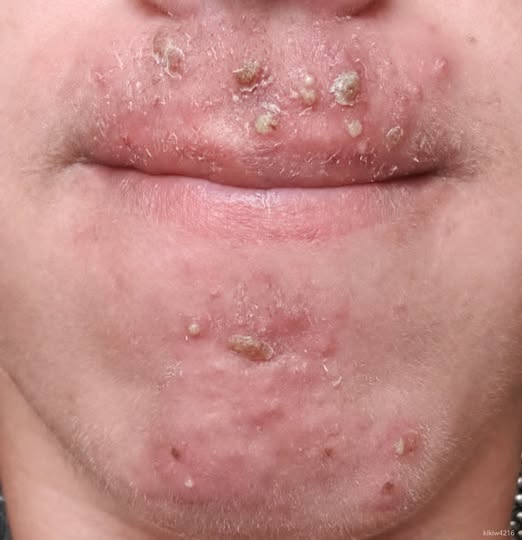
What you described is very plausible—but it’s worth clearing something up right away: this kind of overnight reaction isn’t usually some mysterious “punishment” from a random encounter. It’s almost always a straightforward skin response to irritation, bacteria, or clogged pores. The timing feels dramatic, but the mechanism is pretty ordinary. Skin—especially around the mouth—is sensitive and reacts fast when its balance is disrupted.
What likely happened falls into a few common categories. The first is contact irritation, which can come from things like someone else’s skincare products, makeup residue, facial oils, or even lip products transferring onto your skin. The second is bacterial transfer—not necessarily anything serious, just unfamiliar bacteria that your skin isn’t used to. The third is friction + moisture, which can clog pores quickly and lead to what looks like a sudden breakout. When these combine, you can get clusters of inflamed bumps that appear within hours.
The pattern you described—around the mouth and chin—is especially typical of what’s often called perioral dermatitis or a contact-related breakout. It doesn’t mean you “caught” something serious. It just means your skin barrier got irritated and reacted.
A few important reality checks:
- This doesn’t automatically mean infection or an STI
- It doesn’t mean the other person had “bad hygiene”
- It does mean your skin barrier was disrupted
- And yes, it can happen incredibly fast
Where you were right is the reflection part—skin is reactive, and small choices can have visible consequences quickly.
What to do now (the part that actually matters)
You handled some of this correctly already, especially not picking at it. That’s key. Here’s how to manage it properly:
1. Keep it simple
Use a gentle cleanser only—no scrubs, no harsh treatments, no experimenting.
2. Avoid heavy products
Skip oils, thick creams, or anything fragranced around that area.
3. Don’t touch it
Every time you touch it, you risk spreading irritation or bacteria.
4. Let it settle
Most reactions like this calm down in a few days if you don’t aggravate them.
5. Watch for red flags
If it spreads, becomes painful, or doesn’t improve in about a week, a doctor might prescribe something mild (like a topical treatment).
What this actually teaches (without the dramatics)
You don’t need to overcorrect or become paranoid, but there is a practical takeaway:
- Skin-to-skin contact can transfer oils, bacteria, and products
- Washing your face after situations like that is a simple, effective habit
- Your skin barrier matters more than most people think
But don’t turn this into a bigger narrative than it is. This isn’t some rare or extreme consequence—it’s basically the skin version of “you skipped a step and your body noticed.”
Bottom line
What happened to you is common, temporary, and fixable. The only real mistake would be overreacting—either by panicking or by throwing a bunch of harsh treatments at it.
If anything, the useful takeaway is simple:
take 60 seconds to wash your face next time, and your skin will likely never make this kind of “statement” again.