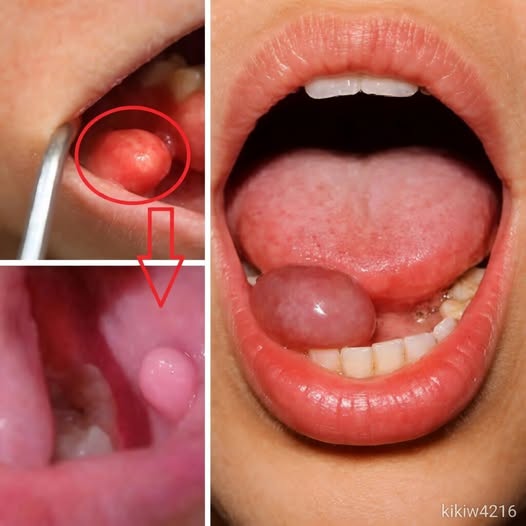
Discovering an unfamiliar bump inside your mouth can be an unsettling experience. Whether you notice it while brushing your teeth, eating, or simply running your tongue along your lower lip, the sudden appearance of a smooth, fluid-filled swelling often sparks immediate concern. Many people fear the worst, imagining infections, tumors, or serious health conditions. However, in a large number of cases, what you are seeing is something far less alarming: an oral mucocele.
An Oral Mucocele is one of the most common benign lesions found in the mouth. Despite its sometimes dramatic appearance—often bluish, translucent, and slightly swollen—it is typically harmless, painless, and self-limiting. Understanding what a mucocele is, why it forms, how it behaves, and when it requires medical attention can transform that initial moment of panic into one of calm awareness.
The First Signs That Catch People Off Guard
The earliest symptom of a mucocele is usually a small, rounded bump that seems to appear almost overnight. Many individuals describe it as feeling like a tiny water balloon or blister beneath the surface of the skin inside the mouth. It may be located on the inner lower lip, which is the most common site, though it can also develop on the inner cheeks, under the tongue, or on the floor of the mouth.
Visually, the bump may appear clear, pinkish, or bluish depending on its depth and the surrounding tissue. The bluish tint often causes alarm, as it can resemble bruising or something more serious. However, this coloration is simply due to the way light passes through the thin tissue and reflects off the fluid trapped beneath.
One of the defining characteristics of a mucocele is its fluctuation. It may grow larger over several days, then shrink, rupture, or even disappear entirely—only to return again if the underlying cause persists. This cycle can be confusing and frustrating, especially for individuals who expect a consistent pattern from health issues.
Despite its noticeable appearance, a mucocele is usually painless. At most, it may cause mild discomfort if it interferes with chewing, speaking, or rubbing against teeth. This lack of pain is actually an important clue that helps distinguish it from more serious oral conditions.
What Causes a Mucocele to Form?
At its core, a mucocele is the result of saliva becoming trapped beneath the surface of the oral tissue. This typically occurs when a minor salivary gland duct is damaged or blocked. These glands are responsible for producing saliva, which keeps the mouth moist, aids digestion, and protects against bacteria.
The most common cause is mechanical trauma. This can include accidentally biting your lip, chewing on the inside of your cheek, or sustaining a small injury while eating. Even habits like lip sucking or nervous chewing can repeatedly irritate the same area, increasing the likelihood of duct damage.
When the duct is ruptured, saliva leaks into the surrounding tissue instead of flowing normally into the mouth. The body responds by forming a small, fluid-filled pocket—what we recognize as a mucocele. In other cases, the duct may become blocked rather than broken, causing saliva to build up behind the obstruction.
This explains why mucoceles are especially common in children, teenagers, and young adults. These age groups are more prone to accidental bites, orthodontic irritation, and habitual oral behaviors that can trigger the condition.
Why the Appearance Can Be Misleading
One of the reasons mucoceles cause so much चिंता (worry) is their visual similarity to other oral lesions. A bluish or translucent bump inside the mouth is not something most people encounter regularly, and the unfamiliarity alone can lead to anxiety.
However, medical professionals rely on a combination of appearance, location, and behavior to quickly identify a mucocele. Its soft, compressible texture, lack of pain, and tendency to fluctuate in size are all strong indicators of its benign nature.
That said, not every bump in the mouth is a mucocele. Conditions such as fibromas, cysts, vascular lesions, or, in rare cases, tumors can present with similar features. This is why persistent or unusual lesions should always be evaluated by a dentist or oral healthcare provider.
The Natural Course: What Usually Happens
In many cases, a mucocele resolves on its own without any medical intervention. The body gradually reabsorbs the trapped saliva, and the damaged duct may heal naturally over time. This process can take anywhere from a few days to several weeks.
Sometimes, the mucocele will rupture spontaneously. When this happens, a small amount of clear or slightly sticky fluid may be released into the mouth. The bump may flatten or disappear temporarily, but it can return if the underlying issue—such as repeated trauma—remains unresolved.
This cycle of swelling, rupture, and recurrence is common and not necessarily a cause for concern. However, it can become bothersome if it persists for long periods or interferes with daily activities.
When to Seek Professional Evaluation
Although mucoceles are generally harmless, there are situations where professional evaluation is important. If the bump does not resolve after several weeks, continues to grow, becomes painful, or appears in an unusual location, it should be examined by a dental professional.
A dentist or oral surgeon can typically diagnose a mucocele through a simple visual inspection and gentle palpation. In most cases, no advanced testing is required. However, if there is any uncertainty, further evaluation—such as imaging or a biopsy—may be recommended to rule out other conditions.
Seeking evaluation is not about expecting the worst; it is about confirming what is most likely a benign condition and ensuring appropriate care if needed.
Treatment Options: From Simple to Surgical
For small, asymptomatic mucoceles, the recommended approach is often watchful waiting. Avoiding habits that may aggravate the area—such as lip biting or chewing—can help the lesion heal naturally.
If the mucocele persists, recurs frequently, or causes discomfort, treatment may be considered. Options range from minimally invasive procedures to minor surgical removal.
One common approach is surgical excision, where the mucocele and the associated gland are removed under local anesthesia. This is a quick outpatient procedure with a high success rate and low risk of recurrence when performed properly.
Other techniques include laser therapy, which offers precise removal with minimal bleeding, and cryotherapy, which uses cold temperatures to destroy the lesion. In cases involving larger cysts under the tongue (known as ranulas), a procedure called marsupialization may be used to create a permanent drainage pathway.
Recovery from these treatments is typically fast, with most patients returning to normal activities within a few days.
The Role of Habits and Prevention
Preventing mucoceles largely comes down to minimizing trauma to the oral tissues. Becoming aware of habits such as lip biting, cheek chewing, or excessive sucking motions can significantly reduce the risk.
Maintaining good oral hygiene and addressing dental issues—such as sharp teeth, misaligned bites, or poorly fitting appliances—also plays an important role. Regular dental checkups can help identify and correct these contributing factors before they lead to recurring problems.
For individuals prone to stress-related habits, simple strategies like chewing sugar-free gum or practicing mindfulness techniques can help redirect the behavior.
Emotional Impact and Common Misconceptions
It is important to acknowledge the emotional response that often accompanies the discovery of a mucocele. The fear of serious illness is a natural reaction, especially when the appearance is unfamiliar or alarming.
However, one of the most valuable aspects of understanding mucoceles is the reassurance it provides. Knowing that this condition is common, benign, and manageable can significantly reduce anxiety and prevent unnecessary stress.
A common misconception is that mucoceles are infections or contagious conditions. In reality, they are neither. They are simply the result of a mechanical issue within the salivary system.
Another misconception is that they must always be treated immediately. In truth, many resolve on their own, and intervention is only necessary in specific cases.
A Broader Perspective on Oral Health
The experience of discovering a mucocele often leads to greater awareness of oral health overall. It highlights how even minor habits and small injuries can have visible effects, and it underscores the importance of paying attention to changes in the body.
The mouth is a highly dynamic environment, constantly adapting to daily activities such as eating, സംസാര (speaking), and breathing. Minor irregularities are not uncommon, and most are part of the body’s natural response to stress and healing.
Understanding this broader context helps shift the perspective from चिंता (fear) to curiosity and informed observation.
Final Thoughts: From Panic to Understanding
Encountering a sudden translucent or bluish bump in your mouth can feel alarming at first, but in many cases, it is simply a mucocele—a common and harmless condition that reflects the body’s response to minor trauma.
By understanding its causes, recognizing its symptoms, and knowing when to seek care, you can approach the situation with confidence rather than fear. Most mucoceles resolve without intervention, and even those that require treatment are easily managed with excellent outcomes.
Ultimately, this experience serves as a reminder that not every unexpected change in the body signals something serious. Sometimes, it is simply the body doing what it does best—responding, adapting, and healing in ways that may look unfamiliar but are entirely natural.
With the right knowledge, what begins as a moment of worry can become an opportunity for awareness, reassurance, and a deeper understanding of your own health.