Some moments don’t just interrupt your life—they split it in two. There is a “before,” and then there is everything that comes after. For me, that moment came in the frozen aisle of a grocery store, under the sterile glow of fluorescent lights, with a bag of frozen peas slipping from someone’s trembling hand.
Her hand.
Lisa.
Fifteen years had passed since she disappeared without a trace. Fifteen years of unanswered questions, sleepless nights, and a child growing up without his mother. And yet, there she stood—older, thinner, but unmistakably the woman I had once loved.
Time didn’t slow down. It shattered.
“Mark,” she whispered, as if saying my name might break something fragile in the air between us.
I couldn’t move. My fingers loosened around my shopping basket, and it dropped to the floor with a dull, hollow sound that seemed far too loud for the moment.
Every emotion I had buried—anger, grief, confusion, longing—rose all at once, choking me.
“You don’t get to just appear,” I said, my voice low, strained. “Not after everything.”
Her eyes darted around nervously, scanning the aisle like a trapped animal searching for escape.
“Not here,” she said quickly. “Please… we can’t do this here.”
But I wasn’t letting her walk away again.
Not this time.
We moved to the end of the aisle, away from passing shoppers who had no idea they were brushing past the collision of two lives that had been frozen in time for over a decade.
“Start talking,” I demanded.
She hesitated.
And in that hesitation, I saw something that unsettled me more than her disappearance ever had.
Fear.
“I didn’t leave because I wanted to,” she said finally. “I left because I had to.”
The words hit me like a slap.
I had imagined a thousand explanations over the years—affair, abandonment, even death. But this?
This was something else.
We agreed to talk properly at a nearby coffee shop. Ten minutes later, we sat across from each other, untouched drinks between us, the air thick with everything that had gone unsaid for fifteen years.
And then she told me.
It sounded unbelievable at first—like something out of a movie. She had been involved in a corporate investigation at her old job, uncovering financial crimes tied to dangerous people. When she realized the extent of what she had stumbled into, it was already too late.
Threats came quickly.
Not just to her—but to us.
“They said they’d hurt you,” she whispered. “They said they’d take Noah.”
My stomach twisted.
“So you disappeared?” I asked, disbelief creeping into my voice. “You just… vanished?”
“I thought it was the only way to protect you,” she said, tears forming in her eyes. “If they couldn’t find me, they wouldn’t come after you.”
She had built a new identity. Moved cities. Changed everything.
And left us behind.
For fifteen years.
“You don’t get to call that protection,” I said sharply. “You robbed him of a mother.”
Her face crumpled.
“I know,” she whispered. “I know.”
That night replayed in my mind—the last time I saw her. She kissed baby Noah’s forehead, grabbed her bag, and said she’d be right back.
She never came back.
I raised our son alone.
Through every fever. Every school event. Every question he asked about her.
“Where’s Mom?”
“Why doesn’t she call?”
“Did she leave us?”
And I never had answers.
Until now.
But answers didn’t make it easier.
They made it more complicated.
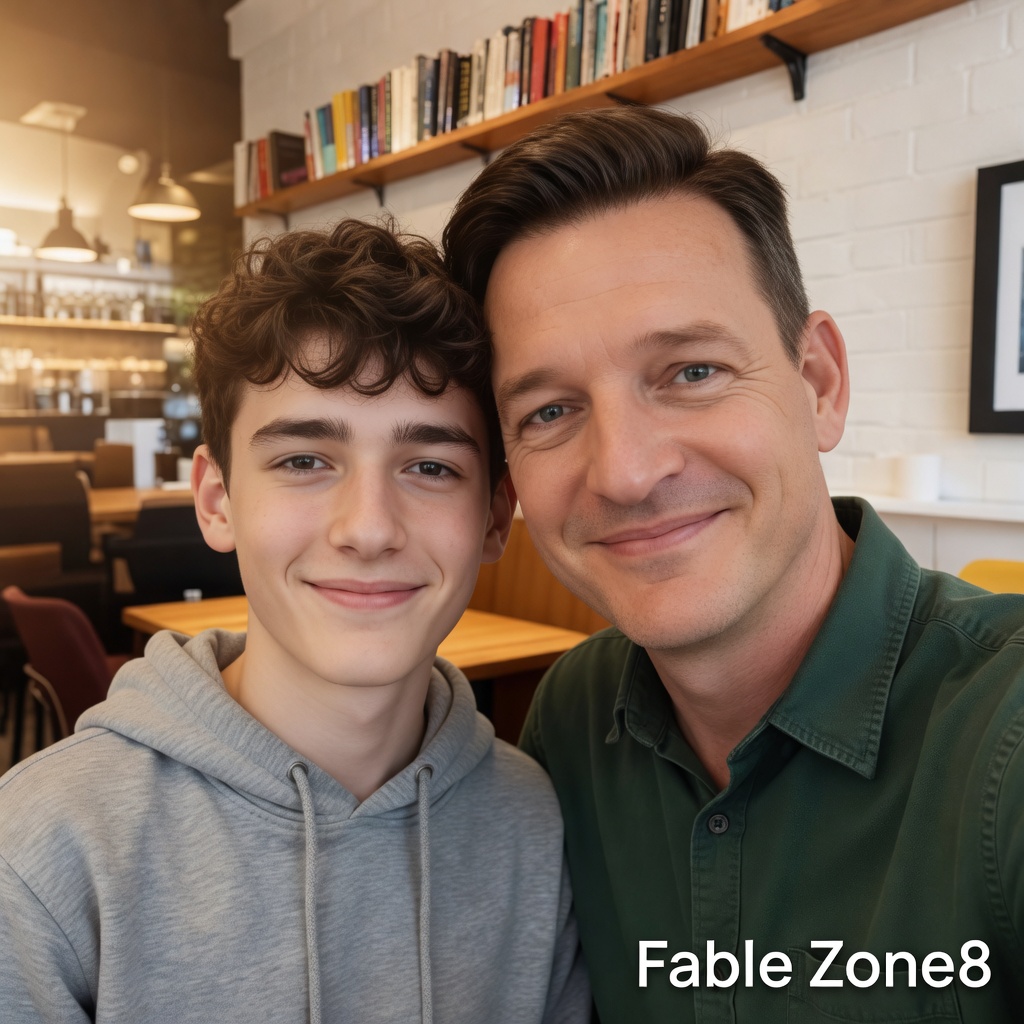
When I got home that evening, Noah was sitting at the table, books spread out, headphones around his neck. Fifteen years old now. Tall. Smart. Strong in ways he shouldn’t have had to be.
“Hey, Dad,” he said casually. “You look weird.”
I forced a smile.
“Long day.”
But inside, everything was unraveling.
How do you tell your son that the mother he thought was gone forever is suddenly back?
That she chose to leave—but claims it was to protect him?
That everything he believed might not be true?
I didn’t sleep that night.
The next few days were a blur of meetings with Lisa. Public places. Careful conversations. Slow revelations.
She showed me pieces of her life—photos, journal entries, fragments of existence lived in hiding.
She had watched Noah grow from a distance.
Birthdays. School achievements.
Always silent. Always unseen.
“I never stopped loving him,” she said once.
“Love isn’t enough,” I replied.
Eventually, there was no avoiding it.
Noah deserved the truth.
When I told him, it broke something in both of us.
“She left us?” he asked quietly.
“Yes.”
“But she’s alive?”
“Yes.”
His reaction wasn’t immediate. It came in waves—confusion, anger, disbelief, and something else.
Hope.
Meeting them was the hardest part.
We chose a neutral place. A quiet café.
When Noah walked in and saw her, time seemed to stop again—just like it had in the grocery store.
Lisa stood slowly, tears already falling.
“Noah…” she said.
He stared at her.
Not as a child—but as someone trying to understand a stranger who was supposed to be his mother.
Their first conversation was awkward. Careful.
But real.
He asked questions.
Hard ones.
“Why didn’t you come back?”
“Did you ever think about me?”
“Do you regret it?”
She answered every one.
Honestly.
Painfully.
“I thought I was saving you,” she said. “But I see now… I hurt you in ways I can’t undo.”
And somehow, that honesty mattered.
It didn’t fix everything.
But it opened the door.
Rebuilding wasn’t instant.
It took time.
Therapy sessions. Family dinners filled with silence. Moments of connection followed by setbacks.
Trust doesn’t come back all at once.
It returns in pieces.
But then something happened that reminded us why fear had driven everything in the first place.
Someone broke into our home.
Nothing was taken.
But things had been moved.
Disturbed.
Watched.
Lisa knew immediately.
“They found me,” she said.
That night changed everything again.
We left temporarily. Stayed in motels. Moved carefully.
For the first time, Noah saw the fear she had lived with.
And slowly, he began to understand.
Not fully.
But enough.
Months passed.
The investigation Lisa had once been part of resurfaced. With new evidence, authorities tracked down one of the key figures involved.
The threat—at least the immediate one—was finally neutralized.
And with that, something shifted.
We weren’t just surviving anymore.
We were rebuilding.
Lisa moved back in—slowly.
Piece by piece.
Her presence felt strange at first.
Like something familiar and unfamiliar at the same time.
But then came the small things.
Cooking together.
Laughing at old memories.
Watching Noah grow—not from a distance, but right in front of her.
And for Noah, the change was undeniable.
He smiled differently.
Laughed more.
Something that had been missing… returned.
Not perfectly.
But meaningfully.
As for me, forgiveness didn’t come easily.
It wasn’t a moment.
It was a process.
One I’m still navigating.
Because love doesn’t erase pain.
But it can exist alongside it.
Now, when I think about that day in the frozen aisle, I don’t just see shock or anger.
I see a turning point.
A moment where everything broken had a chance to be rebuilt.
Not into what it once was.
But into something new.
Stronger.
More honest.
More real.
Our family isn’t perfect.
It never will be.
But it’s whole again.
And sometimes… that’s enough.