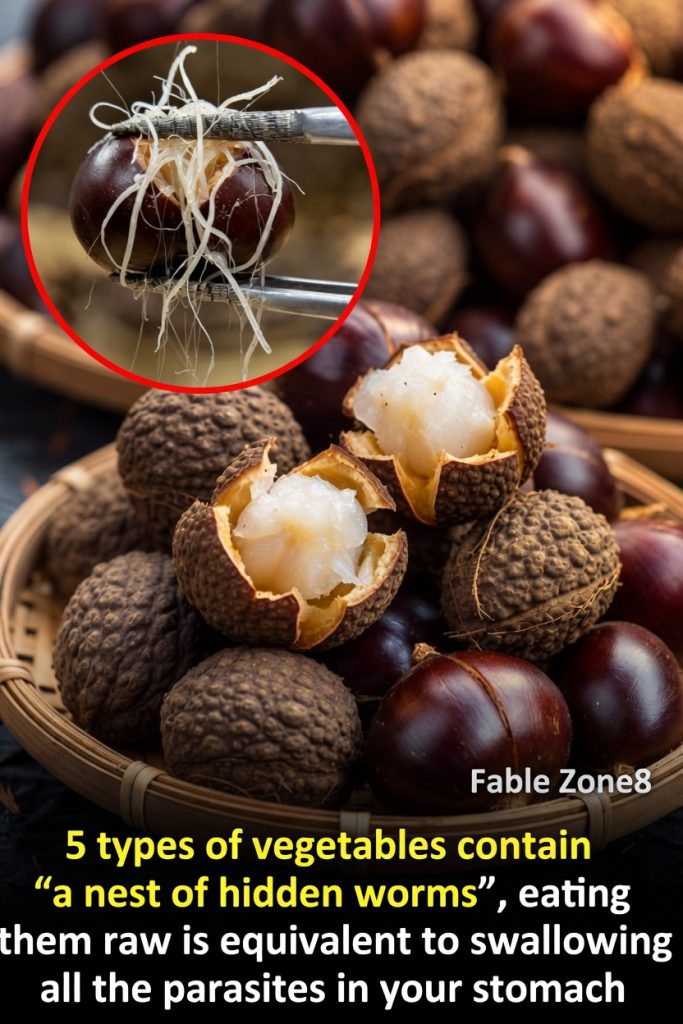
In recent years, social media has become a powerful force in shaping how people perceive food safety. Viral images and alarming headlines can spread rapidly, often triggering fear and confusion. One such case involves widely shared photos claiming that certain vegetables—particularly water chestnuts—contain hidden worms or parasites that can infect the human body when consumed raw. While these claims are often exaggerated, they do touch on a real and important topic: the potential for contamination in raw produce.
Understanding the difference between sensationalism and science is essential. Not every vegetable is dangerous, and not every viral claim is accurate. However, it is true that under certain conditions, fresh produce can carry microorganisms, including parasites, especially if grown or handled in unsanitary environments. The goal is not to create fear, but to promote awareness and safe food practices.
Water chestnuts are frequently mentioned in these viral posts. These aquatic vegetables grow in freshwater environments such as ponds and flooded fields. Because of this, they can be exposed to contaminants present in the water, including parasite larvae in regions with poor sanitation. One parasite often associated with aquatic plants is Fasciolopsis buski, also known as the giant intestinal fluke. Its life cycle involves freshwater snails and plants, and humans can become infected by ingesting contaminated raw vegetation.
However, it is important to clarify that such infections are relatively rare and typically occur in specific regions where sanitation practices are inadequate. In most regulated food systems, the risk is significantly lower. Moreover, proper cooking effectively destroys these parasites, making the food safe to eat.
The viral images showing worm-like structures inside water chestnuts are often misleading. In many cases, what appears to be a parasite may actually be plant fibers, natural discoloration, or even staged content designed to attract attention. That said, the possibility of contamination in poorly managed environments is real, which is why proper preparation is crucial.
Leafy vegetables such as cabbage, spinach, and lettuce are also commonly mentioned in discussions about foodborne risks. Their structure—especially tightly packed leaves—can trap dirt, insects, and microorganisms. If these vegetables are grown in contaminated soil or irrigated with unsafe water, they may carry parasite eggs or harmful bacteria.
For example, soil-transmitted parasites like roundworms can leave microscopic eggs on produce. These are not visible to the naked eye, which is why thorough washing is essential. While the risk of serious infection from properly handled produce is low, it increases when hygiene standards are not maintained during farming, transportation, or preparation.
Cabbage, in particular, has dense layers that can hide contaminants deep within. Simply rinsing the outer leaves may not be enough. Removing outer layers and washing each leaf individually can significantly reduce risk. Similarly, soaking leafy greens in saltwater or vinegar solutions can help dislodge dirt and small organisms.
Cruciferous vegetables like broccoli and cauliflower present a different challenge. Their complex, tree-like structures provide many small spaces where insects or debris can hide. While it is more common to find harmless insects than parasites, proper cleaning is still important.
A simple and effective method is to soak these vegetables in salted water for several minutes before rinsing thoroughly. This helps remove hidden particles that may not be visible at first glance. Cooking these vegetables adds an extra layer of safety by eliminating most microorganisms.
It is also worth noting that not all risks come from parasites. Bacteria such as E. coli and Salmonella are more common causes of foodborne illness associated with raw vegetables. These pathogens can contaminate produce through water, soil, or handling. Again, proper washing and, when appropriate, cooking are key preventive measures.
The broader issue behind these concerns is not specific vegetables but the conditions under which they are grown and handled. Factors such as water quality, use of fertilizers, hygiene practices, and transportation all play a role in determining food safety.
In regions with strong agricultural regulations and monitoring systems, the likelihood of contamination is relatively low. However, in areas where untreated wastewater is used for irrigation or where sanitation infrastructure is limited, the risk increases. This is particularly relevant for travelers who may consume raw produce in unfamiliar environments.
Despite these risks, it is important not to avoid vegetables altogether. Fresh produce is a cornerstone of a healthy diet, providing essential vitamins, minerals, fiber, and antioxidants. The benefits of consuming vegetables far outweigh the risks when proper precautions are taken.
Rather than eliminating raw vegetables, a more balanced approach involves improving food safety habits. Washing produce under running water is one of the simplest and most effective steps. Using a brush for firm vegetables and peeling when appropriate can further reduce contamination.
For those who want additional reassurance, lightly cooking vegetables can significantly reduce the risk of both parasites and bacteria. Steaming, boiling, or sautéing preserves many nutrients while enhancing safety.
Another important aspect is proper storage. Keeping vegetables refrigerated and separate from raw meats prevents cross-contamination. Clean kitchen surfaces and utensils also play a crucial role in maintaining food hygiene.
It is equally important to address the psychological impact of viral food scares. Sensational content can create unnecessary fear, leading people to distrust everyday foods. This can result in overly restrictive diets or avoidance of nutritious options.
Developing critical thinking skills is essential in navigating such information. Not all images or claims shared online are verified or accurate. Consulting reliable sources, such as public health organizations and scientific research, provides a more balanced perspective.
Education is a powerful tool in this context. Teaching children and adults alike about proper food handling, hygiene, and preparation can significantly reduce risks. Simple habits, when practiced consistently, can make a substantial difference.
For example, washing hands before handling food, cleaning surfaces regularly, and avoiding cross-contamination are basic yet effective practices. These measures not only protect against parasites but also against a wide range of foodborne illnesses.
In the case of water chestnuts and other aquatic vegetables, the safest approach is to cook them thoroughly, especially if their source is uncertain. This eliminates potential parasites while preserving their flavor and texture.
Similarly, leafy greens should be washed carefully, and when in doubt, lightly cooked. This is particularly important for vulnerable groups such as young children, pregnant women, and individuals with weakened immune systems.
Ultimately, the conversation about “hidden parasites” in vegetables should be grounded in facts rather than fear. While contamination is possible under certain conditions, it is not as widespread or inevitable as viral posts may suggest.
By focusing on practical solutions—such as proper washing, safe sourcing, and appropriate cooking—individuals can continue to enjoy the benefits of fresh produce without unnecessary चिंता or anxiety.
The modern food system is complex, and while it is not perfect, it is supported by ongoing research, regulation, and improvement. Public health efforts continue to monitor and address potential risks, ensuring that food remains as safe as possible for consumers.
In conclusion, vegetables remain an essential part of a healthy lifestyle. Awareness of potential risks is important, but it should be paired with knowledge and practical action rather than fear. By adopting simple food safety practices, individuals can confidently include a wide variety of vegetables in their diet.
The viral images may capture attention, but the real takeaway is not to avoid vegetables—it is to handle them wisely. With proper care, the salad bowl can remain a source of nourishment, not concern, allowing people to enjoy both health and peace of mind.