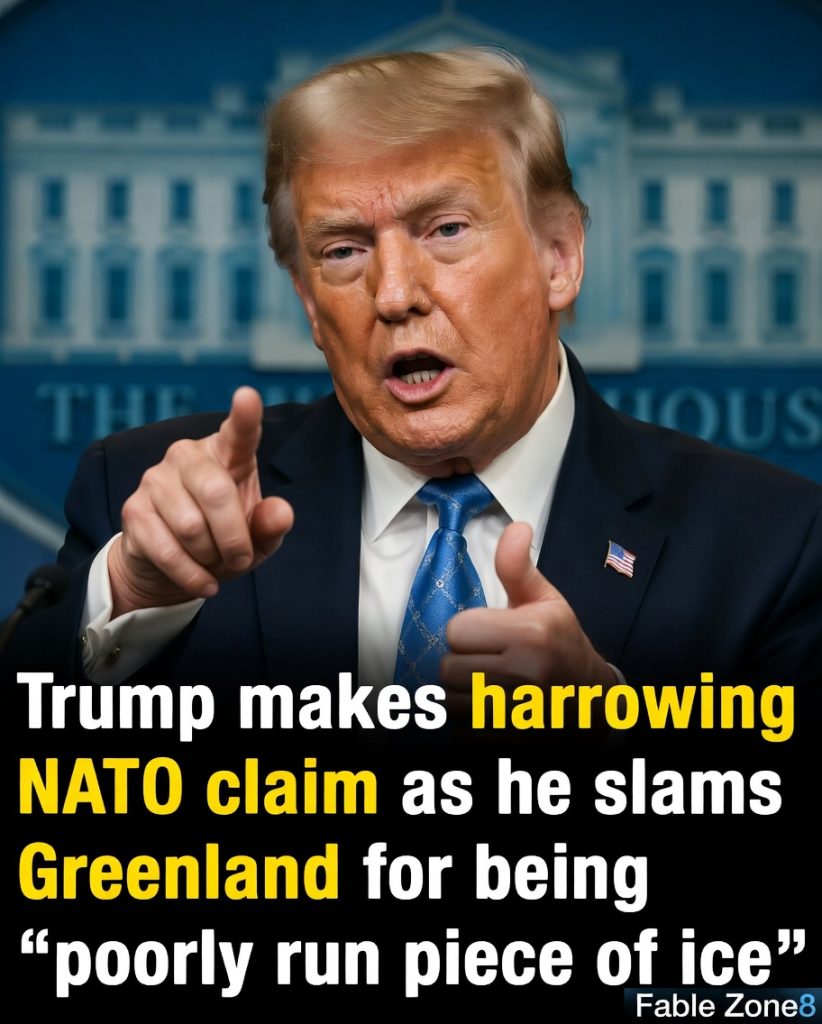
The global political landscape was jolted once again as Donald Trump delivered a series of controversial remarks that quickly reverberated across diplomatic circles. At a time when tensions in the Middle East remain high following recent conflict involving Iran, his comments shifted focus toward long-standing allies—particularly NATO—raising concerns about the future stability of one of the world’s most important military alliances.
Trump’s assertion that NATO “wasn’t there when we needed them, and they won’t be there if we need them again” sparked immediate reaction from policymakers and analysts alike. The statement, delivered after discussions at the White House, was widely interpreted as a direct challenge to the reliability of allied nations. For decades, NATO has served as a cornerstone of Western security, built on the principle of collective defense. Questioning that foundation—especially during a period of geopolitical tension—has amplified fears about fractures within the alliance.
These remarks come against the backdrop of a fragile ceasefire between the United States and Iran, following weeks of escalating confrontation. Although the ceasefire has temporarily eased hostilities, uncertainty remains high. Trump has indicated that U.S. military forces will maintain a strong presence in the region until what he considers a more comprehensive agreement is reached. This posture has placed additional pressure on allies to clarify their positions, particularly regarding participation in any future operations.
Several European nations—including France, United Kingdom, Germany, Spain, and Netherlands—have chosen a more cautious path, declining to join direct military efforts. Instead, they have emphasized diplomacy and de-escalation. This divergence has highlighted a growing strategic gap within NATO, where member states are balancing alliance obligations with domestic political considerations and broader concerns about regional stability.
During a high-level meeting with Mark Rutte, discussions reportedly revealed both cooperation and tension. Rutte emphasized that European allies have provided support in less visible but still significant ways, such as granting access to bases and airspace. While these contributions are standard within alliance frameworks, Trump’s public stance suggests he views them as insufficient. This difference in perception underscores a broader debate about what constitutes meaningful participation in modern military alliances.
Adding to the controversy, Trump reignited diplomatic friction with remarks about Greenland, describing it as a “big, poorly run piece of ice.” The comment revived memories of earlier tensions when he expressed interest in acquiring the Arctic territory from Denmark. Greenland’s strategic importance—due to its location and untapped natural resources—has made it a focal point in geopolitical discussions, particularly as Arctic competition intensifies. However, such blunt rhetoric has drawn criticism for undermining diplomatic norms and straining relationships with allies.
Together, these statements have intensified concerns about the cohesion of Western alliances. Analysts warn that visible divisions within NATO could weaken its deterrence capabilities and embolden rival powers. Since its founding in the aftermath of World War II, NATO has relied on unity and mutual trust. Public disagreements—especially from a leading member—risk altering how both allies and adversaries perceive its strength.
Supporters of Trump argue that his approach reflects a necessary recalibration of international relationships. They believe his willingness to challenge allies pushes them to contribute more fairly to shared defense responsibilities and reduces what they see as an imbalance borne by the United States. Critics, however, contend that such rhetoric may erode trust at a time when coordination is essential, potentially weakening long-standing partnerships that have underpinned global stability for decades.
At its core, the controversy highlights a deeper question about the role of the United States on the world stage. Should it continue to lead through multilateral cooperation, or pivot toward a more transactional, interest-driven model? Trump’s statements reflect the latter approach, emphasizing national priorities over collective frameworks. Whether this shift strengthens or destabilizes alliances remains a subject of intense debate.
As global tensions persist and diplomatic relationships evolve, the impact of these remarks will continue to unfold. The fragile ceasefire with Iran, internal divisions within NATO, and renewed friction over Greenland all point to a period of heightened uncertainty. In such a climate, words carry significant weight—shaping perceptions, influencing policy, and potentially redefining the future of international cooperation.
Whether these developments lead to stronger alliances or deeper fractures will depend not only on policy decisions, but on the ability of nations to navigate an increasingly complex and interconnected world.