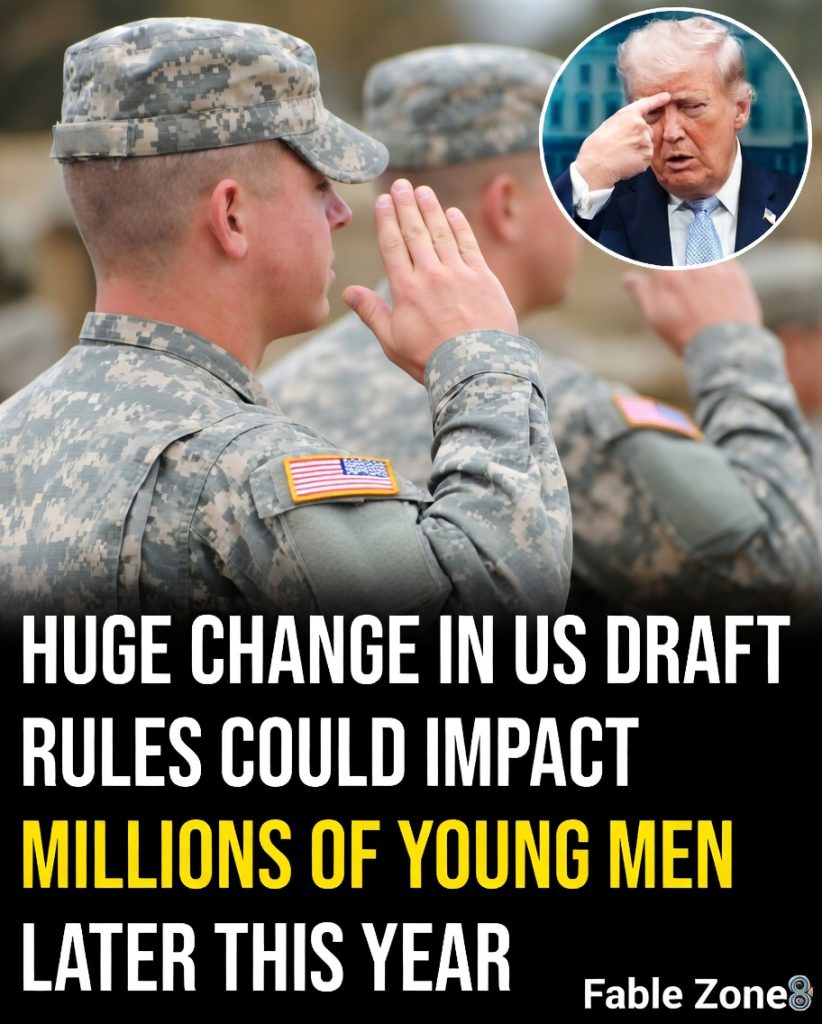
A significant policy shift is emerging in the United States—one that could affect millions of young men without them needing to take any action at all. The Selective Service System is preparing to transition to an automatic draft registration process, fundamentally changing how eligible individuals are enrolled. For decades, men aged 18 to 25 have been required by law to register themselves. Under the new approach, that responsibility would shift from individuals to the federal government, marking one of the most notable updates to the system in modern history.
This change is tied to provisions within the National Defense Authorization Act for 2026, a comprehensive bill that sets military funding levels and outlines structural priorities. By embedding automatic registration into this legislation, lawmakers ensured its passage as part of a broader national security framework. Supporters argue that the move addresses declining compliance rates and streamlines a system that has long relied on individual action and awareness. Rather than expecting young men to remember to register, federal agencies would use existing data—such as information from the Social Security Administration—to automatically enroll eligible individuals.
Under the current system, failing to register carries significant penalties. These can include large fines, potential prison time, and ineligibility for federal student aid, certain government jobs, and immigration benefits. Despite these strict rules, enforcement has historically been inconsistent. The proposed automatic system aims to eliminate noncompliance altogether, creating what advocates describe as a more efficient and equitable framework. By removing the need for manual registration, officials believe they can ensure universal coverage while reducing administrative costs.
However, the shift raises important questions beyond efficiency. Critics point to concerns about privacy and data use, particularly as the government expands its reliance on interconnected databases. Automatically enrolling individuals without direct action or explicit consent may be seen by some as a step toward increased government control over personal information. Others argue that removing the act of registration could reduce public awareness about the existence and purpose of the draft system itself, distancing citizens from a process that carries significant implications.
The timing of this policy change has also drawn attention. While U.S. officials maintain that there are no immediate plans to reinstate conscription, global tensions continue to shape national security discussions. Ongoing instability in regions such as the Middle East, including issues involving Iran, has contributed to broader concerns about potential future conflicts. Although the U.S. has relied on an all-volunteer military since the end of the Vietnam War, the Selective Service System remains in place as a contingency mechanism for rapid mobilization if necessary.
Supporters of the new system, including lawmakers such as Chrissy Houlahan, view it as a logical modernization effort. They argue that maintaining readiness in an unpredictable world requires efficient systems that can adapt to changing conditions. From this perspective, automatic registration is less about preparing for an imminent draft and more about ensuring that the infrastructure exists if it is ever needed.
Opponents, however, see deeper implications. Some believe the change could signal a gradual shift in how the government approaches military preparedness and citizen involvement. While officials emphasize that the all-volunteer force remains strong, statements suggesting that “all options remain available” have fueled speculation. Historically, adjustments to military policy have sometimes preceded broader strategic changes, leading some analysts to question whether this update is purely administrative or part of a longer-term recalibration.
At its core, the transition to automatic registration reflects a broader tension between efficiency and transparency. On one hand, the system promises to simplify compliance, reduce costs, and ensure fairness by applying the same standard to everyone. On the other, it introduces new concerns about how personal data is used and whether citizens are being fully informed about policies that affect them.
For millions of young men, the change will likely occur quietly, without paperwork or deadlines. They may become part of a system that has existed for decades without ever actively engaging with it. Yet the implications extend beyond convenience. They touch on fundamental questions about responsibility, awareness, and the relationship between individuals and the state.
As the expected implementation date approaches in late 2026, public discussion is likely to grow. Whether viewed as a practical improvement or a symbolic shift, the update ensures that the Selective Service System will remain a central—if often overlooked—component of national security strategy in the United States for years to come.