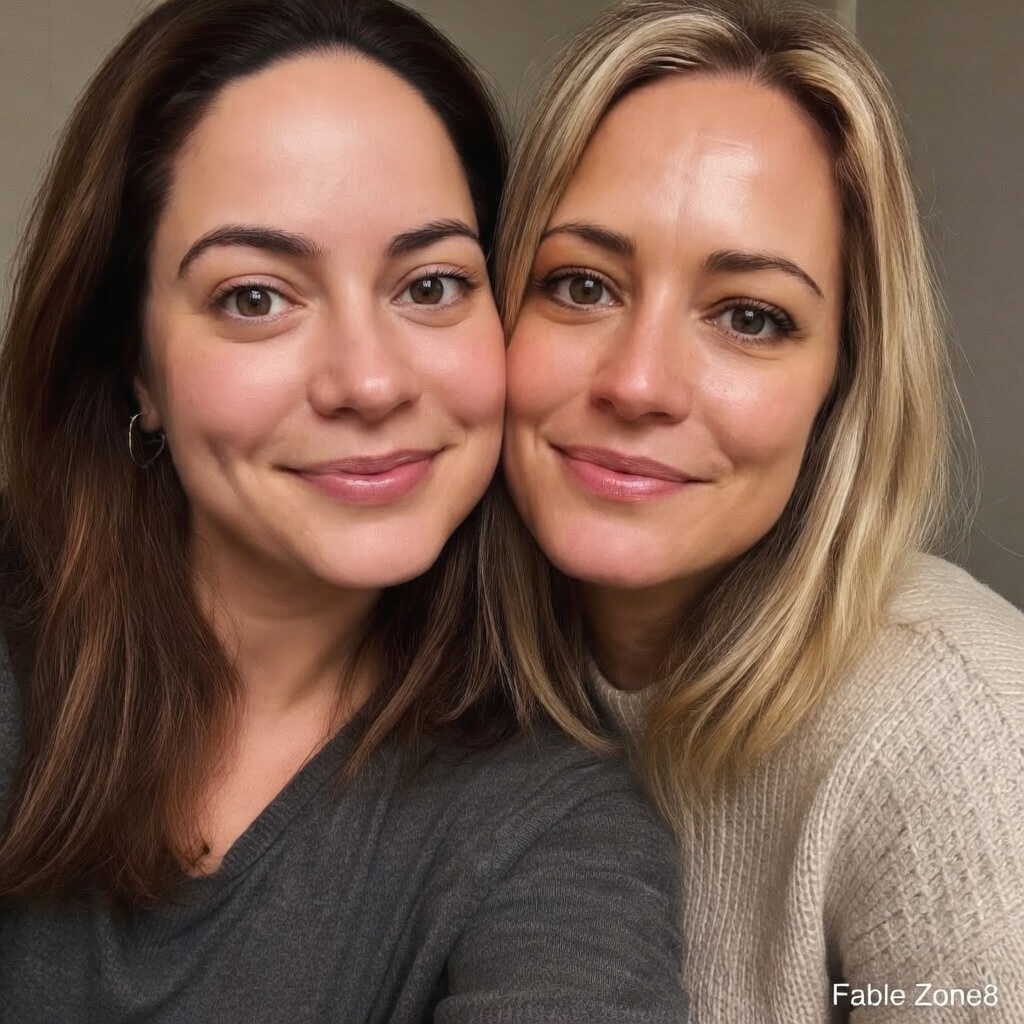
The night my phone rang at three in the morning, I woke with that unmistakable sense that something was wrong. Not the kind of unease that fades when you turn over and close your eyes again, but the kind that lingers—heavy, insistent, impossible to ignore. For a moment, I stared at the ceiling, hoping the ringing would stop. It didn’t. When I reached for my phone and saw the name on the screen, my chest tightened.
Stacey.
A name I hadn’t spoken out loud in over a year. A name that carried memories I had worked hard to bury.
I almost didn’t answer. Every instinct told me to let the past stay where it belonged. But something—maybe curiosity, maybe instinct—made me swipe the screen.
“Hello?”
There was silence for half a second. Then I heard her breathing. Uneven. Shaky.
“Lily…” she whispered. “I know you have every reason to hate me. But I don’t feel safe. Please… don’t hang up.”
Her voice wasn’t just emotional. It was terrified.
And just like that, everything I had spent years trying to forget came rushing back.
Before everything fell apart, my life had once felt simple. Predictable in the best way. My marriage to Alan had started with warmth and promise—the kind of connection that makes you believe you’ve found something lasting. We built a life together in a modest home filled with ordinary happiness. Morning routines, laughter at the dinner table, bedtime stories for our daughters, Mia and Sophie.
From the outside, we looked like a family that had it all.
But cracks don’t always appear loudly. Sometimes they form quietly, almost invisibly.
Alan began working later. Traveling more. Smiling less. Conversations became shorter, colder. His phone was always within reach, always turned slightly away. At first, I told myself I was imagining things. That stress had changed him. That marriages go through phases.
But deep down, something felt wrong.
When I tried to talk to him, he brushed me off. Called me paranoid. Said I was overthinking.
And slowly, I began to question myself instead of him.
Until the day I found a strand of long blonde hair on his jacket—one that clearly didn’t belong to me.
That was the moment denial stopped being an option.
Weeks later, I found the messages. Her name was Kara. Their conversations weren’t vague or ambiguous—they were intimate, undeniable. When I confronted him, he didn’t even try to lie.
He just… left.
Packed his things like our life together meant nothing.
The aftermath was brutal.
Not just because I lost my husband, but because I had to rebuild everything while holding my daughters together. I found a full-time job, started therapy, and slowly created a new sense of normal. There were nights filled with quiet tears, questions I couldn’t answer, and a loneliness that felt endless.
But eventually, I found strength in survival.
I believed the worst was behind me.
Until I found out Alan had remarried.
And not just to anyone.
To Stacey.
My best friend.
The same woman who had sat beside me while I cried. The one who told me I deserved better. The one who promised she would always be honest with me.
I remember the moment she called to tell me.
Her voice was filled with nervous excitement. Like she expected my blessing.
“You’re marrying the man who broke my family,” I told her.
Silence followed.
That was the end of our friendship.
Or so I thought.
A year later, she stood in my living room at three in the morning, trembling.
She looked different. Not physically, but emotionally—like someone carrying a weight she didn’t understand.
“I went into his office,” she said, her voice unsteady. “He always keeps it locked. But tonight… I just had this feeling.”
What she found inside wasn’t what she expected.
It wasn’t something illegal. It wasn’t violent.
It was something far more disturbing.
A collection of journals. Notes. Photos. Messages. Pieces of other women’s lives—carefully kept, quietly hidden. Some of the timelines overlapped. Some dated back to when we were still married. Others were recent.
There wasn’t just one affair.
There were many.
Different names. Different stories. But the same pattern.
“He makes you feel like you’re the only one,” she said, tears filling her eyes. “And then… suddenly, you’re not enough. And you don’t even know why.”
Her words hit me harder than I expected.
Because I understood them.
Perfectly.
That night, we sat together—two women who had once been divided by betrayal, now connected by truth.
We went through everything. Carefully. Slowly. Trying to make sense of a man who never seemed to stay fully present in anyone’s life.
Over the next few days, we reached out to a few of the women whose names appeared repeatedly. What we discovered wasn’t shocking—it was consistent.
Alan wasn’t dangerous in the way people expect.
He didn’t shout. He didn’t threaten.
He disappeared.
Emotionally first. Then physically.
He moved from one connection to another, chasing intensity but never sustaining it. Leaving behind confusion instead of closure.
Like someone constantly searching for something he could never hold onto.
For Stacey, the realization was devastating.
Not because she feared him.
But because she finally saw him clearly.
And clarity can hurt more than lies.
“He didn’t change,” she said quietly one afternoon. “I just didn’t want to see it.”
Within weeks, she made her decision.
She left.
No drama. No confrontation.
Just a quiet, deliberate exit from a life that was never as real as it seemed.
Watching her go through what I had once endured was strange. Painful, but also… grounding. It reminded me how far I had come. How much stronger I was than the woman I used to be.
And somewhere in that shared experience, something unexpected happened.
We stopped being enemies.
Not because the past disappeared—but because we both understood it now.
Months later, we sat across from each other again in my living room.
This time, there was no panic. No fear.
Just calm.
“Thank you,” she said softly.
I nodded. “We both needed the truth.”
There was no dramatic reconciliation. No attempt to return to what we once were.
Just something quieter.
Respect.
Understanding.
Closure.
When she asked, “What now?” I didn’t have to think long.
“Now,” I said, “we move forward.”
And for the first time in years, I meant it.
Not just moving on from him.
But moving on from everything he represented—the doubt, the confusion, the feeling of never being enough.
Because the truth is, some people don’t break your life all at once.
They do it slowly.
Quietly.
Until you finally see them for who they are.
And when you do, that’s when healing really begins.
Not alone.
But sometimes… with the last person you ever expected to understand.