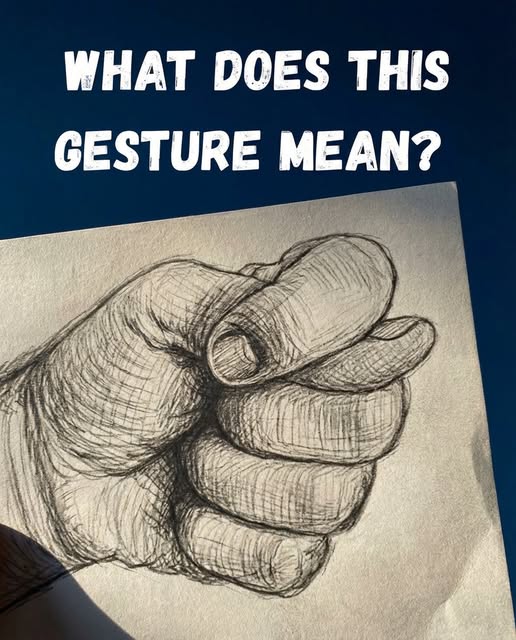
Long before the world was flooded with emojis, GIFs, and social media shorthand, people relied on gestures to communicate what words sometimes could not. Among the most quietly powerful of these was the “fig”—a hand gesture that, at first glance, appears to be nothing more than a clenched fist. Look closer, though, and you’ll notice the thumb tucked firmly between the index and middle fingers. This small but deliberate detail transformed an ordinary hand into a potent symbol, carrying meanings that ranged from playful defiance to protective magic, and from silent protest to familial affection. The fig gesture’s roots run deep through history, crossing borders and generations, and its legacy reminds us that the most potent messages are often those spoken in the language of subtlety and wit.
The origin of the fig gesture is as rich and layered as the cultures that adopted it. In 19th-century European villages, where power dynamics were often skewed and open confrontation could have lasting consequences, the fig offered a clever means of resistance. A peasant might tuck his thumb and flash the gesture behind a landowner’s back, quietly refusing a demand or expressing defiance without risking public reprisal. The gesture’s ambiguity was its strength—observers might recognize the sign and share in the secret, but the target of the gesture could never be certain of its intent. In this way, the fig became a tool for everyday people to assert themselves, maintain dignity, and inject humor into situations that might otherwise have bred resentment or fear.
But the fig was more than a symbol of rebellion. In folk traditions across Eastern Europe, the Mediterranean, and beyond, the closed fist with the hidden thumb was imbued with protective power. Superstition held that the gesture could ward off the “evil eye”—a curse feared for its power to bring misfortune or illness. Mothers tucked their thumbs between their fingers when passing graveyards or encountering strangers, believing that this simple act would shield them and their children from harm. In some regions, the fig was even pressed into the hands of newborns as a first defense against bad luck. The gesture thus straddled the line between the mundane and the magical, acting as both a practical expression and a spiritual safeguard.
Over time, the fig gesture found its way into the rhythms of family life. What began as a means of protest or protection softened into playfulness. Grandparents used the gesture to tease grandchildren, responding to requests for treats or stories with a silent “not happening!”—always accompanied by a knowing smile. Children learned to recognize the fig as a sign of gentle boundary-setting, a way for elders to assert authority without harshness. The gesture became part of the unspoken vocabulary of home, a tool for managing everyday negotiations and reinforcing the bonds of trust and affection that hold families together. Its meaning was understood intuitively, passed down not through instruction but through imitation and shared experience.
Yet, even in its most lighthearted moments, the fig could carry deep emotional resonance. For people facing separation—whether through migration, military service, or personal hardship—the gesture sometimes appeared as a private act of courage or comfort. Tucked fingers offered a silent promise: I will endure, I will remember, I will resist despair. In this context, the fig became a companion in uncertainty, a physical reminder that strength can be hidden, that not all battles are fought in the open, and that quiet resolve is sometimes the most powerful force of all. Such moments of subtle defiance or reassurance echo through personal histories, shaping the stories families tell about perseverance and hope.
Today, the fig gesture is rarely seen outside of certain folk traditions and cultural gatherings. The rise of digital communication—texts, reactions, and an ever-expanding lexicon of icons—has replaced much of the unspoken language that once animated daily life. Our screens are filled with instant responses, and the nuance of a tucked thumb can feel almost quaint in a world obsessed with speed and clarity. Yet, the fig’s enduring relevance lies precisely in what it resists: the demand for constant transparency, the compulsion to spell everything out. It reminds us that some messages are best delivered with a wink, that humor and subtlety can coexist with seriousness, and that the most profound statements are sometimes those left unfinished, waiting for the right eyes to recognize their meaning.
In the end, the fig in the fist is more than a relic of the past. It is a reminder that human communication is as much about what is withheld as what is revealed. The gesture’s quiet power lies in its ambiguity, its ability to carry different meanings for different people, and its refusal to be pinned down or co-opted by authority. In a world where words are cheap and outrage is easy, the fig stands as a testament to the enduring value of subtlety, humor, and the hidden strength that comes from knowing when to speak—and when to simply show your hand.