Simple Fruit Selection Tricks That Can Help You Choose Sweeter Watermelons, Juicier Pineapples, Better Cantaloupes, and More Flavorful Produce Every Time You Shop, Reducing Disappointment and Making Healthy Eating Easier, More Enjoyable, and Far Less Dependent on Pure Luck Alone
Buying fresh fruit should be one of the simplest and most enjoyable parts of grocery shopping. Bright colors, appealing aromas, and the promise of natural sweetness make produce sections among the most attractive areas of any supermarket or farmers market. Yet many shoppers know the frustration that can come from choosing fruit that looks perfect on the outside only to discover disappointment after cutting it open.
Almost everyone has experienced it. You carefully select a watermelon that appears flawless, only to find it bland and watery inside. A pineapple that looked vibrant and healthy turns out to be sour and fibrous. A container of strawberries reveals hidden mold beneath the top layer. Even fruits that appear ripe and attractive can sometimes fail to deliver the flavor and texture we expect.
Because of these experiences, many people develop personal methods for choosing produce. Some rely on family advice passed down through generations. Others follow tips from farmers, produce workers, or online videos. While no method can guarantee perfection every time, understanding a few basic indicators can dramatically improve your chances of bringing home delicious fruit.
The secret lies in learning how to interpret the clues that fruit naturally provides. Color, aroma, weight, texture, and even subtle surface characteristics can reveal valuable information about ripeness, sweetness, and overall quality.
Why Fruit Selection Can Be Challenging
Fruit continues to change after harvest. Some varieties ripen significantly after being picked, while others do not.
Factors such as weather conditions, soil quality, harvesting time, transportation, and storage methods all influence the final eating experience. Two pieces of fruit sitting side by side may look nearly identical yet taste completely different.
Additionally, grocery stores often prioritize appearance because shoppers naturally gravitate toward visually appealing produce. Bright lighting, careful arrangement, and attractive packaging can make fruit look better than it actually is.
This means consumers need to look beyond appearance alone and learn to identify more reliable signs of quality.
Understanding the Importance of Multiple Clues
One of the biggest mistakes shoppers make is relying on a single indicator.
For example, color alone rarely tells the entire story. A fruit may have excellent color but poor texture. Another may feel heavy but lack sweetness. The best approach is to evaluate several characteristics together.
Think of fruit selection as gathering evidence. Each clue contributes to a larger picture. The more positive signals a fruit displays, the better your chances of making a successful choice.
Experienced produce shoppers often combine observations about weight, smell, texture, and appearance before making a final decision.
Choosing a Better Watermelon
Watermelon is one of the fruits most frequently associated with selection tricks because judging its interior quality can be difficult.
Fortunately, several indicators may help.
Look for the Field Spot
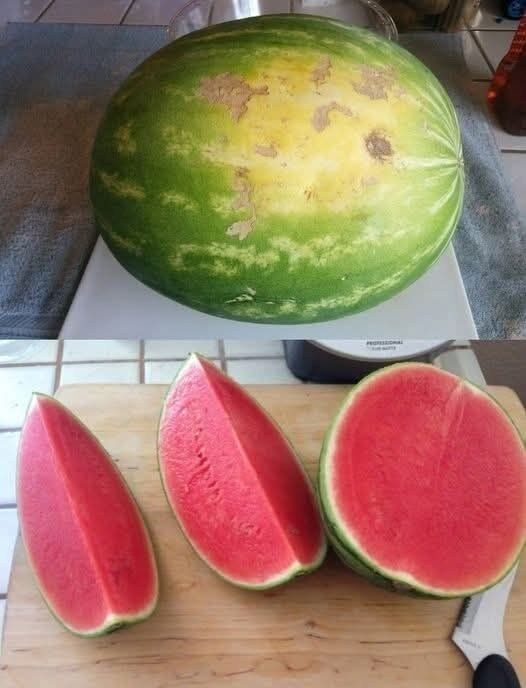
The field spot is the area where the watermelon rested on the ground while growing.
Many shoppers mistakenly view this mark as a defect, but it can actually be one of the most useful clues.
A creamy yellow or golden field spot often suggests that the melon spent enough time ripening on the vine. A very pale or nearly white spot may indicate that the fruit was harvested before reaching full maturity.
Generally speaking, deeper color in the field spot is considered a positive sign.
Examine the Surface
Some watermelons display rough brown web-like patterns across portions of the rind.
These markings are commonly believed to reflect pollination activity during growth. Although not a guarantee of sweetness, many experienced shoppers prefer melons with moderate webbing because they often associate it with good flavor development.
Consider Weight
A watermelon should feel heavy for its size.
Heavier melons typically contain more water, which often contributes to a juicy eating experience. Comparing several melons of similar size can help identify the densest option.
Check the Stem Area
A dry, brown stem can indicate that the watermelon remained attached to the vine long enough to mature properly.
A green stem may suggest earlier harvesting, which can sometimes affect flavor.
How to Choose a Better Pineapple
Pineapples can be particularly challenging because their appearance does not always accurately reflect internal ripeness.
Many people assume that a completely yellow pineapple is automatically the best choice, but reality is more complicated.
Pay Attention to Aroma
One of the most reliable indicators is smell.
A ripe pineapple typically produces a pleasant, sweet aroma near the base of the fruit. If there is little or no scent, the pineapple may not be fully ripe.
On the other hand, an overly strong or fermented smell may indicate that the fruit is past its peak.
Evaluate Firmness
A quality pineapple should feel firm with only slight softness.
If the fruit feels excessively hard, it may need additional ripening. If it feels soft or develops mushy areas, spoilage may already be occurring.
Examine the Crown
Many shoppers use the leaf test.
Gently tugging one of the inner leaves can provide information about ripeness. A leaf that releases with moderate resistance may suggest that the fruit is ready to eat.
Leaves that refuse to move at all may indicate underripeness, while leaves that fall out too easily can signal overripeness.
Observe Color Carefully
Color can offer useful information, but it should not be the sole deciding factor.
A pineapple with a healthy mix of green and golden tones can be perfectly ripe. Excessive yellowing combined with softness may suggest that the fruit is beginning to decline.
Selecting a Flavorful Cantaloupe
Cantaloupes often challenge shoppers because their thick, netted rind conceals most signs of internal quality.
However, several indicators can improve your chances of success.
Start With Appearance
Avoid melons displaying obvious bruises, cracks, mold, or soft spots.
These defects can indicate damage, spoilage, or shortened shelf life.
Check the Color
A ripe cantaloupe generally develops a warm beige, tan, or slightly golden background color beneath its netted surface.
Excessive green coloration may indicate that the fruit was harvested too early.
Feel the Weight
Like watermelon, cantaloupe should feel relatively heavy for its size.
Greater weight often suggests higher moisture content and a juicier interior.
Press the Blossom End
The blossom end is opposite the stem scar.
A gentle press should reveal slight softness without feeling mushy. This subtle give often indicates ripeness.
Smell the Fruit
A sweet, pleasant melon fragrance near the blossom end is usually a positive sign.
Strong sour odors or fermented aromas suggest that the fruit may be overripe.
Strawberry Shopping Tips
Strawberries are among the most popular fruits but can spoil quickly.
When selecting strawberries:
- Look for bright, vibrant color.
- Avoid containers with visible mold.
- Check the bottom of the package whenever possible.
- Choose berries with fresh green caps.
- Avoid berries that appear dull, shriveled, or leaking juice.
Unlike some fruits, strawberries do not continue to ripen significantly after harvest, making initial selection especially important.
Picking Better Peaches
Peaches often disappoint shoppers because they can appear ripe while remaining dry or mealy inside.
Good peaches generally display:
- A sweet fragrance.
- Slight softness when gently squeezed.
- Smooth skin free of major bruising.
- Rich coloration appropriate to the variety.
Avoid peaches that feel rock hard unless you plan to allow additional ripening at home.
Choosing Apples
Apples are among the easiest fruits to evaluate.
Look for:
- Firm texture.
- Smooth skin.
- Bright, healthy color.
- Absence of bruises or punctures.
A quality apple should feel solid and heavy relative to its size.
Soft areas often indicate internal breakdown.
Why Smell Is Often Underrated
Many shoppers focus almost exclusively on appearance.
However, aroma is frequently one of the most valuable indicators of ripeness and flavor.
Fruits naturally produce aromatic compounds as they mature. A pleasant, sweet smell often signals that sugars and flavor compounds have developed properly.
While not every fruit emits a strong fragrance, those that do can provide important information unavailable through visual inspection alone.
The Role of Seasonality
Even the best selection techniques cannot fully compensate for poor timing.
Fruit generally tastes best when purchased during its natural growing season.
Produce harvested locally and sold during peak season often offers superior flavor compared to fruit transported long distances during off-season months.
Learning seasonal availability can significantly improve fruit quality while often reducing costs.
Farmers Markets vs. Supermarkets
Many consumers wonder whether farmers markets offer better fruit than supermarkets.
The answer depends on the source and season.
Farmers markets may provide fresher produce harvested closer to peak ripeness because transportation times are shorter.
However, excellent fruit can also be found in supermarkets with strong produce management programs.
Regardless of where you shop, understanding selection techniques remains valuable.
Why Experience Matters
No guide can guarantee perfect fruit every time.
Agriculture involves countless variables beyond the consumer’s control, including weather, soil conditions, harvest timing, and transportation.
However, repeated observation builds experience.
Over time, shoppers learn to recognize patterns that improve decision-making. The more attention you pay to successful and unsuccessful purchases, the better your intuition becomes.
Eventually, choosing quality fruit feels less like guessing and more like applying practical knowledge.
Conclusion
Buying fresh fruit will probably never become an exact science, but it does not have to feel like pure luck either.
The most successful shoppers learn to combine multiple clues rather than relying on appearance alone. Color, aroma, weight, firmness, and specific variety-related indicators all contribute valuable information.
Whether you are choosing a watermelon for a summer picnic, a pineapple for a tropical dessert, a cantaloupe for breakfast, or strawberries for a healthy snack, a little observation can go a long way.
The goal is not perfection. Instead, it is improving your odds and reducing disappointment. With practice, patience, and attention to detail, selecting delicious fruit becomes easier, more consistent, and far more rewarding.
The next time you stand in front of a display of colorful produce, remember that the fruit is already telling you its story. All you have to do is learn how to read the clues.