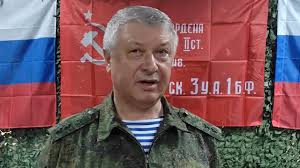
The attempted assassination of Lieutenant General Vladimir Alexeyev in Moscow has sent shockwaves through Russia’s military establishment and reverberated across international capitals. As deputy head of the GRU—Russia’s powerful military intelligence arm—Alexeyev is one of the most prominent figures in the country’s ongoing conflict with Ukraine. The brazen shooting, which occurred in a quiet residential area of Moscow, is only the latest in a series of targeted attacks on Russian military leaders, highlighting a growing sense of vulnerability and instability at the heart of Russia’s war effort.
The attack itself was both sudden and sinister. According to official sources, Alexeyev was ambushed and shot multiple times on a Friday morning as he entered his apartment block on the northwestern outskirts of the Russian capital. Emergency services responded swiftly, and the general was transported to a nearby hospital, where his condition remains unclear. The Russian Investigative Committee wasted no time in launching a criminal probe, classifying the incident as attempted murder and immediately securing CCTV footage and witness testimony from the scene. The fact that such a high-profile target could be attacked so brazenly in Moscow has stunned both the Russian public and international observers, raising questions about the reach and effectiveness of the country’s own security apparatus.
The motives behind the assault are the subject of intense speculation. Alexeyev’s position as second-in-command at the GRU and his deep involvement in critical Russian military operations—particularly in Ukraine—make him both a valuable asset and a potential target for enemies on multiple fronts. He played a central role in Russia’s 2022 siege of Mariupol and was a key negotiator with Yevgeny Prigozhin, the Wagner Group chief, during the infamous mutiny in 2023. His name has appeared on European and UK sanctions lists due to the GRU’s alleged involvement in the 2018 Salisbury nerve agent attack. These connections, both domestic and international, have placed Alexeyev in the crosshairs of those opposed to Moscow’s policies, whether they be foreign intelligence services, Ukrainian operatives, or rival factions within Russia itself.
This attack comes amid a disturbing pattern of violence against high-ranking Russian military officers. In recent years, multiple generals have been killed or targeted, including Lt. Gen. Igor Kirillov and Lt. Gen. Fanil Sarvarov. Each assault chips away at the aura of invulnerability that once surrounded the Russian military elite and hints at deeper fractures within the system. While Russian officials, including Foreign Minister Sergei Lavrov, have been quick to point the finger at Ukraine, the precise motives and perpetrators remain unclear. Ukrainian intelligence has claimed responsibility for some previous attacks on Russian officials, but Kyiv has not commented on the Alexeyev shooting, adding another layer of ambiguity to a complex and dangerous situation.
The political fallout in Moscow was immediate. Kremlin spokesman Dmitry Peskov publicly expressed hope for Alexeyev’s recovery, while government agencies scrambled to reassure the public and international partners of Russia’s internal stability. Yet, each new attack on military leadership exposes cracks in the country’s security armor and invites speculation about internal power struggles. Some analysts suggest that the violence could be the result of infighting within the Russian security establishment, as competing factions vie for influence and control during a time of unprecedented external and internal pressure. The assassination attempt on Alexeyev, coming on the heels of other high-profile killings and foiled plots, suggests that Russia’s internal security environment is more fragile than the Kremlin wants to admit.
Internationally, the implications of the attack are profound. As the war in Ukraine grinds on, the targeting of senior military officials on Russian soil signals a new level of escalation. Western capitals are watching closely, mindful that instability within Russia’s military command could have unpredictable consequences for the conflict and for broader regional security. The repeated targeting of GRU leaders, in particular, raises questions about the effectiveness of Russian counterintelligence and the possibility of foreign infiltration or sabotage. The incident may also embolden opposition elements within Russia, who see the attacks as evidence that the government’s grip on power is slipping. For Ukraine and its allies, each successful strike against a Russian general is both a tactical victory and a symbolic blow against Moscow’s war machine.
Within Russia, the attack on Alexeyev has deepened existing anxieties about the direction of the war and the country’s political future. The public is left to wonder whether the violence is an isolated act of vengeance, a carefully orchestrated foreign plot, or a symptom of deeper dysfunction within the military and intelligence services. The frequency with which senior figures are targeted suggests a systemic problem—a vulnerability that the Kremlin has struggled to contain. As investigations continue, the Russian government faces mounting pressure to demonstrate that it can protect its own leaders and maintain order amid growing chaos.
Looking ahead, the shooting of Lt. Gen. Vladimir Alexeyev could prove to be a turning point in Russia’s war with Ukraine and its internal struggle for stability. Whether the attack was the work of Ukrainian intelligence, internal dissidents, or a rival faction within the Russian elite, the message is clear: no one, not even the most powerful, is safe. The Kremlin’s response—both in terms of security measures and military strategy—will shape the next phase of the conflict and determine the extent to which Russia can weather the mounting storms within and beyond its borders. For now, the world watches as Moscow grapples with the latest blow to its leadership, and as the shadow of instability grows ever longer over the Russian capital.