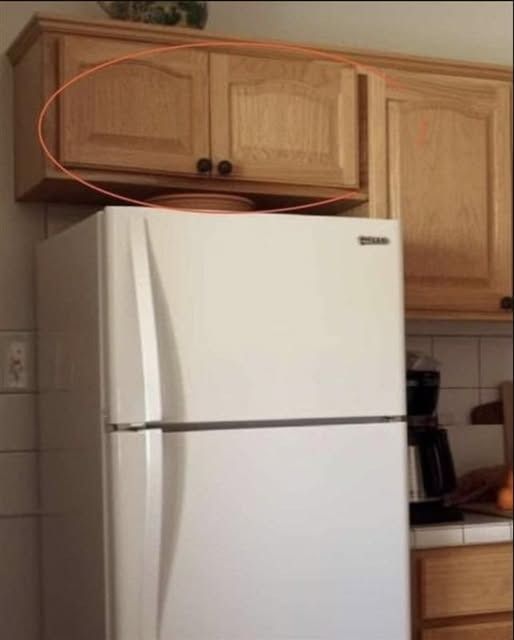
Every day, homeowners stroll past their kitchens’ most overlooked feature: the cabinets perched above the refrigerator. For many, these high-up compartments are a source of mild annoyance or bemusement. They’re too tall to access with ease, often too shallow or oddly sized, and tend to accumulate a random assortment of items—holiday platters, dusty cookbooks, forgotten plastic containers, or even just empty space. It’s no wonder that so many people view these cabinets as an afterthought, a quirk of design best ignored or, at best, used as a last-resort junk drawer. But what if those awkward cabinets were never meant to be “useless” at all? What if their placement and design have a history and a purpose that can actually make your kitchen more organized, efficient, and comfortable?
To understand the real reason for cabinets above the fridge, it’s helpful to step back and consider the evolution of kitchen design. In the past, storage was at a premium, and every available inch was pressed into service. But not all storage was meant for daily use. The cabinets above the refrigerator were intended as long-term or “deep” storage—a place to keep items you don’t need often but want nearby. Think of seasonal cookware like roasting pans, oversized serving trays, punch bowls, or bulk paper goods that only come out for holidays or large gatherings. In older homes, these spaces were specifically positioned to help de-clutter the rest of the kitchen. With the help of a step stool, homeowners could access these items a few times a year, freeing up lower cabinets for dishes, utensils, and food that needed to be reached every day. It was a subtle but intentional way to keep the kitchen tidy and functional.
Yet storage isn’t the only reason these cabinets exist. There’s a practical, engineering-driven rationale as well: airflow. Refrigerators generate heat as they operate, releasing it from the coils at the back and top of the appliance. In tightly enclosed spaces, this heat can accumulate, forcing the fridge to work harder to keep its contents cool and, over time, potentially shortening its lifespan or increasing energy use. The cabinets above the fridge are typically set with a small gap or venting allowance above and behind them, creating a channel for heat to rise and dissipate. This not only protects the appliance but helps regulate the temperature in the kitchen as a whole. Overloading or sealing off this space—by stacking boxes on top of the fridge or cramming the cabinet full—can inadvertently block airflow and reduce your refrigerator’s efficiency.
Another benefit, less discussed but significant in older home designs, is insulation. Before the advent of high-powered kitchen ventilation or open-concept layouts, kitchens were more compartmentalized, and heat management was a constant challenge. The cabinet above the fridge effectively served as an insulating buffer, slowing the transfer of heat from the warm kitchen below to the ceiling above. This design choice helped regulate the microclimate around the refrigerator, preventing unnecessary temperature swings and making the kitchen more comfortable overall. While modern homes with advanced HVAC systems may not rely on this feature as much, it’s a testament to the thoughtful engineering that underpins even the most humble elements of kitchen design.
Over the years, however, the original intent behind these cabinets has faded from memory. As lifestyles changed and kitchens became larger and more open, the space above the fridge lost its status as “prime real estate” and gradually transformed into a catch-all for random items—outdated appliances, mystery storage containers, even expired food. Many homeowners, unsure what to do with the space, simply ignore it or use it as a dumping ground for things they don’t want to deal with elsewhere. This is why so many people are surprised to learn that these cabinets were never meant to be random storage at all. Used correctly, they can free up valuable cabinet space elsewhere, keep your kitchen uncluttered, and even contribute to the efficient functioning of your appliances.
Reclaiming the purpose of your above-fridge cabinets is easier than you might think. Start by emptying the space and assessing what you truly need to store there. Reserve it for items you only use occasionally but want to keep on hand—those heirloom platters, specialty appliances, or bulk household goods. Avoid stacking items on top of the fridge or blocking the airflow behind the cabinet. If you find the cabinet difficult to reach, invest in a sturdy foldable step stool and keep it nearby. You might even consider adding labeled bins or baskets to organize the space, making it easier to retrieve items when you do need them.
Ultimately, the cabinets above your fridge are not a design mistake—they’re a quiet example of the practical ingenuity that has shaped kitchens for generations. By understanding their intended purpose and making thoughtful choices about what goes inside, you can transform an awkward space into one of your kitchen’s most valuable assets. The next time you glance at those high cabinets, remember: they’re not just filler, and they’re certainly not useless. They’re a small but important piece of a well-designed home, waiting to be used as they were always meant to be.