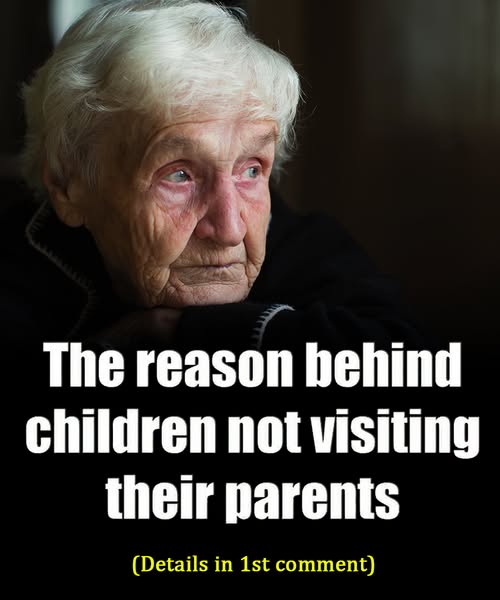
Family is supposed to be the anchor, the safe harbor, the place where love is unconditional and history is shared. Yet for many parents, there comes a day when the warmth of family gatherings is replaced by a quiet ache: calls go unanswered, visits become brief or rare, grandchildren feel like polite guests, and the home that once overflowed with noise and closeness now echoes with absence. This distance doesn’t arrive in a single dramatic rupture. More often, it unfolds in small moments—a missed call, a misunderstood remark, a visit that ends with everyone a little more tired than fulfilled. For parents, the growing gap can feel like rejection; for adult children, it’s often about survival—a need to breathe, to be seen, to feel safe in their own lives.
The reasons behind this drift are rarely rooted in malice. Instead, they are the accumulation of tiny misunderstandings, repeated patterns, and old roles that become too heavy to continue carrying. Love remains, but it’s weighed down by history, by words that sting even when meant as caring, by questions that morph into critiques: “Are you eating enough?” becomes “You’ve gained weight.” “Are you happy at work?” lands as “You should be doing better.” What begins as concern is heard as judgment; what is meant as guidance is received as a performance review. Over time, the effort to visit feels less like coming home and more like auditioning for approval—until the child, now grown, simply stops wanting to show up for the part.
Boundaries, once invisible in the parent-child relationship, become essential fault lines in adulthood. When a grown child says, “Let’s not talk about politics,” or “We’re trying a different parenting approach,” it isn’t a rejection of love, but a plea for respect. The response to these boundaries matters deeply. If parents reply with, “Don’t be so sensitive,” or “I’m your parent; I can say what I want,” the message received is that comfort and authority outweigh the adult child’s need for autonomy and safety. Honoring a boundary, even one you don’t understand, is often the first step in rebuilding connection—a sign that you’re willing to meet your child where they are, not just where you wish they’d stay.
The past, too, is often a silent presence at the table. Some families polish old stories like heirlooms, reliving and retelling hurts, grudges, or disappointments. For adult children, these gatherings can feel like being dragged back into emotional weather they never chose. Distance becomes a form of self-protection, a way to step out of the storm and cultivate peace elsewhere. Healing asks for a new script: the courage to pause, to listen without defending, to say “I’m here and I’m listening,” and to allow the story to move forward, not just backward.
Apologies are a bridge rarely crossed but deeply needed. Every family carries scars—words spoken in anger, choices that hurt more than anyone realized at the time. When a child risks honesty and hears only, “I did my best,” or “That’s not how it happened,” the door to healing creaks shut. Most adult children aren’t asking for their parents to have been perfect; they’re asking to be believed. Validation, not perfection, is what opens the path back to closeness. Without acknowledgment of hurt, distance grows heavy with what was never said, and visits become less frequent, less meaningful.
The presence of partners and new family members can complicate the landscape as well. You may love your child, but if their spouse or chosen family is treated as an outsider—through subtle digs, cold shoulders, or wistful nostalgia for “before they came along”—the message is clear: you don’t truly belong here. Adult children, seeking unity in their own families, will choose environments that welcome everyone or, failing that, will step back to protect the people they love. True acceptance means making space for the people your child has chosen, not just the person they once were.
Grandparenting and generosity add further layers of complexity. Offering help can be a gift, but when it’s laced with strings or served with side orders of criticism—“When I raised you, we never did that,” or “After all I’ve done for you…”—gratitude turns to guilt, and support feels more like leverage. Adult children will often choose tighter budgets or less assistance over affection that comes with a price tag. The most lasting gifts are those given freely, with no expectation of control or repayment.
Perhaps the hardest loss for parents is feeling unseen by their own children—not for who they were, but for who they are now. When conversations focus only on childhood memories or past achievements—“You used to love this,” “Remember when you were little?”—the adult sitting across the table can feel invisible, trapped in the amber of yesterday. The longing to be recognized as a whole, present-tense person is universal. When that isn’t met, even devoted children may step back, seeking understanding elsewhere.
None of this means parents are villains or children are ungrateful. The truth is, the hurt is mutual. For parents, the distance feels like abandonment. For grown children, it feels like survival—a necessary step to preserve selfhood and peace. The path back is rarely paved with guilt or persuasion, but with curiosity and humility. Ask your child who they are now, not just who you remember. Listen to understand, not to correct. Offer “I’m sorry” even if it feels unfamiliar or awkward. Choose presence over persuasion, questions over conclusions, and humility over being right.
The real tragedy isn’t that children stop visiting, but that visits stop feeling like home. Yet the hopeful part is this: homes can be rebuilt, one gentle step at a time. Sometimes it starts with a softer tone, a boundary honored, a story retired, a partner welcomed, a grandchild’s routine respected, or a gift given without strings. Above all, it begins with the simple but radical act of saying, “I see you.” The journey between love and understanding is long, but it is not uncrossable. It is walked with patience, kindness, and the willingness to try again. If this resonates, let it be a gentle invitation: it’s not too late to reach out, to listen, and to start rebuilding home—together.