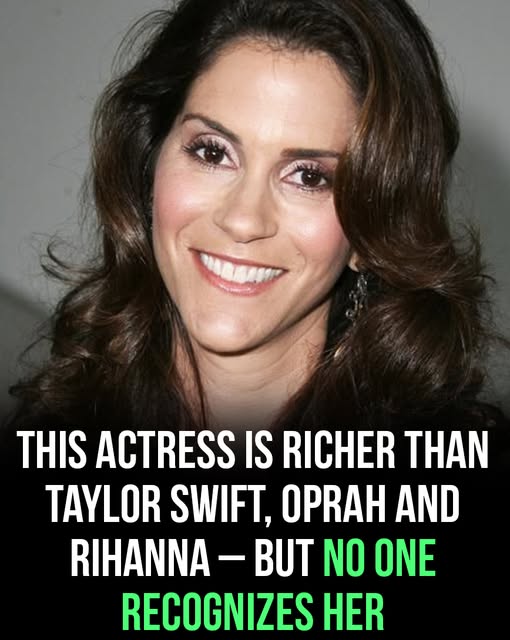
In a world obsessed with celebrity, it’s easy to assume that the wealthiest women in entertainment are those whose names regularly light up marquees and trend on social media. Taylor Swift, Oprah Winfrey, and Rihanna have each built global empires, parlaying their talents and personas into lucrative businesses, iconic brands, and headline-making fortunes. Their success stories are well-told and instantly recognizable, shaping the aspirations of millions and fueling endless fascination. Yet, quietly and almost invisibly, one Hollywood actress has assembled a fortune that puts her in a rarefied league above even these titans of culture. Her name is Jami Gertz—a face familiar to those who remember the blockbusters of the 1980s and 1990s, but a name rarely invoked in conversations about the world’s richest celebrities. The true story of Jami Gertz’s wealth is not just a tale of Hollywood luck, but a lesson in the transformative power of financial strategy, partnership, and the unassuming nature of real influence.
Jami Gertz’s career in front of the camera began as many do in Hollywood: with ambition, talent, and a series of memorable roles that made her a recognizable face, if not a household name. She starred in cult classics such as “The Lost Boys,” “Less Than Zero,” and the tornado thriller “Twister,” and made regular appearances on television in shows like “Square Pegs” and “Still Standing.” While Gertz enjoyed steady work, she was never positioned as the industry’s next megastar—her performances appreciated, but rarely accompanied by the kind of press frenzy that propelled peers into the upper echelons of fame. As the years passed and the entertainment landscape shifted, Gertz gradually stepped away from the limelight, her career seemingly destined to be remembered as a chapter in Hollywood’s long and crowded history.
But what most people never realized was that Gertz’s most significant chapter was only just beginning. In 1989, she married Tony Ressler, a rising star in the world of finance who would go on to co-found Apollo Global Management and later, Ares Management. These firms would become giants in private equity and asset management, handling hundreds of billions of dollars in investments worldwide. Through her partnership with Ressler, Gertz found herself on the inside track of one of the most lucrative wealth-building avenues of the modern era—one rarely accessible to celebrities whose fortunes depend on the fickle tides of public attention. Instead of chasing endorsement deals or launching personal lifestyle brands, Gertz and Ressler focused on building a diversified, quietly immense empire rooted in long-term strategy and the patience of seasoned investors.
The scale of their success is staggering, yet it remains almost invisible to the casual observer. Today, estimates of the couple’s net worth routinely place them in the multi-billion-dollar range, comfortably outpacing many of the world’s most famous entertainers and athletes. While Taylor Swift, Oprah, and Rihanna have each achieved billionaire status through relentless creativity and tireless brand-building, Gertz’s fortune is anchored in private equity, sports franchise ownership, and a broad portfolio of investments that rarely make headlines. She and Ressler are principal owners of the NBA’s Atlanta Hawks, a role that places them in rare company among celebrity sports franchise holders. Beyond the sports world, they are deeply engaged in philanthropy, supporting causes ranging from education and the arts to health care and community development. Their giving is substantial, but often conducted quietly, with little fanfare or expectation of public recognition.
What sets Gertz apart is not just the scale of her wealth, but the way she moves through the world. In an era when celebrity is often synonymous with constant visibility, Gertz has chosen a path of deliberate understatement. She is rarely seen at red-carpet galas or in the pages of celebrity weeklies. Her social media presence is virtually nonexistent by the standards of her peers, and she offers few interviews or public statements about her personal life. When she does appear in public, it is often in the context of philanthropic work, board meetings, or events related to her family’s business interests. This low profile is not the result of reclusiveness or lack of achievement, but a conscious decision to let her actions—and investments—speak for themselves. In many ways, Gertz exemplifies a kind of old-school discretion that has become increasingly rare in a culture obsessed with personal branding and online influence.
The implications of Gertz’s story are profound. She challenges deeply held assumptions about the relationship between fame and fortune, demonstrating that the two are not always as closely linked as we imagine. Her journey is a reminder that true power and influence often reside far from the spotlight, in boardrooms and investment firms, in the patient accumulation of assets and the quiet exercise of leadership. It also highlights the importance of partnership: Gertz’s marriage to Ressler was not only a personal union but a strategic alliance that amplified both their strengths. Together, they have built a legacy that extends across industries and continents, touching countless lives through both business and philanthropy.
For the public, the revelation of Gertz’s extraordinary wealth is both surprising and instructive. It invites us to reconsider what success looks like, and to recognize that the richest people in the room are not always the most visible or celebrated. In a world that prizes recognition and applause, Jami Gertz has built her fortune—and her life—on quieter foundations: strategic thinking, meaningful partnership, and a commitment to making a difference without demanding the spotlight. Her story is a testament to the hidden potential of those who choose a different path, and a powerful reminder that sometimes, the true measure of success is not how loudly you are celebrated, but how deeply you are able to shape the world around you.