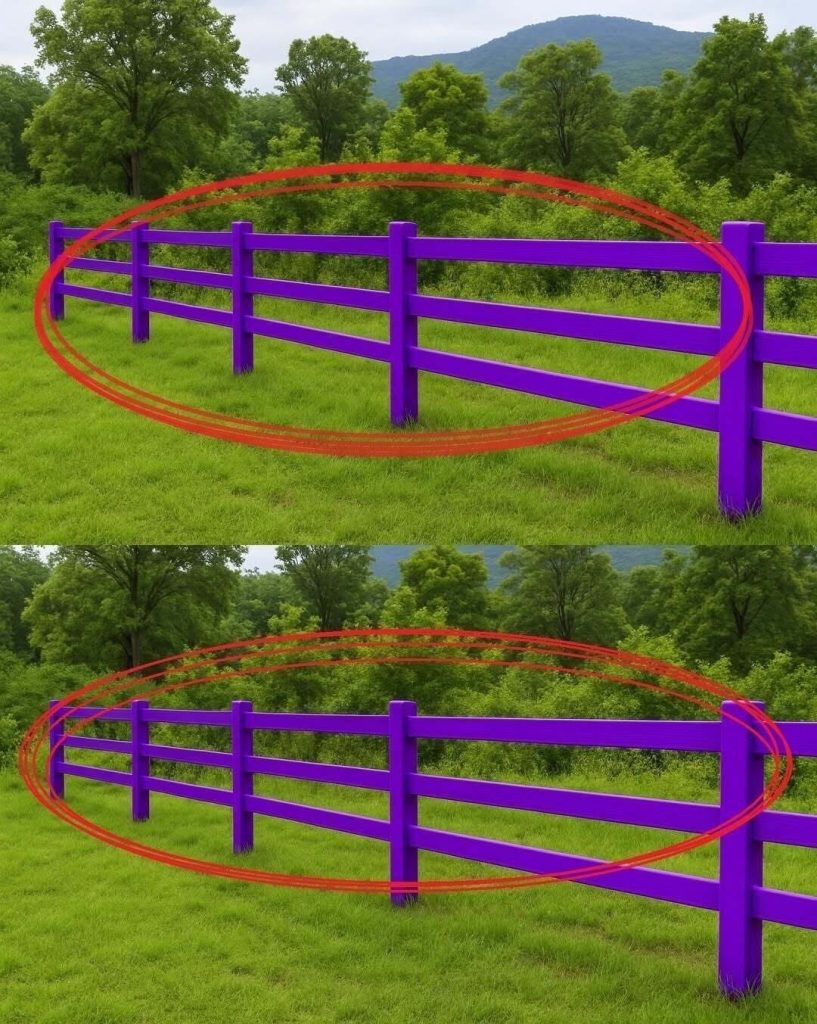
Exploring rural landscapes, forests, or open countryside often brings moments of quiet curiosity, especially when something unexpected interrupts the familiar scenery. A purple fence cutting across a field or lining a wooded path can feel whimsical at first glance, almost decorative or artistic. Yet this vibrant color carries a very deliberate meaning, rooted in law and practicality. In many states across the United States, a fence, post, or tree marked with purple paint is a legally recognized signal indicating private property. The marking communicates a clear prohibition against trespassing without requiring signs, confrontation, or repeated warnings. It is not chosen for style—it is selected because it stands out sharply against natural surroundings, ensuring visibility and understanding, even in dense forests or expansive fields where other warnings might be overlooked or destroyed.
The origins of purple boundary markings are grounded in efficiency and durability. Traditional “No Trespassing” signs often fail in rural or wooded areas: they can be blown down by storms, fade under sunlight, be damaged by animals, or removed deliberately. Replacing them repeatedly is costly and often ineffective. Painting posts, trees, or fences offers a low-maintenance solution that can remain visible for years. Purple, specifically, was chosen because it rarely occurs naturally in the environment, making it instantly distinguishable from other markers like orange hunting flags, red construction tape, or trail blazes. By standardizing this color, lawmakers created a system that could communicate a clear, unambiguous message: the land beyond this line is private, and entry without permission is prohibited.
In jurisdictions that recognize purple paint laws, the markings carry the same legal weight as posted signs. Trespassing across a purple boundary can result in fines, citations, or even arrest, depending on local law. These regulations often include specifications for placement: vertical stripes typically must be applied between three and five feet above the ground and spaced consistently along the property line to ensure visibility. The color and pattern function as legally enforceable notice. By codifying the rules, authorities protect landowners’ rights while simultaneously informing visitors of their obligations. Understanding the meaning of purple paint is therefore essential for anyone navigating rural areas, whether hiking, hunting, or exploring. Ignorance of the law does not exempt one from responsibility.
For outdoor enthusiasts—hikers, campers, photographers, and hunters—recognizing and respecting purple paint is critical for both legal and practical reasons. Crossing a marked property line can expose visitors to hazards such as livestock, farm equipment, uneven terrain, or hunting activity. Beyond legal consequences, the paint serves as a safety measure, alerting travelers to risks they might otherwise overlook. Purple markings create a clear boundary without the need for aggressive confrontation, helping maintain peace between landowners and recreational visitors. They remind explorers that the freedom to roam exists within a framework of responsibility: curiosity must stop where property lines begin.
Socially, purple fences and posts reflect a balance between privacy and courtesy. Landowners often prefer a passive, nonconfrontational method to deter trespassers. The paint communicates ownership firmly but politely, asserting rights without hostility. Visitors who recognize the color are participating in a culture of respect, honoring both the land and the people who care for it. Ignoring the markings, on the other hand, can generate frustration, legal complications, and tension in rural communities. Purple paint, in essence, is a language of boundaries—a quiet negotiation between public curiosity and private stewardship that fosters mutual understanding when observed.
The increased visibility of purple paint also speaks to changing patterns of land use and outdoor recreation. With more people exploring rural areas and technology making previously remote regions more accessible, clear and reliable boundary markers are more important than ever. Purple paint ensures that responsibility is shared: the landowner communicates limits, and visitors must recognize and abide by them. It reinforces the principle that enjoying nature does not override private ownership and emphasizes safety, awareness, and respect. Each encounter with a purple line is a reminder that the landscape is shaped not only by natural forces but also by human care, law, and attention. Recognizing these markers allows people to explore safely, legally, and harmoniously, preserving a balance that benefits everyone.