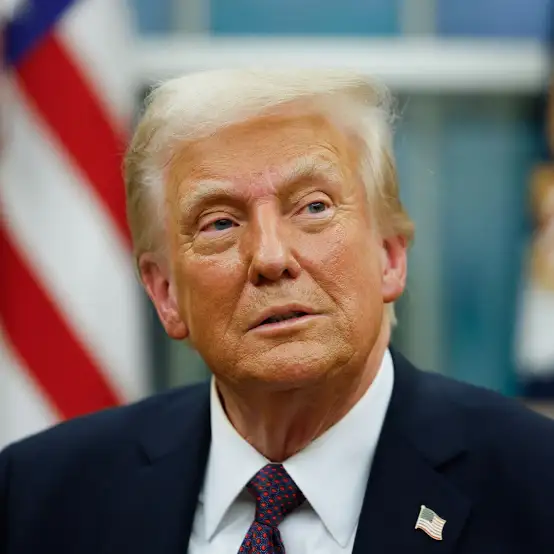
President Donald Trump’s announcement that his administration considers itself engaged in a “non-international armed conflict” with major drug cartels in North and South America marks one of the most consequential rhetorical and strategic shifts in modern U.S. security policy. By formally characterizing these criminal networks as terrorist organizations and framing the struggle against them as a form of war, the White House moved the issue out of the familiar realm of law enforcement cooperation and into the far more volatile territory of armed conflict. For decades, drug trafficking has been treated as a transnational criminal problem requiring intelligence sharing, extradition agreements, financial tracking, and coordinated policing. This declaration, delivered through a brief but pointed memo to Congress, suggests that the administration views those tools as insufficient for the scale and brutality of cartel violence. It also reflects a broader worldview in which non-state actors capable of destabilizing regions, corrupting governments, and inflicting mass harm are no longer merely criminals but strategic enemies. The language used matters deeply, because once a conflict is defined as war, expectations shift—about urgency, about acceptable tactics, and about the balance between security and civil liberties. Even supporters of a hardline approach recognize that such framing carries heavy consequences, both domestically and internationally.
At the heart of the administration’s argument is the claim that modern drug cartels have evolved beyond profit-driven smuggling operations into quasi-military organizations that control territory, command armed forces, and terrorize civilian populations. In parts of Latin America, cartels exert influence comparable to, or even exceeding, that of formal state institutions, imposing their own rules, collecting taxes, and violently punishing dissent. By labeling these groups as terrorists, the administration seeks to unlock a broader range of legal authorities, intelligence capabilities, and potentially military options. Supporters argue this recognition simply acknowledges reality: cartel violence has claimed tens of thousands of lives, destabilized entire regions, and fueled addiction crises that cross borders. Critics counter that while the brutality is undeniable, terrorism designations blur important distinctions between ideological violence and organized crime, risking an overly militarized response to problems rooted in poverty, corruption, and demand for drugs. The debate is not merely semantic. Terrorism labels can trigger sanctions, asset seizures, expanded surveillance, and, in extreme cases, the use of force beyond national borders, raising profound questions about proportionality and long-term effectiveness.
The legal implications of declaring a “non-international armed conflict” are equally complex. Such a classification occupies a gray area in international law, traditionally applied to civil wars or sustained fighting between states and organized armed groups within a country’s borders. Applying it to transnational cartels stretches existing frameworks and invites scrutiny from legal scholars, human rights organizations, and foreign governments. If the United States asserts that it is engaged in armed conflict, questions immediately arise about which rules apply: the laws of war or domestic criminal law. This distinction affects everything from detention standards to targeting decisions and accountability for civilian harm. Allies may worry about precedent, fearing that broad interpretations could justify unilateral action on their soil. Domestically, Congress faces renewed pressure to clarify its role in authorizing force, especially given the Constitution’s allocation of war powers. While the administration insists that existing authorities suffice, history shows that ambiguous mandates often lead to mission creep, with objectives expanding faster than oversight mechanisms can adapt.
Diplomatically, the declaration risks straining already fragile relationships across the Americas. Many governments in the region have long cooperated with the United States on counter-narcotics efforts, even as they bristled at perceptions of interference or blame-shifting. Recasting the problem as a war led by Washington may revive painful memories of past interventions and fuel nationalist backlash. Leaders must now balance the benefits of U.S. support—intelligence, funding, training—against domestic concerns about sovereignty and public opinion. At the same time, some officials quietly welcome the tougher stance, hoping it brings sustained attention and resources to a fight they have waged largely alone. The challenge lies in ensuring that cooperation remains genuinely collaborative rather than coercive. Effective action against cartels depends on trust, shared goals, and respect for local realities, including the social conditions that allow criminal networks to thrive. Without careful diplomacy, a policy intended to project strength could instead weaken regional alliances.
Within the United States, the announcement resonates powerfully with a public weary of rising overdose deaths, border insecurity, and stories of cartel violence. Framing the issue as war simplifies a complex crisis into a narrative of enemies and resolve, which can be politically potent. It signals action and decisiveness, qualities many voters find reassuring. Yet simplification comes at a cost. The drug trade is sustained not only by supply but by demand, and decades of experience suggest that force alone cannot eradicate it. Militarized strategies have, in some cases, displaced violence rather than eliminated it, pushing traffickers into new routes and markets. Civil liberties advocates warn that expanding counterterrorism tools risks eroding constitutional protections, particularly for communities already subject to heavy policing. The administration’s rhetoric also raises expectations that dramatic results will follow, creating pressure to escalate if quick victories prove elusive. Managing these domestic dynamics will be as important as navigating international law or diplomacy.
Ultimately, the administration’s declaration represents a defining moment in how the United States conceptualizes security threats in an interconnected world. By placing drug cartels in the same category as terrorist organizations, it challenges traditional boundaries between crime, war, and governance. Whether this approach leads to meaningful reductions in violence and trafficking, or instead deepens cycles of conflict and mistrust, will depend on how rhetoric translates into policy. A strategy that combines pressure with prevention, enforcement with reform, and strength with restraint may yet yield progress. But history offers sobering lessons about the limits of force when confronting deeply rooted social and economic problems. As the implications unfold, this decision will be judged not only by its intentions but by its consequences—for the rule of law, for regional stability, and for the millions of lives caught in the crosscurrents of the drug trade.