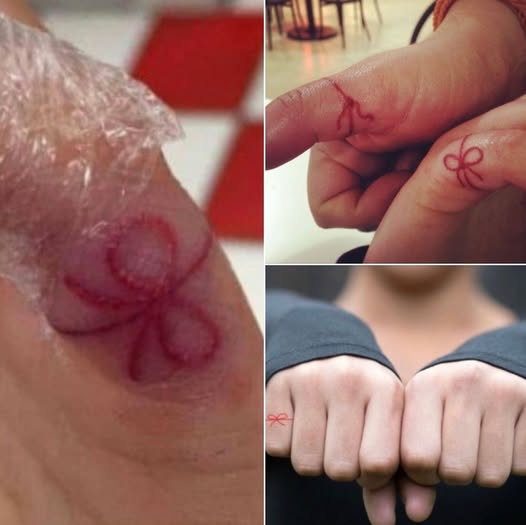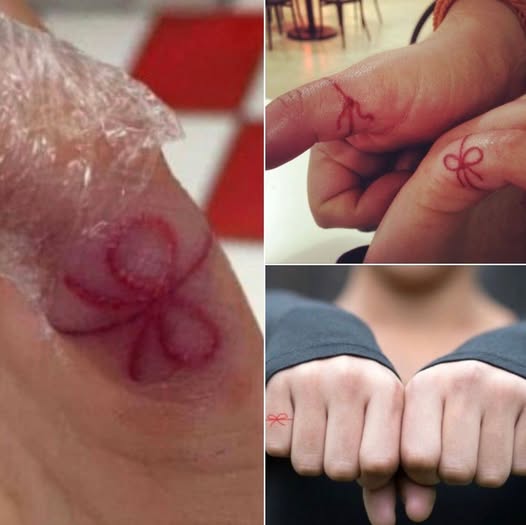
Tattoos have long served as a universal language, conveying identity, belief, and personal experience across cultures and generations. From tribal markings to modern minimalism, body art allows individuals to tell stories visually—stories of love, loss, growth, and transformation. Among the many designs that carry profound meaning, the red string tattoo stands out for its simplicity and deep symbolism. At first glance, it may appear as a small, delicate band tied like a bow on a finger, thumb, or wrist. Yet beneath its minimalist surface lies centuries of myth, tradition, and human connection.
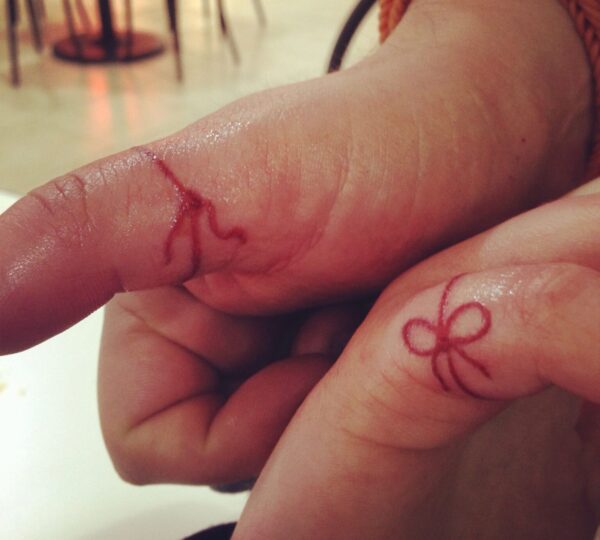
The red string tattoo originates from East Asian folklore, particularly Chinese and Japanese mythology. Known as the “red string of fate,” it represents an invisible thread that connects two people destined to enter each other’s lives. No matter how far they drift apart, how tangled circumstances become, or how much time passes, this thread will never break. The myth often features a supernatural matchmaker—sometimes called the “Old Man Under the Moon”—who binds these destined individuals together. Men traditionally wear the string on their thumb, women on their pinky, mirroring the folklore’s imagery. Today, variations may appear on wrists, ankles, or other placements, but the core symbolism—connection, destiny, and enduring bonds—remains intact.
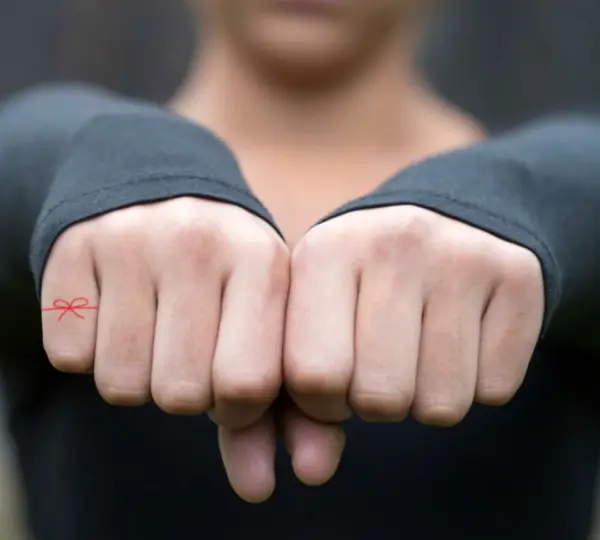
While the tattoo is frequently associated with romantic fate, its meaning is far broader. Many wear it to honor family ties, lifelong friendships, spiritual mentors, or even deceased loved ones. The red string represents a connection that transcends physical distance and temporal limits. It is a reminder that some relationships are predestined, that certain souls are meant to cross paths, and that the bonds formed through love, mentorship, or memory are not easily broken. In a world where digital communication often feels fleeting, this tattoo provides a tangible symbol of enduring closeness.
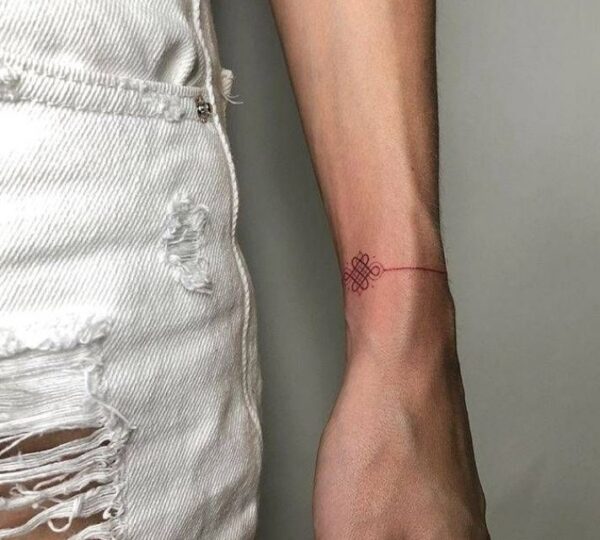
Beyond relationships with others, the red string also embodies personal transformation and resilience. For those who have faced hardship, trauma, or loss, it symbolizes continuity, survival, and growth. The thread becomes a metaphorical guide, linking the past self to the present and future, highlighting the journey of healing, self-discovery, and personal evolution. By marking the body with this symbol, wearers can carry a daily reminder of their inner strength and the enduring connections that have shaped their lives.
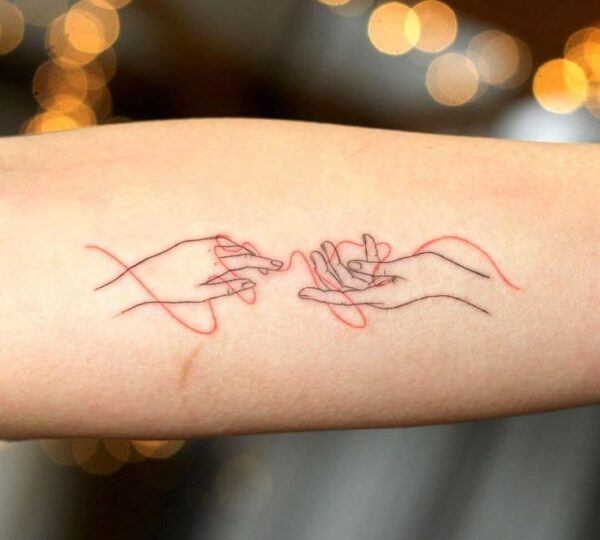
The tattoo’s appeal has also evolved across cultures. In Japan, it intertwines with the concept of the pinky promise, representing trust and sincerity. In Korea, it emphasizes soulmates and long-lost connections. In Western interpretations, it often signifies emotional closeness, whether to a partner, friend, parent, or influential figure. Its open-ended symbolism allows wearers to project personal meaning onto the design, making it adaptable across age, experience, and cultural background. It is as much about inner belief as outward expression.
Ultimately, the red string tattoo is a visual declaration of faith in connection, destiny, and the invisible threads that weave our lives together. It speaks to hope, continuity, and the quiet power of human relationships. By transforming intangible bonds into tangible art, it provides both comfort and inspiration. Whether viewed as myth, metaphor, or spiritual truth, the tattoo reminds wearers—and observers—that life is rarely accidental, and that the people, events, and connections that shape us are often guided by forces we cannot see but deeply feel. It celebrates the enduring magic of being linked to others, across time, space, and experience.