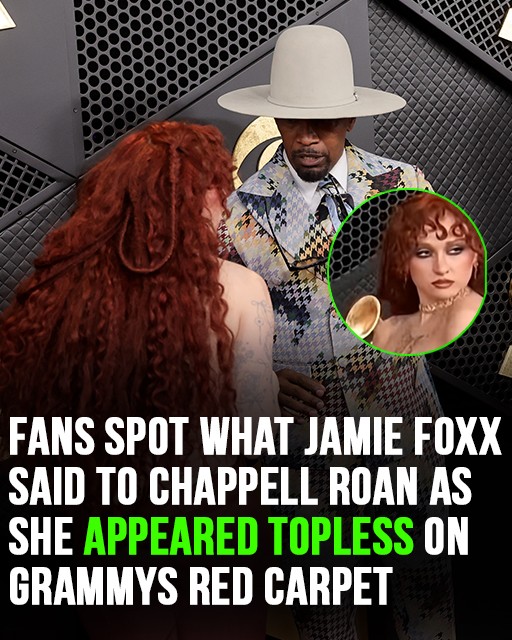
Before a single award was handed out at the 2026 Grammy Awards, Chappell Roan had already become one of the night’s most talked-about figures. Her arrival at Los Angeles’ Crypto.com Arena felt less like a routine red-carpet appearance and more like a carefully staged performance. Fresh off her Best New Artist win the year before and returning with multiple nominations, Roan stepped into the spotlight wearing a bold Mugler gown that immediately commanded attention. The deep maroon look blended sheer elements, sculptural detailing, layered fabrics, and dramatic movement, designed to provoke reaction as much as admiration. As photographers crowded around her, the outfit dominated early coverage of the ceremony, igniting conversations about fashion, artistic intent, and the evolving boundaries of red-carpet expression before the show had even officially begun.
Roan’s fashion choices have long existed at the intersection of music, theater, and visual art, and this appearance followed that trajectory. The gown’s design played with illusion and symbolism rather than concealment, echoing themes she has explored throughout her performances and public persona. For Roan, clothing is not merely decorative; it is communicative. Her aesthetic draws from drag culture, avant-garde runway traditions, and pop spectacle, deliberately challenging expectations of how female artists should present themselves in mainstream spaces. The look was unapologetic and meticulously styled, from the cascading cape to her long crimson hair, which framed the ensemble in a way that felt intentional rather than accidental. In that sense, the outfit functioned as both fashion statement and cultural commentary, reinforcing her reputation as an artist who refuses to soften her vision for comfort or consensus.
It was against this backdrop that a brief, unscripted interaction unfolded—one that would soon eclipse much of the evening’s pre-show conversation. As Roan moved along the carpet, she was approached by Jamie Foxx, who was attending with his daughters, Corinne and 17-year-old Anelise. Cameras captured Foxx introducing Roan to Anelise, describing her as “one of your biggest fans.” The moment lasted only seconds: a polite greeting, a quick handshake, and then Roan was ushered onward by her team. Almost immediately afterward, Foxx could be heard apologizing, repeating, “I’m sorry,” in what appeared to be an instinctive attempt to smooth over any perceived awkwardness. The exchange was brief, subdued, and seemingly unremarkable—until it wasn’t.
Within hours, clips of the interaction spread rapidly across social media platforms, accumulating tens of millions of views. Commentary followed just as quickly, and opinions were sharply divided. Some viewers questioned whether the introduction was appropriate given the setting and Roan’s outfit, framing the moment as uncomfortable or poorly judged. Others saw nothing unusual at all, interpreting the exchange as a harmless, respectful interaction between a fan and an artist, amplified beyond proportion by the internet’s tendency to dissect every celebrity gesture. The speed and intensity of the reaction highlighted how quickly modern audiences assign meaning to fleeting moments, especially when they involve high-profile figures and visually striking contexts.
As the debate grew, it became clear that the conversation was less about the individuals involved and more about broader cultural tensions. Generational perspectives on fashion, celebrity influence, and public decorum collided in real time. For some, Roan’s look symbolized artistic freedom and self-determination; for others, it raised questions about visibility, influence, and shared public spaces. Foxx’s quick apology was interpreted in multiple ways—by some as courtesy, by others as discomfort, and by still others as an unnecessary reaction to a moment that required no correction at all. The fact that the interaction was so brief yet so heavily scrutinized underscored how public figures often lose control of their narratives once cameras and commentary take over.
Throughout the evening, Roan herself appeared unaffected by the controversy. She continued through the ceremony as one of the most photographed and discussed attendees, her presence reinforcing the image she has carefully cultivated: an artist who does not dilute her expression to avoid debate. The viral moment did little to shift that perception. If anything, it reinforced her role as a cultural catalyst, someone whose appearances spark discussion simply by existing outside conventional expectations. The Grammys, designed to celebrate musical achievement, once again demonstrated how easily the spotlight can drift toward symbolism, optics, and unscripted human interactions.
In the end, the exchange between Jamie Foxx and Chappell Roan serves as a small but revealing snapshot of celebrity culture today. It raises questions without offering definitive answers: where do personal boundaries lie in public spaces, how do generations interpret the same moment differently, and how much weight should be assigned to brief encounters stripped of broader context? Like Roan’s fashion choices themselves, the debate resists closure. It lingers, evolving with each retelling, reminding audiences that in the age of viral clips and instant judgment, even a few seconds on the red carpet can become a mirror reflecting society’s shifting values and unresolved conversations.