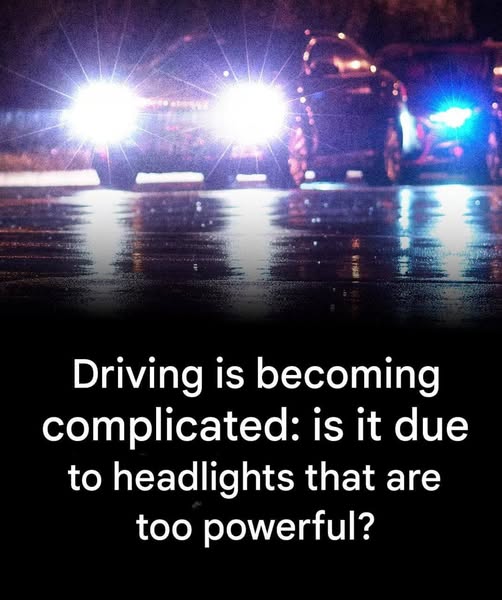
The moment often arrives without warning. One second the road ahead feels manageable, familiar, and calm, and the next it dissolves under an intense wall of light from oncoming traffic. Headlights flare, reflections bloom across the windshield, and instinctively your hands tighten on the steering wheel. Many drivers assume this experience signals failing eyesight, especially if it seems to worsen over time. Yet for millions of people, the issue has far less to do with personal vision decline and far more to do with how modern vehicles illuminate the road. Changes in headlight technology, vehicle design, and driving environments have transformed night driving into a more visually demanding experience than it was even a decade ago. Understanding why this happens helps reduce anxiety, improve safety, and restore confidence behind the wheel after dark.
Automotive lighting has evolved rapidly, and while these changes were designed to improve safety, they have also introduced new challenges. For decades, halogen headlights dominated the road. Their warm, yellowish light provided modest illumination that scattered less in rain or fog and was generally easier on the eyes. As high-intensity discharge headlights became popular in the late 1990s and early 2000s, drivers gained brighter, whiter light and better distance visibility. However, this shift marked the beginning of widespread glare complaints. HID lights increased contrast but also created sharper light edges that were more disruptive for oncoming drivers. Today, LED headlights have become standard in new vehicles due to their efficiency, longevity, and design flexibility. While they illuminate the road more effectively for the driver using them, their cooler color temperature and intense focus produce harsher glare for everyone else. Light in the blue-white range scatters more within the human eye and in the atmosphere, creating halos, reflections, and momentary blindness that the visual system struggles to recover from quickly.
Beyond brightness alone, color temperature plays a critical role in how headlights are perceived. Many modern LEDs operate in the 5,500 to 6,500 Kelvin range, producing a crisp, daylight-like appearance. While this enhances detail recognition for the driver, it is also more taxing on oncoming eyes, especially in low-light environments where pupils are dilated. Warmer lights, closer to 3,000 to 4,000 Kelvin, tend to feel softer and produce less discomfort glare, but they do not project as far or as sharply. Manufacturers favor cooler tones for perceived safety and modern aesthetics, yet the trade-off is increased visual stress for other road users. This effect becomes even more pronounced in adverse weather. Rain, fog, snow, and even mist cause short-wavelength light to scatter more aggressively, amplifying glare and reducing contrast precisely when drivers need clarity the most.
Vehicle design has quietly intensified this problem. Over the past two decades, SUVs, trucks, and crossovers have surged in popularity, reshaping traffic dynamics. These taller vehicles position headlights higher off the ground, often closer to the eye level of drivers in sedans and compact cars. When combined with powerful LED systems, the result is a beam that feels unavoidably intrusive, even when the vehicle is properly distanced. Misalignment worsens the issue further. Headlights can tilt upward due to suspension wear, uneven tire pressure, heavy cargo, or minor collisions that go unnoticed. Many drivers are unaware that headlight alignment is not static and can drift over time. Even a small deviation can send concentrated light directly into the eyes of oncoming traffic. While regulations exist to control brightness and beam patterns, real-world conditions often differ from laboratory testing, creating a gap between compliance and comfort.
Human vision itself adds another layer of complexity. Night driving demands constant adaptation from the eyes, which must switch rapidly between dark surroundings and sudden bursts of intense light. In low-light conditions, pupils dilate to maximize incoming light, making them more vulnerable to glare. When a bright headlight enters the visual field, light scatters inside the eye, reducing contrast and temporarily impairing object recognition. This effect, known as disability glare, can make road markings, pedestrians, and obstacles momentarily invisible. Discomfort glare, while less directly impairing vision, causes squinting, blinking, and eye strain that subtly degrade driving performance. Aging compounds these challenges. As people grow older, contrast sensitivity decreases and the eyes adapt more slowly to changes in brightness. Conditions such as dry eye, cataracts, or minor lens clouding can dramatically amplify glare, even in drivers who pass standard vision tests. The result is a growing population of drivers who feel increasingly uneasy on night roads despite having technically adequate eyesight.
Environmental and seasonal factors further magnify the strain. Wet roads act like mirrors, reflecting headlight beams upward into drivers’ eyes. Urban light pollution reduces the contrast between headlights and ambient lighting, making it harder to judge distance and speed. In winter months, shorter days and longer nights force drivers to spend more time adjusting to darkness, often after already experiencing visual fatigue from daytime screen use. Fatigue itself reduces glare tolerance, making headlights seem brighter and more intrusive than they would otherwise. These overlapping factors explain why night driving feels more difficult now than it once did, even for experienced drivers who have not noticed any decline in daytime vision.
Despite these challenges, drivers are not powerless. Practical steps can significantly reduce glare and improve comfort. Regular headlight alignment checks ensure beams are angled correctly, minimizing unnecessary light spill. Keeping windshields clean—inside and out—is critical, as smudges and micro-scratches scatter light and intensify glare. Clouded headlight lenses should be restored or replaced to prevent uneven light diffusion. When facing oncoming headlights, shifting gaze slightly toward the right edge of the lane helps maintain orientation without staring directly into the light source. Eyeglass wearers can benefit from anti-reflective coatings, which reduce internal light scatter, while caution should be used with night-driving lenses to avoid excessive darkening. Maintaining safe following distances reduces rearview glare, and using high beams responsibly prevents contributing to the problem for others.
Looking ahead, technology offers cautious optimism. Adaptive headlight systems that automatically adjust beam direction, intensity, and shape based on traffic conditions are becoming more common. Some systems selectively dim portions of the beam to avoid blinding oncoming drivers while maintaining road illumination. As these technologies mature and become standard, night driving may regain some of its lost comfort. Still, technology alone cannot solve the issue. Awareness, patience, and informed driving habits remain essential. Regular eye exams can identify conditions that worsen glare sensitivity, and driver education programs that emphasize defensive night driving could reduce accidents significantly.
Night driving in the era of bright LEDs is a shared challenge shaped by technology, biology, and environment. While modern headlights enhance visibility for some, they unintentionally strain others, creating a complex visual landscape that demands adaptation. By understanding the causes of glare and taking proactive steps to mitigate its effects, drivers can reclaim confidence and safety after dark. Navigating today’s night roads requires not only good equipment, but also an appreciation of human visual limits—and a collective effort to make the road more comfortable for everyone who shares it.