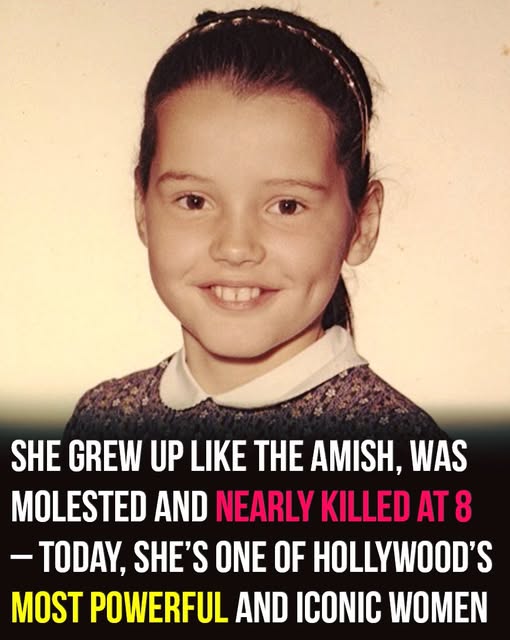
Geena Davis entered the world in Wareham, Massachusetts, in 1958, in a household that prized quiet discipline, manners, and modesty above all else. To her parents, life was structured, contained, and predictable; entertainment was limited, and anything daring was discouraged. From an early age, Davis absorbed the lesson that being polite, agreeable, and silent was essential to survival. She learned to blend into her surroundings, to defer attention, and to carry discomfort quietly. These early lessons were reinforced by one of the most terrifying experiences of her childhood: at eight years old, she sat silently in a car driven by her 99-year-old great-uncle as he drifted into oncoming traffic. At the last moment, he corrected the wheel, narrowly avoiding disaster. That incident etched itself into her psyche. She learned, early and painfully, that making noise or drawing attention could be dangerous, and the habit of silence became ingrained.
Her childhood challenges extended beyond moments of fear. While delivering newspapers, she was sexually abused by a neighbor, an incident that was never officially addressed or investigated. The experience, shrouded in secrecy and shame, reinforced the lesson that drawing attention to pain was unacceptable. By the time she reached adolescence, her towering height made her a target for teasing and ridicule, compounding her desire to remain unseen. Even as she excelled in sports and music—track, hurdles, high jump, and flute—she maintained the careful, quiet posture her upbringing demanded. Studying abroad in Sweden expanded her horizons and language skills, but the dream she carried closest to her heart remained largely private: acting.
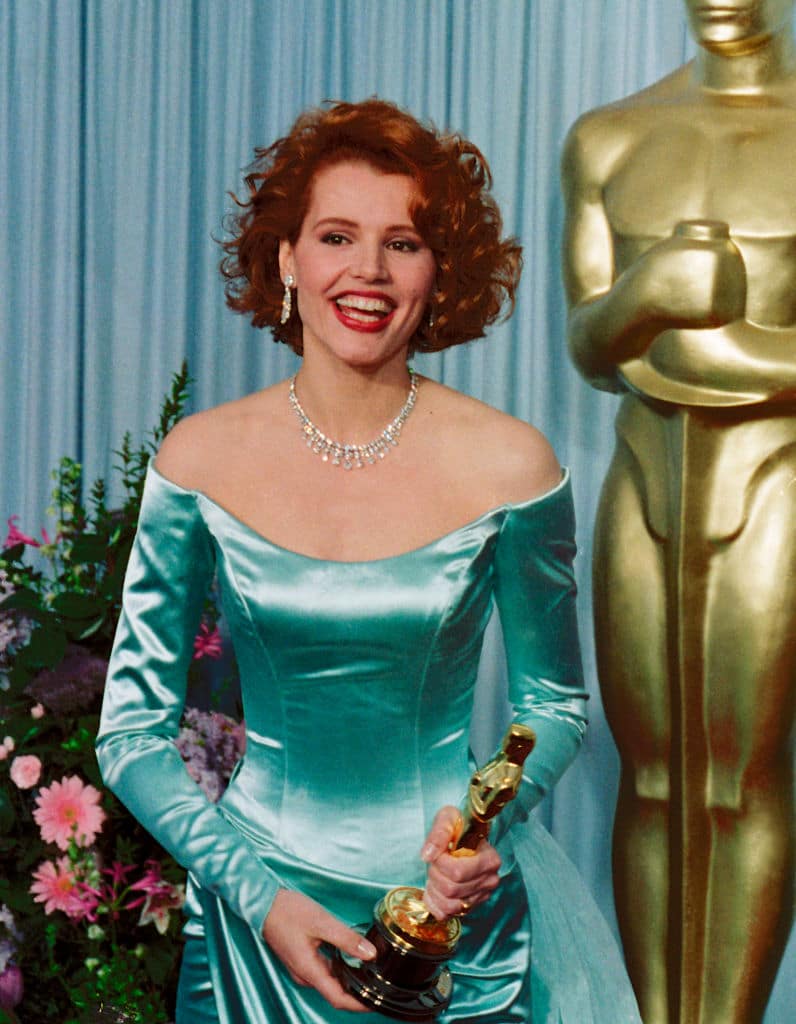
After Boston University, where she studied drama but never formally completed her degree, Davis moved to New York City. She worked various jobs—waitressing, clerking, even posing as a mannequin—before her modeling career took off. Appearing in a Victoria’s Secret catalog proved pivotal. The catalog caught the attention of director Sydney Pollack, who cast her in Tootsie in 1982. From that point, her ascent was swift and multifaceted: films such as The Fly, Beetlejuice, and The Accidental Tourist, for which she won an Academy Award, showcased her versatility, intelligence, and depth. Yet it was Thelma & Louise that became transformative, both professionally and personally. Working alongside an assertive co-star, Davis began to unlearn decades of ingrained politeness and reticence, realizing that expressing oneself openly did not equate to difficulty but to freedom.
Hollywood, however, remained unkind to women as they aged. Approaching forty, Davis faced a sudden scarcity of roles—a stark reminder of the industry’s ageism. But this professional challenge coincided with a shift in her personal life. Becoming a mother in her mid-forties, she welcomed a daughter and later twin sons, which altered her perspective on representation in media. Watching children’s programming, she noticed the persistent underrepresentation of girls and sidelining of women, a pattern that both frustrated and galvanized her. Where once silence had been a survival mechanism, now she felt compelled to speak and act.
In 2004, Davis founded the Geena Davis Institute on Gender in Media. Through rigorous research, advocacy, and strategic partnerships, the Institute has influenced systemic change in how women are portrayed on screen, pushing Hollywood to recognize the value and impact of gender equity in media. What began as personal frustration evolved into global influence, transforming her from actress to a leading voice in cultural reform. Her work illustrates how personal experience, when combined with courage and dedication, can yield widespread change.
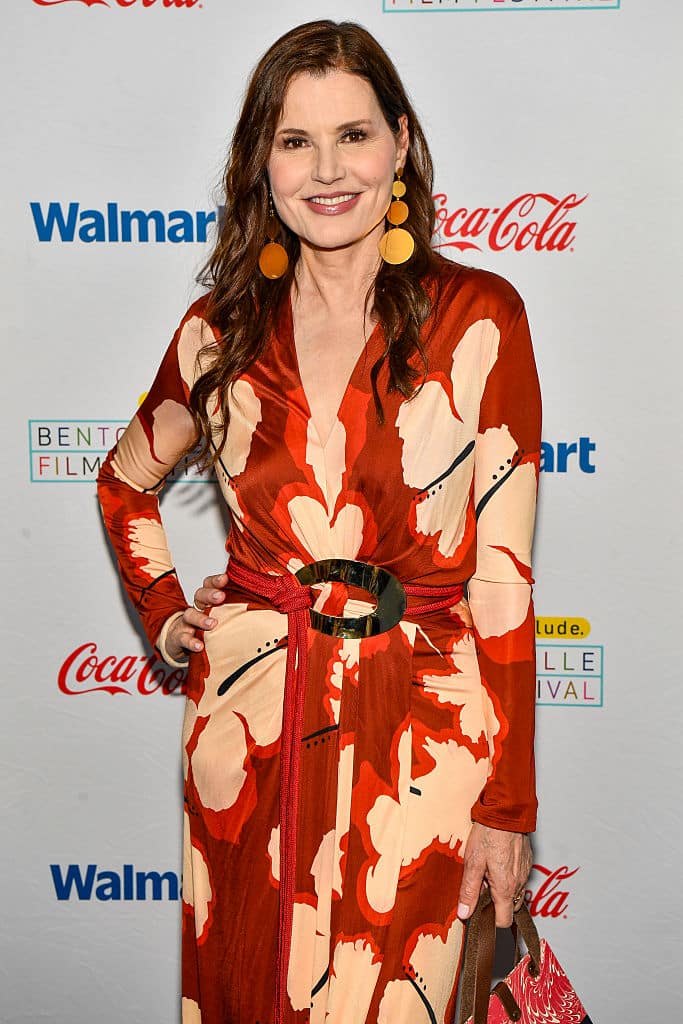
Now in her late sixties, Geena Davis remains active, purposeful, and engaged in both her craft and her advocacy. She continues to act while tirelessly championing inclusivity and representation, teaching the next generation that voice is power and that speaking up can transform not just individual lives but entire industries. From near-tragedy in her childhood to global impact as a professional and activist, Davis embodies the journey of survival, growth, and the deliberate reclamation of a voice long silenced. She once learned that silence could almost cost her life; today, she shows the world that speaking up can change it.