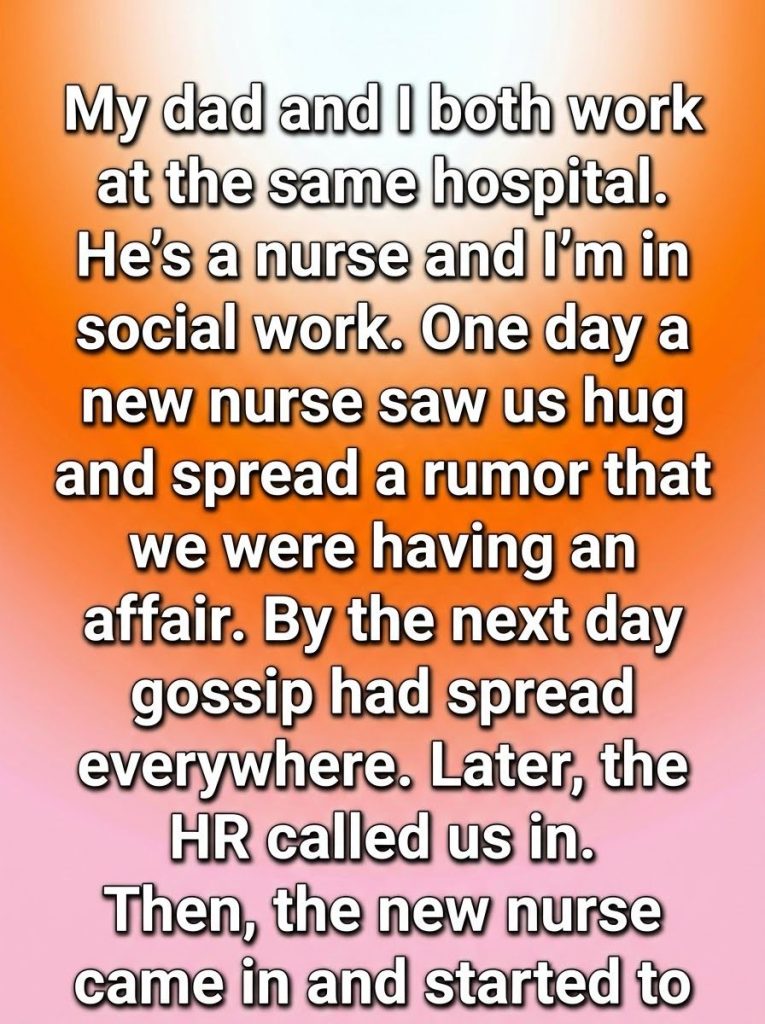
Hospitals are places where urgency governs every movement and emotion is carefully contained beneath layers of professionalism. Long shifts blur together, alarms replace clocks, and exhaustion becomes a shared language among staff. In that environment, small gestures of comfort can feel disproportionately meaningful. For me, that comfort came from working alongside my father, a nurse whose steady presence had shaped my understanding of care long before I ever put on scrubs myself. Growing up, I watched him navigate grief, stress, and responsibility with quiet dignity, and years later, finding myself in the same hospital corridors felt grounding rather than intimidating. When our schedules overlapped, we developed a simple ritual: a brief hallway hug before returning to our respective units. It lasted only seconds, never interfered with patient care, and served as a reminder that amid the chaos, we were not facing the day alone. In a setting defined by constant crisis, that small connection felt human, necessary, and harmless.
What neither of us anticipated was how easily context could be stripped away in a workplace where everyone is overextended and constantly observing one another. One ordinary afternoon, that familiar hug was seen by someone who did not know our story. There was nothing secretive or inappropriate about it, yet by the next morning, the atmosphere had shifted. Conversations quieted when we entered rooms. Friendly nods were replaced by polite distance. The hospital, usually buzzing with teamwork and shared purpose, suddenly felt tense and watchful. No one confronted us directly. Instead, speculation moved invisibly, passed along in fragments and assumptions. In an environment built on trust and communication, the silence felt heavier than accusation. It was unsettling to realize how quickly a single moment, removed from its context, could reshape how people perceived us and our professionalism.
The situation escalated faster than either of us expected. Within days, we were called into a meeting with our supervisor. The words felt surreal as they were spoken aloud: a rumor had spread suggesting an inappropriate relationship between two staff members. Hearing it framed so formally was jarring, especially knowing how innocent the reality was. For my father, the accusation cut deeply. His career had been defined by integrity, boundaries, and respect—for patients and colleagues alike. To have that questioned, even indirectly, was painful. Still, he remained composed, reminding me quietly that truth did not need defensiveness. In that moment, the generational difference between us was clear. I felt anger and disbelief, while he leaned into patience and clarity, trusting that honesty would dismantle misunderstanding more effectively than outrage ever could.
As the meeting unfolded, the source of the rumor finally surfaced. A new nurse, unfamiliar with our relationship and still learning the social landscape of the hospital, admitted she had misinterpreted what she saw. She mentioned it casually to another colleague, never imagining it would grow beyond a passing comment. In a workplace fueled by stress and constant vigilance, that comment took on a life of its own. My father calmly explained that he was my parent, not my partner, and produced family photos that left no room for doubt. The tension in the room shifted almost instantly—from suspicion to embarrassment. Apologies followed, awkward but sincere, along with reminders about the responsibility that comes with observation and communication. The hospital’s leadership emphasized the importance of verifying information before drawing conclusions, particularly in an environment where reputations and trust are critical to effective care.
Returning to work after the meeting was strangely quiet. People avoided eye contact at first, unsure how to address what had happened. Over time, normal rhythms resumed. Conversations warmed again, teamwork reasserted itself, and the unspoken discomfort faded. What lingered, however, was a heightened awareness of how fragile workplace trust can be, especially in high-pressure settings where exhaustion lowers patience and assumptions fill gaps left by incomplete information. Our hallway hugs did not stop. They were never the problem. This time, though, they were met with understanding smiles rather than sidelong glances. The shift was subtle but meaningful—a collective acknowledgment that human connection does not automatically undermine professionalism.
The experience left a lasting impression on both of us. It highlighted how easily compassion can be misread when stripped of context, and how quickly rumors can take root in environments where people are already stretched thin. More importantly, it underscored the necessity of empathy—not just toward patients, but toward colleagues whose lives extend beyond their job titles. Hospitals are places of science, protocol, and precision, but they are also communities of human beings carrying personal histories into every shift. Allowing room for that humanity does not weaken professionalism; it strengthens it. In the end, a simple hallway hug became an unexpected lesson in communication, trust, and grace, reminding everyone involved that care does not stop at the bedside—it lives in how we treat one another behind the scenes as well.